

![[post_title]](https://samony.com.ng/wp-content/uploads/2025/11/1764531194_Gary-Lineker-destroys-Tommy-Robinson-after-Mexico-holiday-video-goes-1024x538.jpg?lm=692C9BFD)
Analyzing the Gary Lineker-Tommy Robinson Spat: A Sign of the Times?
Gary Lineker versus Tommy Robinson. It sounds like a bizarre celebrity boxing match, doesn’t it? Yet, the recent clash between the football legend and the far-right activist highlights a deeper, troubling trend in the media landscape. Robinson’s attempt to ambush Lineker with a video, questioning his activities on holiday, backfired spectacularly. Lineker’s measured response exposed the “journalist’s” blatant opportunism. The public pile-on was swift and decisive.
It’s easy to dismiss this as a simple case of good versus evil. The reality, as always, is more nuanced. Robinson’s tactic, while distasteful, plays into a familiar playbook: leveraging social media to create outrage and garner attention. The fact that his video racked up millions of views underscores the power of this approach, regardless of its ethical shortcomings. This incident underscores the ease with which misinformation can spread online, even when quickly debunked, and it shows how celebrities’ private lives can become political fodder.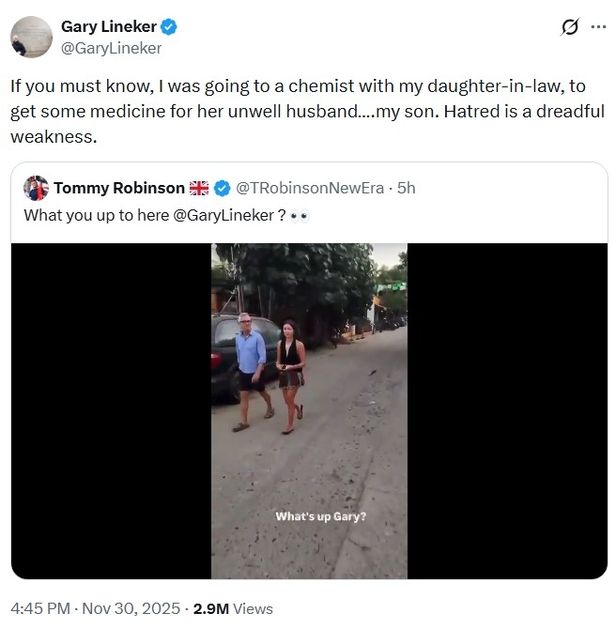 >
>
The interesting part isn’t just the squabble itself, but the reaction it provoked. The almost gleeful condemnation of Robinson feels like a collective catharsis. People are tired of the constant stream of manufactured controversy and the erosion of civility in public discourse. Lineker’s response, calm and factual, resonated because it offered a stark contrast to the inflammatory rhetoric that dominates so much of online interaction.
Still, it’s crucial to consider why Robinson’s methods, however crude, continue to find an audience. There’s a segment of the population that feels unheard, disenfranchised, and deliberately ignored by the mainstream media. Characters like Robinson, regardless of their own dubious motives, tap into this sense of grievance. They offer simplistic narratives that, while often inaccurate or outright hateful, provide a sense of belonging and validation to those who feel marginalized.
This challenge isn’t going away anytime soon. The algorithms that govern social media amplify extreme voices, creating echo chambers where people are only exposed to information that confirms their existing biases. It creates opportunities for individuals like Robinson to cultivate and expand their platforms. Simply condemning their actions isn’t enough. We need to understand the underlying factors that make their message appealing to some. >
>
It’s worth noting the parallel narrative involving Holly Valance. Her association with Robinson raises eyebrows, particularly given her past connections to more mainstream circles. It suggests a realignment of political allegiances within certain segments of society, a willingness to embrace more radical voices. Whether this stems from genuine conviction or a desire for attention remains to be seen.
The Lineker-Robinson episode, therefore, is a microcosm of the broader challenges facing our society. We must grapple with the spread of misinformation, the polarization of public discourse, and the underlying anxieties that fuel extremism. Reacting with outrage is tempting, but a more measured, analytical approach is essential. This means understanding the motivations of those who promote divisive narratives. It also means working to create a more inclusive and equitable society where everyone feels heard and valued.
Frankly, I’ve seen similar patterns emerge repeatedly in the media landscape over the years. The names and faces change, but the underlying dynamics remain eerily consistent. Someone stirs up controversy, others react, and the cycle continues. The key is to disrupt this cycle by fostering critical thinking, promoting media literacy, and holding those who spread misinformation accountable.
The digital world can be a wild west, and like any frontier, it needs rules and a sense of shared values. Otherwise, we risk descending into a state of perpetual conflict, where reason and empathy are drowned out by the loudest and most extreme voices.

![[post_title]](https://samony.com.ng/wp-content/uploads/2025/11/1764531194_Gary-Lineker-destroys-Tommy-Robinson-after-Mexico-holiday-video-goes-300x158.jpg?lm=692C9BFD "Lineker vs. Robinson: Just a Squabble, or a Sign of Something Darker?")
![[post_title]](https://samony.com.ng/wp-content/uploads/2025/11/Fatih-Karagumruk-0-2-Besiktas-Super-Lig-maci-ozeti-300x169.jpg?lm=692C99A5 "Beşiktaş Edges Karagümrük: Was It Really That Convincing?")
![[post_title]](https://samony.com.ng/wp-content/uploads/2025/11/Real-world-testing-shows-which-vehicle-models-emit-more-of-the-300x169.jpeg?lm=692C9390 "Car Emissions: Unveiling the NOx Danger and Australia’s New Standards")
![[post_title]](https://samony.com.ng/wp-content/uploads/2025/11/1764529159_A-womans-body-was-found-floating-in-San-Francisco-Bay-300x200.jpeg?lm=692C940B "Nancy Galvani Case: Justice Delayed?")
![[post_title]](https://samony.com.ng/wp-content/uploads/2025/11/Police-arrests-suspected-electric-cable-vandal-in-Jigawa-300x169.jpg?lm=692C9449 "Jigawa’s Electric Cable Theft: Unveiling Systemic Issues")
![[post_title]](https://samony.com.ng/wp-content/uploads/2025/11/Anita-Okoyes-Thanksgiving-video-sparks-concern-she-as-cooks-on-300x150.jpg?lm=692C94BD "Anita Okoye’s Thanksgiving: Sweet Family Moment or PR Play? 🤔")

![[post_title]](https://samony.com.ng/wp-content/uploads/2025/11/1764531073_Idaho-bar-offering-a-month-of-free-drinks-to-customers-1024x683.jpeg?lm=692C9B85 "Idaho Bar’s ICE Tip Promotion: Divisive Times")
![[post_title]](https://samony.com.ng/wp-content/uploads/2025/11/Otti-appoints-Ikpeazus-ex-CPS-Ememanka-as-DG-Abia-State-1024x1024.jpg?lm=692C9BCD "Abia State’s New Media Team: Genius Move or Just Politics as Usual?")
![[post_title]](https://samony.com.ng/wp-content/uploads/2025/11/Fatih-Karagumruk-0-2-Besiktas-Super-Lig-maci-ozeti.jpg?lm=692C99A4 "Beşiktaş Edges Karagümrük: Was It Really That Convincing?")
