

![[post_title]](https://samony.com.ng/wp-content/uploads/2025/12/Elderly-woman-arrested-for-allegedly-running-an-illegal-prison-in-1024x512.jpg?lm=69406ADA)
Police in Limpopo, South Africa, have arrested a 54-year-old woman on serious charges after uncovering what authorities describe as an illegal private detention facility operating within her home. The startling discovery revealed that at least 36 men were allegedly held captive at the residence, purportedly for infractions ranging from unpaid bar tabs to violent behaviour and abuse against women.
The woman, who owns a local beer bar, is accused of converting a section of her private property into a makeshift prison. Reports indicate that patrons from her establishment were allegedly confined after consuming alcohol, with the specific reasons for their detention including failure to settle their bills or engaging in disruptive and abusive conduct towards others.
This clandestine operation reportedly commenced in late last year, with investigations suggesting that numerous individuals were held over an extended period. While some detainees faced allegations of drinking without payment, others were reportedly imprisoned for acts of aggression, particularly for being abusive towards women while under the influence of alcohol. The scale and duration of the alleged confinement have prompted widespread concern.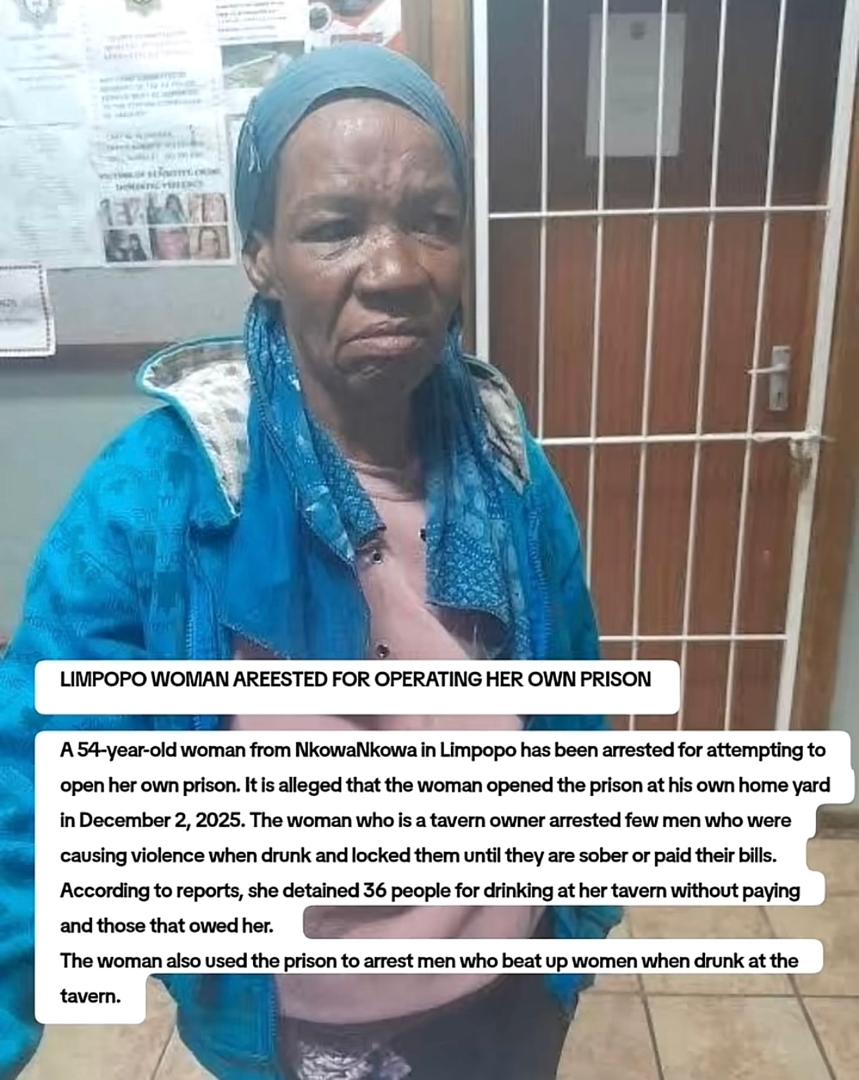
The charges against the suspect are expected to be severe, encompassing serious offences such as kidnapping, unlawful detention, and potentially human rights violations. South African law strictly prohibits private citizens from operating correctional facilities or detaining individuals without due legal process, underscoring the gravity of the allegations.
Authorities initiated their investigation following undisclosed information that led to the raid on the woman’s property. The police are now meticulously gathering evidence, interviewing the alleged victims, and working to ascertain the full scope of the operation, including the conditions under which the men were held and the precise duration of their captivity.
The incident has sparked considerable shock and outrage across South Africa and on social media platforms. Many observers have questioned how such an extensive and illegal operation could have persisted for weeks or even months without detection by local authorities or community members, highlighting potential gaps in oversight.
Controversially, some online commentators have expressed a degree of support for the woman, suggesting she was performing a role typically reserved for law enforcement and the justice system. These sentiments, however, have been widely condemned by others who emphasize that vigilantism, regardless of perceived motives, fundamentally undermines the rule of law and individual liberties.
This public discourse points to broader societal frustrations regarding crime and the perceived effectiveness of the justice system in certain areas. While such sentiments may exist, legal experts unequivocally state that taking the law into one’s own hands is illegal, dangerous, and can lead to severe consequences for all involved.
The alleged victims, who have now been freed, are likely to require significant support and potential legal aid as they navigate the aftermath of their ordeal. Their testimonies will be crucial to the ongoing police investigation and the subsequent legal proceedings against the accused.
This case also brings into sharp focus the importance of robust community oversight and effective law enforcement mechanisms to prevent similar incidents. It underscores the critical need for individuals to report suspicious activities to legitimate authorities rather than resorting to illegal forms of self-justice.
As the investigation continues, the accused woman remains in custody, awaiting her appearance in court. The South African justice system will now determine the facts of the case and ensure that due process is followed, upholding the principles of law and order for all citizens.
The implications of this case extend beyond the immediate arrests, raising important questions about public trust in institutions and the boundaries of community intervention in addressing social issues. The outcome will likely set a precedent for similar situations, reinforcing the state’s monopoly on legitimate force and detention.

![[post_title]](https://samony.com.ng/wp-content/uploads/2025/12/It-was-just-15-minutes-to-take-off-300x150.jpg?lm=6945830C "Nigerian Woman’s Passport Ordeal Before International Flight Goes Viral")

![[post_title]](https://samony.com.ng/wp-content/uploads/2025/12/1766160634_Wife-and-lovers-murder-plot-as-theyre-jailed-for-conspiring-300x158.jpg?lm=694578FC "Wife and Lover Jailed for Plotting Husband’s Murder for Insurance")
![[post_title]](https://samony.com.ng/wp-content/uploads/2025/12/The-Christmas-vegetable-you-can-eat-raw-for-a-health.jpeg?lm=69457E96 "Unlocking Nutrients: The Health Benefits of Eating Raw Vegetables")

![[post_title]](https://samony.com.ng/wp-content/uploads/2025/12/1766160689_Can-you-tell-a-Christmas-number-one-from-a-number-300x158.jpg?lm=69457934 "Christmas Chart Legacy: Unpacking Festive Number Ones and Enduring Hits")


![[post_title]](https://samony.com.ng/wp-content/uploads/2025/12/1766162822_Who-owns-Trump-Mobile-The-Verge-1024x532.jpg?lm=69458188 "Unpacking the Ownership of the Elusive Trump Mobile")
![[post_title]](https://samony.com.ng/wp-content/uploads/2025/12/It-was-just-15-minutes-to-take-off-1024x512.jpg?lm=6945830C "Nigerian Woman’s Passport Ordeal Before International Flight Goes Viral")

