

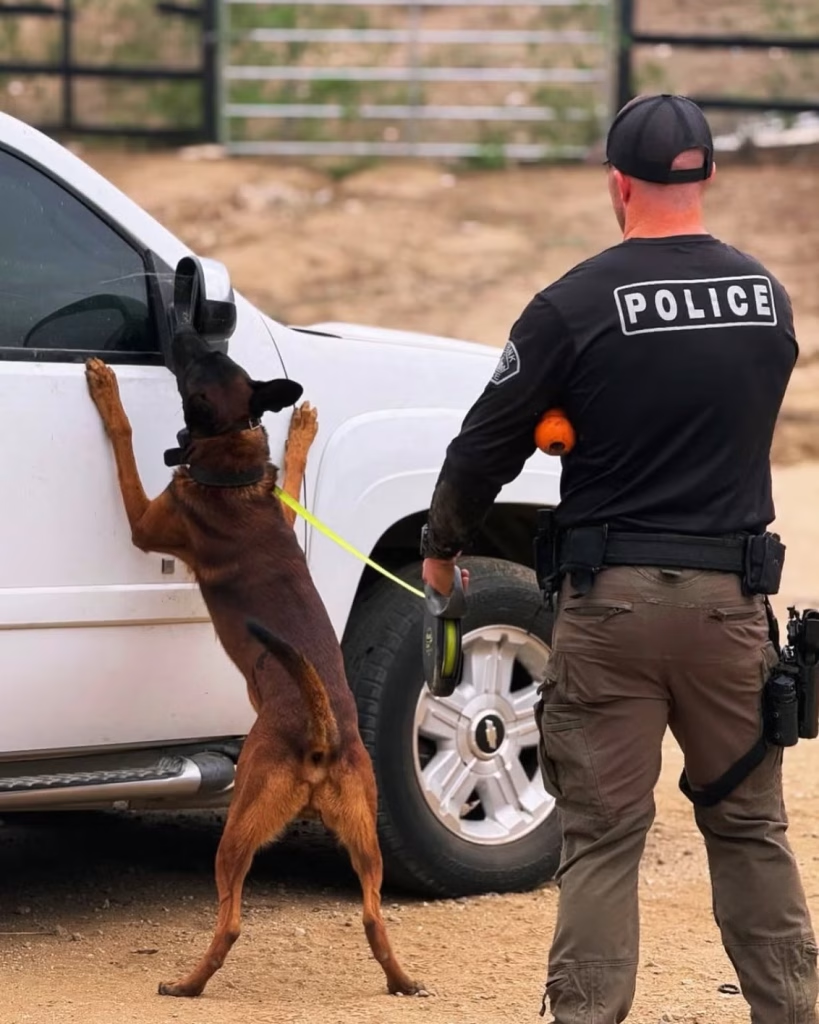
Analyzing the Escalating Use of K9 Units: A Critical Look at Law Enforcement Trends
The recent death of Spike, a Burbank police dog killed in the line of duty, has sparked renewed discussion about the role of K9 units in modern policing. It hits hard, no doubt. These animals are more than just tools; they become part of the force, companions even. Yet, this tragedy invites a deeper dive into the expanding role these units play, the risks involved, and whether their deployment always aligns with best practices.
We’ve observed a steady rise in the utilization of K9 units across various law enforcement agencies. What was once a specialized resource for drug detection and search-and-rescue operations now extends into patrol, crowd control, and suspect apprehension. Several factors drive this growth. Police departments face increasing pressure to combat crime effectively, and K9s offer a perceived advantage in certain situations. The enhanced sensory capabilities of dogs, especially in detecting narcotics or locating hidden individuals, seem invaluable. Budgetary considerations also play a role. Maintaining a K9 unit, while not inexpensive, might appear more cost-effective than assigning multiple officers to specific tasks.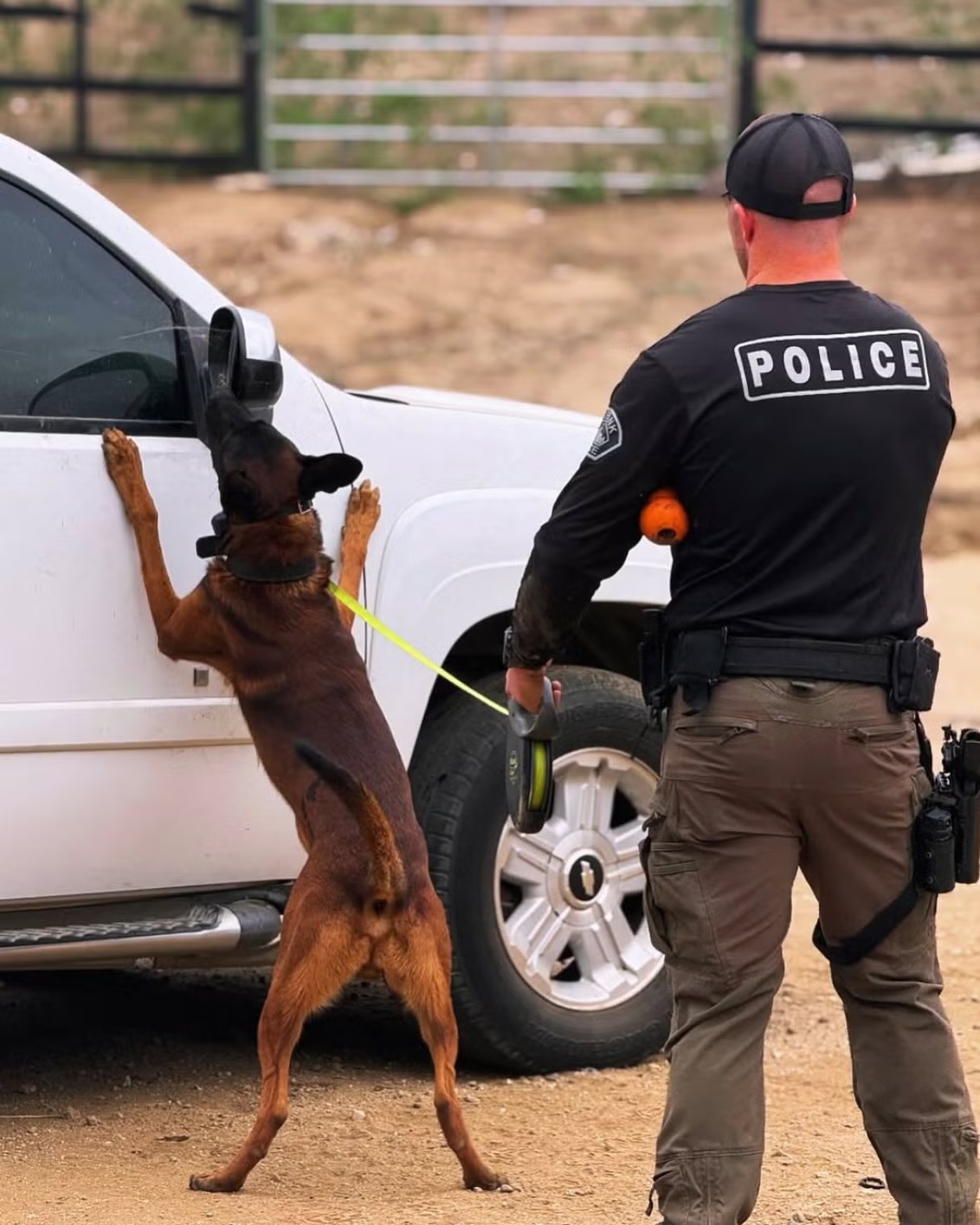 >
>
However, the increasing reliance on K9 units presents several challenges. The inherent risks to both the dogs and the suspects involved are paramount. Spike’s tragic death underscores the danger these animals face. They are often placed in volatile situations where the potential for serious injury or death is high. The use of force – even when applied by a dog – is always a serious issue. It demands constant review and rigorous standards.
Another concern revolves around the potential for misuse and the disproportionate impact on certain communities. Studies suggest that K9 deployments, particularly in drug-related offenses, tend to target minority neighborhoods. We must examine these statistics objectively to ensure equitable law enforcement practices. Are K9 units deployed consistently across all demographics, or are biases influencing their use? It’s a question worth pursuing.
Training protocols also deserve close scrutiny. Are handlers adequately trained in de-escalation techniques? Do they possess the judgment required to determine when deploying a K9 is appropriate and when it might escalate the situation unnecessarily? The emphasis should be on control and precision, minimizing the risk of unintended harm. It’s not enough to train a dog to bite; handlers need to be adept at reading situations and making split-second decisions that prioritize safety. >
>
The legal framework surrounding K9 deployments also requires ongoing assessment. Current laws often grant significant leeway to law enforcement in deploying K9 units. This latitude might be excessive, especially when considering the potential for civil rights violations. Clearer guidelines and stricter accountability measures could safeguard individual liberties while allowing K9 units to perform legitimate law enforcement functions.
The public perception of K9 units is also evolving. Spike’s death has generated an outpouring of sympathy and support for the Burbank Police Department. Still, incidents involving aggressive K9 deployments can erode public trust, particularly when they result in injuries to civilians. Law enforcement agencies should prioritize transparency and community engagement to foster positive relationships and address public concerns. Open communication about K9 training, deployment protocols, and accountability measures could help bridge the gap between law enforcement and the communities they serve.
Looking ahead, the future of K9 units will likely involve technological advancements. Body cameras for K9s, for example, could provide valuable insights into deployment scenarios, enhancing transparency and accountability. Enhanced training simulations and virtual reality technologies could improve handler preparedness and decision-making skills. Yet, technology alone won’t solve the fundamental challenges surrounding K9 deployments. A commitment to ethical policing, rigorous oversight, and ongoing community dialogue is essential to ensure these valuable resources are used responsibly and effectively.
The death of a police dog elicits emotional responses, rightly so. Yet, it’s precisely these events that call for clear-eyed analysis. What policies truly serve the public good? What balance is struck between effective policing and civil liberties? These are not easy questions, but they are essential to building trust and promoting justice. A dog’s loyalty is unwavering, a reminder of the commitment we expect from those sworn to protect and serve. It’s on us to guarantee that commitment extends to everyone.

![[post_title]](https://samony.com.ng/wp-content/uploads/2025/12/1764719532_Inside-Real-Madrid-Differences-in-the-dressing-room-and-difficulties.jpg "Real Madrid Crisis: Dressing Room Unrest and Alonso’s Tactical Puzzle")
![[post_title]](https://samony.com.ng/wp-content/uploads/2025/12/As-Colonel-Sani-Bello-Rtd-Marks-his-83rd-Birthday-On.webp.webp "What Colonel Sani Bello’s Life Can Teach Us About Nigeria")
![[post_title]](https://samony.com.ng/wp-content/uploads/2025/12/1764717679_OpenAI-CEO-declares-code-red-as-Gemini-gains-200-million.jpg "OpenAI Just Hit the Panic Button Over Google’s AI?! What’s Really Going On")
![[post_title]](https://samony.com.ng/wp-content/uploads/2025/12/1764716752_Sabrina-Carpenter-slams-White-House-for-using-her-music-in.jpg "Sabrina Carpenter vs. White House: When Pop Music Gets Political")
![[post_title]](https://samony.com.ng/wp-content/uploads/2025/12/1764716611_Reactions-After-The-Certificate-Of-Expulsion-That-PDP-Issued-To.png "Wike Got Kicked Out of PDP?! What This Means for Nigeria’s 2027 Elections")
![[post_title]](https://samony.com.ng/wp-content/uploads/2025/12/1764715530_How-Arne-Slot-fits-Mohamed-Salah-into-his-long-term-Liverpool.jpeg "Salah’s Future: Slot’s Liverpool Strategy Takes Shape")

![[post_title]](https://samony.com.ng/wp-content/uploads/2025/12/1764719832_Larry-Summers-banned-for-life-from-American-Economic-Association-over-1024x683.jpg?lm=692F7CDE "Larry Summers AEA Ban: Ethics, Epstein, and Economics’ Reckoning")

