


Analyzing the State of Sports: Beyond the Headlines of Italy’s Davis Cup Triumph
Italy’s recent Davis Cup victory certainly grabbed attention, and the narrative around Cobolli and Berrettini’s camaraderie makes for a compelling story. Sports media thrives on these emotional connections. Seeing that video clip of a young Cobolli with Berrettini really drives home the sentimental angle. But let’s think more critically about what this win, and events like it, actually signal about the wider sports landscape.
The Davis Cup win itself? It’s significant. Italy hadn’t achieved a feat like that since the 1970s. This achievement emphasizes the cyclical nature of dominance in sports. National teams rise and fall. Sometimes it’s about a generation of exceptional talent aligning; sometimes it’s about strategic investment in player development. Sometimes it’s plain luck, dodging injuries and benefiting from favorable matchups. In this case, their victory could be attributed to a blend of talent depth. The squad held strong even with missing key players like Sinner and Musetti. It also indicates a possible strategic advantage in team dynamics.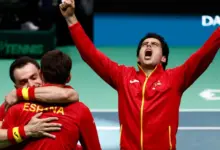 >
>
But beyond the celebratory headlines and the heartwarming anecdotes, some issues present themselves. The absences of top players—Alcaraz for Spain, Sinner and Musetti for Italy—prompt questions about player priorities. Are these top athletes genuinely invested in the Davis Cup? Or are they prioritizing individual rankings, Grand Slam pursuits, and lucrative endorsement deals? It’s a familiar tug-of-war in modern sports. National pride versus personal gain. There’s no easy answer, and it’s naive to assume every player is motivated purely by love of country.
That being said, the reported “brotherhood” within the Italian team offers a counterpoint. Cobolli explicitly mentions Berrettini’s mentorship. A team that fosters that type of supportive environment has a distinct edge. This is not groundbreaking insight. Team chemistry consistently impacts performance. It is still worth considering how teams cultivate these connections. Does it come from organic relationships, deliberate team-building exercises, or a bit of both?
Now, consider the fan element. The article mentions the 10,000-strong crowd chanting Cobolli’s name. That kind of support undoubtedly fuels players. Yet, the fan experience itself is evolving. Think about the rise of online betting, fantasy leagues, and the constant stream of data and analysis available at fans’ fingertips. It changes the way people engage with sports. Fans become increasingly invested, but also more demanding, more critical, and sometimes, more detached from the human element of the game.>
The article cites Cobolli referencing the spirit of Italy’s 2006 World Cup winners. This type of invocation of past glory underscores a vital element of sports: tradition and legacy. It speaks to a shared national identity. These references can inspire a new generation of athletes and fans. But equally, this type of reliance on nostalgia can also create unrealistic expectations and pressure.
Shifting to a different angle, let’s consider the media’s role. Sports journalism often focuses on the drama, the rivalries, and the individual stories. This sells newspapers and drives clicks. There is nothing inherently wrong with that. It is also important to examine the larger systemic issues. Things like funding disparities in different sports, the impact of globalization on talent distribution, or the ethical implications of performance-enhancing drugs. These complex matters rarely make the front page.
What does this Davis Cup victory really say about the future of tennis and sports in general? For one, it indicates the continuing globalization of talent. Tennis, once dominated by a few Western nations, now sees rising stars from all corners of the globe. This also brings cultural diversity to the sport. But it also presents challenges in terms of ensuring fair access to training and resources for athletes from less privileged backgrounds.
Ultimately, Italy’s Davis Cup win is a snapshot of a complex and constantly evolving sports world. It’s a story of individual triumphs, team dynamics, and national pride. Yet, it also invites us to think about the bigger picture. How player priorities impact team events, how fan engagement is changing, and how the media shapes our understanding of sports. Recognizing these dynamics lets us appreciate the games more deeply. It also allows us to critically evaluate the narratives that are constantly being constructed around them.

![[post_title]](https://samony.com.ng/wp-content/uploads/2025/12/1764653742_These-are-the-five-best-places-to-retire-in-the-300x200.jpg?lm=692E7AB1 "These are the five best places to retire in the US")
![[post_title]](https://samony.com.ng/wp-content/uploads/2025/12/Ruby-Is-Not-a-Serious-Programming-Language-300x157.jpg?lm=692E72A3 "Elegance vs. Evolution: Reassessing Ruby’s Place in Modern Development")
![[post_title]](https://samony.com.ng/wp-content/uploads/2025/12/1764652679_Nasarawa-Ex-PDP-top-official-hails-Sule-for-G-20-engagement-300x168.jpg?lm=692E768A "Nasarawa: Ex-PDP top official hails Sule for G-20 engagement")
![[post_title]](https://samony.com.ng/wp-content/uploads/2025/12/How-to-watch-todays-Denver-Nuggets-vs-Dallas-Mavericks-NBA-300x169.jpg?lm=692E7981 "How to watch today’s Denver Nuggets vs Dallas Mavericks NBA game: Live stream, TV channel, and start time")
![[post_title]](https://samony.com.ng/wp-content/uploads/2025/12/Matawalle-donates-N20m-to-Abuja-market-fire-victims-300x210.jpg?lm=692E6B41 "Matawalle donates N20m to Abuja market fire victims")
![[post_title]](https://samony.com.ng/wp-content/uploads/2025/12/1764650066_Ukraine-Russia-war-latest-Moscow-claims-biggest-victory-in-over-a-300x200.jpeg?lm=692E6C58 "Ukraine-Russia Conflict: Shifting Landscape, Fragile Hopes")

![[post_title]](https://samony.com.ng/wp-content/uploads/2025/12/The-common-fruit-juice-that-could-control-blood-pressure-and-1024x683.jpg?lm=692E65CE "Orange Juice: New Research Links Drink to Improved Heart Health")
![[post_title]](https://samony.com.ng/wp-content/uploads/2025/12/1764653742_These-are-the-five-best-places-to-retire-in-the-1024x683.jpg?lm=692E7AB5 "These are the five best places to retire in the US")
![[post_title]](https://samony.com.ng/wp-content/uploads/2025/12/Ruby-Is-Not-a-Serious-Programming-Language-1024x536.jpg?lm=692E72A3 "Elegance vs. Evolution: Reassessing Ruby’s Place in Modern Development")
