

Pentagon’s Probe of Mark Kelly: A Critical Look at Military Justice and Political Maneuvering
The Pentagon’s recent announcement that it’s investigating Senator Mark Kelly, a retired Navy fighter pilot, regarding a video urging American troops to refuse “illegal orders,” has sparked a debate. The core question: does the military have grounds to pursue this, and what does it signify?
The situation started when former President Trump blasted Kelly and other Democratic lawmakers, accusing them of sedition over the video. Secretary of Defense Pete Hegseth defended the probe, arguing that Kelly, unlike the others, remained under Pentagon jurisdiction due to his retired military status.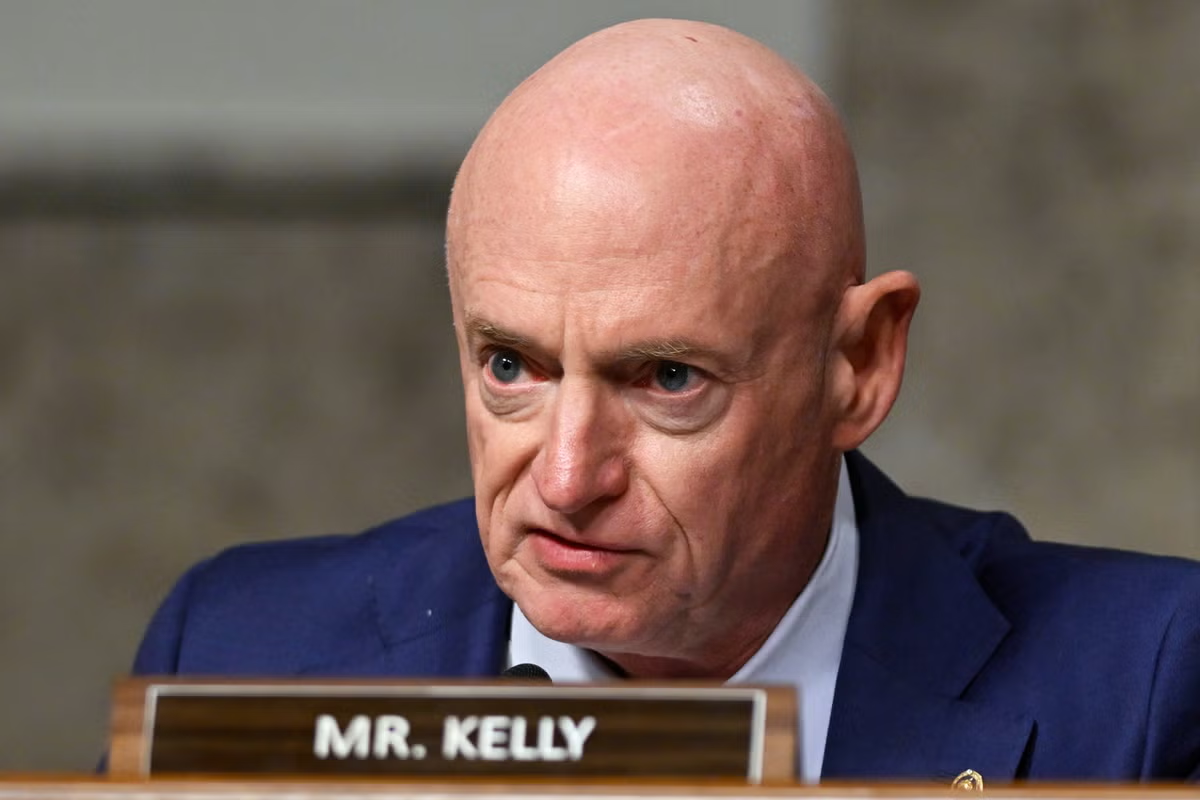 >
>
Kelly dismissed the inquiry as the work of “bullies,” but the question of jurisdiction raises complexities.
Some experts suggest the Pentagon might be overreaching. It’s worth noting, the practice of courts-martialing retired service members, while unusual, isn’t entirely without precedent. Georgetown University law professor Stephen Vladeck notes an upswing in such cases over the past decade. Roughly two million individuals are retired from the US military, but prosecuting a retiree for actions undertaken after retirement seems exceptional, according to retired Navy Captain Todd Huntley, a former JAG.
That said, what’s the foundation of this action?>
Civilian military lawyer Colby Vokey argues that Hegseth seems to misunderstand the Uniform Code of Military Justice. While Hegseth may have personal jurisdiction over Kelly due to his retirement pay, Vokey questions whether he has subject matter jurisdiction, since Kelly made the statements as a senator. One can ponder, can the military really prosecute retirees for offenses committed long after their service? Vokey uses the extreme example of a 100-year-old WWII veteran stealing a candy bar, emphasizing the absurdity of applying military law this broadly.
Adding to the dissent, Patrick McLain, a retired Marine Corps judge, calls the investigation of Kelly a “wackadoodle thing,” particularly given the senator’s First Amendment right to free speech. This echoes concerns about potential overreach and the chilling effect it could have on political discourse.
Still, the military’s ability to regulate speech for service members, a point raised by Duke University’s Charles Dunlap, can’t be disregarded. Military law does place restrictions on speech that civilians wouldn’t face. Yet, even if the video technically violated military law, can that law be applied to a retiree? That’s the pivotal query.
Enter the Former JAGs Working Group. They released a statement saying Kelly did not violate the Uniform Code of Military Justice. They explained that the video merely described the law regarding lawful versus unlawful orders.
The backdrop here is crucial. Democratic lawmakers have been questioning the Trump administration’s deployment of National Guard troops to US cities, as well as the legality of using the military to intercept drug boats. Kelly himself expressed concerns, highlighting the potential for illegal orders. This suggests a politically charged context for the investigation.
Michael O’Hanlon from the Brookings Institution believes any case against Kelly would likely fail. He argues that simply advocating adherence to the law shouldn’t be a crime, especially when the individual is acting as a civilian.
The key question becomes: Can Senator Kelly’s status protect him from the investigation?
Legal experts like Anthony Michael Kreis from Georgia State University argue that it can. He asserts that subjecting a US senator to discipline at the behest of the Secretary of Defense violates the separation of powers, a foundational principle of American governance. Kreis pointed out that the Constitution was specifically designed to prevent such abuses.
Having observed similar situations in the past, this situation feels less about legitimate military discipline and more about political posturing. The timing, the aggressive rhetoric, and the questionable legal grounds all point to a politically motivated action designed to intimidate and silence dissent.
It remains to be seen whether the Pentagon will pursue the investigation, but it has already sparked a needed conversation about the limits of military jurisdiction, the separation of powers, and the delicate balance between national security and free speech. How this unfolds may establish precedents that affect service members – even after retirement – for years to come.

![[post_title]](https://samony.com.ng/wp-content/uploads/2025/11/1764422347_Got-30000-in-Savings-Avoid-This-Mistake-to-Grow-It-300x200.jpg?lm=692AF2CE "Don’t Let $30,000 Stagnate: Optimizing Savings in Today’s Market")

![[post_title]](https://samony.com.ng/wp-content/uploads/2025/11/CAF-Rewards-Super-Eagles-Fan-After-Saying-Morocco-Trip-Is-300x225.jpeg?lm=692AF09D "CAF’s AFCON 2025 Ticket Giveaway: More Than Just Good PR?")
![[post_title]](https://samony.com.ng/wp-content/uploads/2025/11/Bodies-of-two-kidnapped-Cameroonian-women-found-in-Anambra-River-300x146.jpg?lm=692AF0E9 "Anambra Kidnappings: When Will This End?")


![[post_title]](https://samony.com.ng/wp-content/uploads/2025/11/Inducement-is-prohibited-CBN-asks-banks-to-withdraw-non-compliant.jpg?lm=692AF774 "CBN Just Told Banks To Chill With The Ads: What’s Really Going On?")
