

![[post_title]](https://samony.com.ng/wp-content/uploads/2025/11/1764316806_Most-remarkable-anomaly-yet-on-3IATLAS-journey-to-Earth-could-1024x538.jpg?lm=69295689)
3I/ATLAS: Comet, Spaceship, or Something Else Entirely? A Critical Look at the Evidence.
The buzz around 3I/ATLAS continues. Is it simply an interstellar comet, or does it hint at something far more extraordinary – perhaps even extraterrestrial technology? Theoretical physicist Avi Loeb, never one to shy away from a bold claim, suggests the latter. His ongoing speculation, despite NASA’s official stance, has ignited a fiery debate in the scientific community. It feels like we’ve seen this kind of clash between mainstream science and intriguing, albeit unconventional, theories before.
Loeb’s latest proposition centers around 3I/ATLAS’s trajectory. The comet was obscured by the sun during its closest approach, the perihelion. This makes pinpointing its exact behavior problematic. Loeb posits that if 3I/ATLAS’s path aligns unusually closely with Jupiter’s Hill radius, it could signify a technological origin. He even speculates that the object might release artificial satellites near Jupiter’s Lagrange points. He argues that the probability of this alignment happening by chance is slim, making it a noteworthy “anomaly.” >
>
The “Hill radius” concept is crucial here. It defines the region around a planet where its gravitational influence reigns supreme. If 3I/ATLAS is maneuvering to exploit this, it raises eyebrows. The idea of a deliberate course correction certainly adds fuel to the fire, given Loeb’s alien spaceship theory.
Yet, caution is warranted. Complex calculations always come with caveats. There’s a difference between a tantalizing possibility and a proven fact. Are we seeing real evidence of extraterrestrial engineering, or are we interpreting natural phenomena in a way that fits our preconceived notions? Confirmation bias is a real risk.
Still, the current data should prompt rigorous investigation. Loeb’s claims, while certainly provocative, demand scrutiny. Dismissing them out of hand, without thorough examination, would be a disservice to the scientific method. We have to test hypotheses, even the wild ones.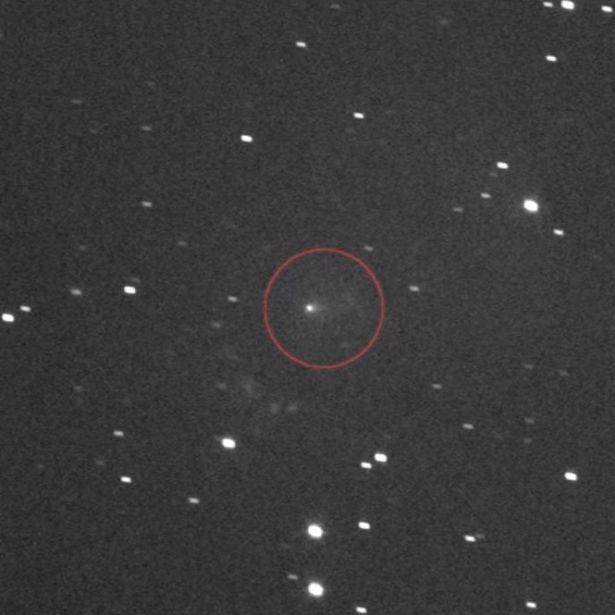 >
>
Looking ahead to March, when more data might become available, it’s important to maintain a balanced view. We need to examine the evidence objectively and avoid leaping to conclusions. NASA’s authority shouldn’t be the final word. We need observable proof.
This whole episode highlights a broader trend: the increasing accessibility of space exploration and data analysis. Citizen scientists and independent researchers can contribute valuable insights, challenging established paradigms. This democratization of discovery is exciting. It challenges the conventional gatekeepers.
However, that democratization also means we need robust frameworks for evaluating claims. Not every anomaly suggests alien life. Sometimes, “remarkable” simply means “rare” or “not yet fully understood.” Separating genuine signals from noise is paramount.
In my own experience observing the tech sector, I’ve noticed a similar pattern. Bold claims and disruptive innovations often face initial skepticism. It takes time, data, and a willingness to challenge assumptions to determine what’s truly groundbreaking and what’s merely hype.
The 3I/ATLAS situation feels similar. The possibility of finding evidence of extraterrestrial technology is certainly a compelling one. We need to approach the matter with both open-mindedness and a healthy dose of skepticism.
Ultimately, the truth, as the saying goes, is out there. But finding it requires careful investigation, critical thinking, and a willingness to consider all possibilities. This includes the possibility that 3I/ATLAS is just a really weird comet. Only time, and more data, will tell. It would be wise to avoid premature pronouncements. Instead, a continued, methodical assessment of available information is required.

![[post_title]](https://samony.com.ng/wp-content/uploads/2025/12/1764955514_World-Cup-2026-draw-live-England-Scotland-and-hosts-USA-300x200.jpg?lm=6933157E "2026 World Cup Draw: Geopolitics and Growing Pains")
![[post_title]](https://samony.com.ng/wp-content/uploads/2025/12/Pressure-growing-on-Pete-Hegseth-as-GOP-and-Democrats-unite-300x200.jpg?lm=69331383 "Hegseth Under Fire: War Crime Accusations or Political Hit Job?")
![[post_title]](https://samony.com.ng/wp-content/uploads/2025/12/What-I-Told-My-Daughter-When-She-Said-She-Wants.webp "Beyond the Aisle: Redefining Wedding Value in a Changing Landscape")
![[post_title]](https://samony.com.ng/wp-content/uploads/2025/12/1764955183_Martin-Kemp-tells-how-wife-Shirlie-told-him-she-loved-300x158.jpg?lm=69331432 "The Enduring Power of “I Love You”: Authenticity, Family, and the Evolving Celebrity Landscape")


![[post_title]](https://samony.com.ng/wp-content/uploads/2025/12/Spurs-U19s-vs-Slavia-Prague-U19s-UEFA-Youth-League.jpg?lm=69331A85 "Tottenham Hotspur U19s vs. Slavia Prague U19s: How to Get Free Tickets")
![[post_title]](https://samony.com.ng/wp-content/uploads/2025/12/Landlord-dumps-kidnapped-tenants-belongings-outside-after-months-of-waiting-1024x512.jpg?lm=69331AFD "Missing Tenant, Landlord’s Loss: Has Compassion Left the Rental Market?")
![[post_title]](https://samony.com.ng/wp-content/uploads/2025/12/1764955514_World-Cup-2026-draw-live-England-Scotland-and-hosts-USA-1024x683.jpg?lm=6933157E "2026 World Cup Draw: Geopolitics and Growing Pains")
![[post_title]](https://samony.com.ng/wp-content/uploads/2025/12/Pressure-growing-on-Pete-Hegseth-as-GOP-and-Democrats-unite-1024x683.jpg?lm=69331388 "Hegseth Under Fire: War Crime Accusations or Political Hit Job?")
