

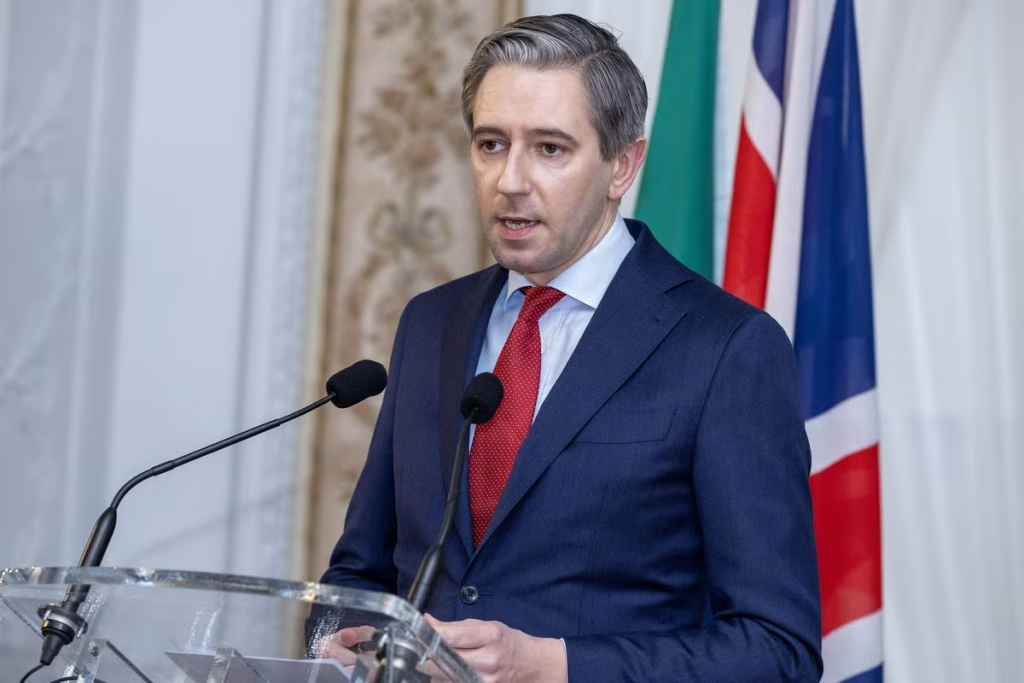
Ireland’s Budget: Navigating Strength and Uncertainty
Ireland currently finds itself in an interesting position. The Irish Fiscal Advisory Council (IFAC) has voiced concerns about the government’s budget management, while the new Finance Minister, Simon Harris, paints a picture of “relative strength.” There’s a recognizable tension here, one that’s worth unpacking.
The core issue, as highlighted by IFAC, centers on a perceived lack of long-term vision. They suggest Ireland is spending its current corporate tax windfall without adequately preparing for future pressures. An aging population, the costs of climate change mitigation, and the reliance on a few key multinational corporations for tax revenue are significant challenges looming on the horizon. The council contends the government needs to move beyond short-term thinking.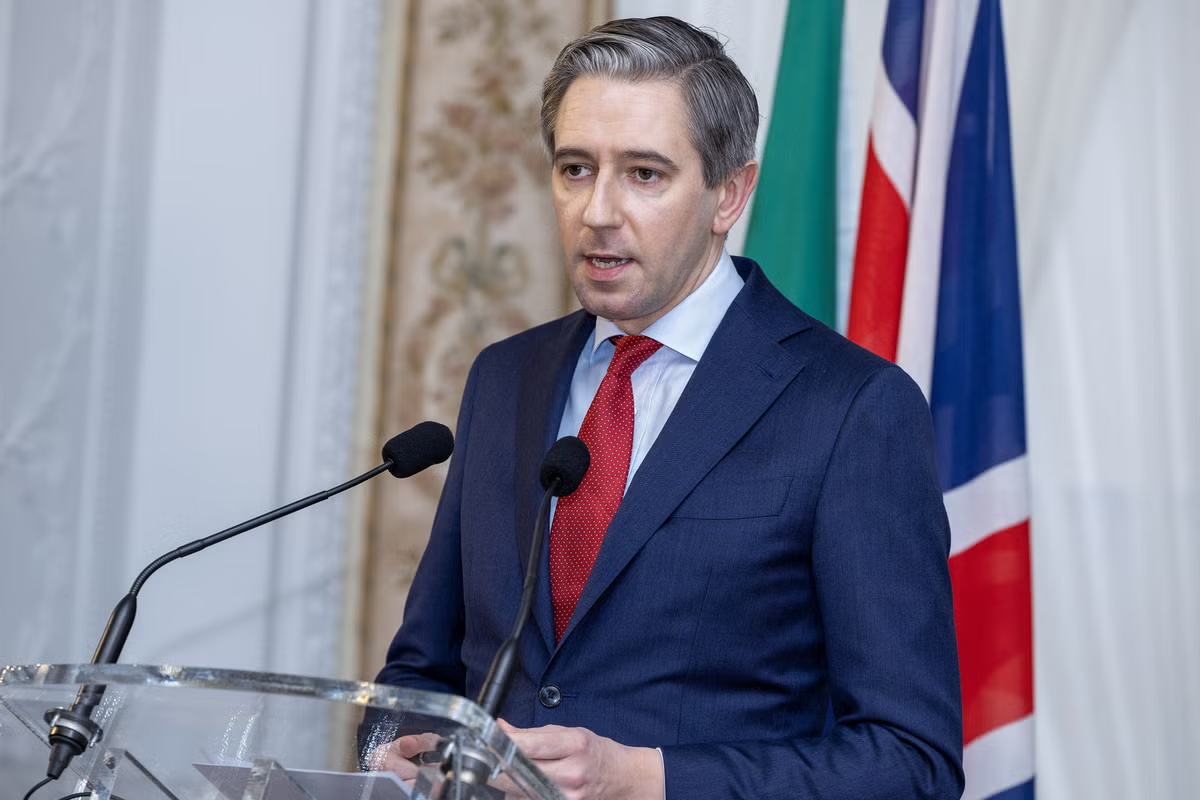 >
>
Essentially, IFAC is saying, “Enjoy the party, but save something for a rainy day.” Their report reveals a concerning potential deficit when “excess” corporation tax is removed from the equation. This paints a different picture than the one of booming success frequently presented. They estimate the combined cost of supporting the elderly and addressing climate change could reach a substantial percentage of national income by 2050.
Now, Simon Harris’ response to these criticisms is notable. He acknowledges the need for a medium-term economic plan, promising to deliver one by year-end. This signals an intention to address IFAC’s concerns and bring more clarity to the government’s fiscal strategy. He even supports a multi-annual budgetary plan, which suggests a degree of agreement with IFAC’s recommendations.
He spoke about preventing “drift spending” and the need for agencies to work within their allocated budgets. It sounds sensible, given the current economic climate. However, it remains to be seen how effectively these goals can be achieved.>
The key question is how Ireland can effectively navigate this “relative strength” amid global uncertainty. Harris emphasized that complacency is not an option. Yet, translating these words into concrete actions and policies is the real test. He’s requested a meeting with IFAC, a positive step suggesting open communication and a willingness to hear dissenting viewpoints. This might help avoid what he terms the “danger of group think”.
From my perspective, having observed similar situations in other economies, there’s a pattern at play. Booms often lead to increased spending commitments. Then, when the boom inevitably fades, the pressure to maintain those commitments creates fiscal strain. Ireland needs to avoid falling into this familiar trap.
Several things are worth noting:
Corporate Tax Dependency: Ireland’s dependence on corporation tax from a handful of multinationals is a major vulnerability. Diversifying revenue streams and reducing reliance on these companies should be a priority. Climate Change Costs: The financial implications of climate change are often underestimated. Ireland needs a detailed plan to finance its transition to a sustainable economy. Aging Population: An aging population strains social security systems. Reforms might be necessary to ensure long-term sustainability. Global Uncertainty: Geopolitical risks, trade wars, and technological disruptions can all impact Ireland’s economy. A robust plan must account for these uncertainties.
The government’s upcoming medium-term economic plan must provide concrete strategies to address these challenges. It requires more than just a statement of intent. It needs clear targets, measurable outcomes, and accountability mechanisms.
The situation requires a balanced approach: maintaining economic growth while saving for the future. It’s about making smart investments, controlling spending, and diversifying revenue sources. It’s a complex balancing act, made more difficult by the ever-present political pressures.
The real challenge facing Ireland isn’t simply managing the current surplus; it’s ensuring sustainable prosperity for future generations. It’s about responsible financial planning, strategic investments, and a willingness to make tough choices. This goes beyond short-term political gains.
Whether Harris and his government can successfully navigate these challenges is yet to be seen. But the conversation has started. The warnings have been issued. Now, Ireland must act decisively to secure its economic future. It’s not just about today’s strength, it’s about tomorrow’s resilience.

![[post_title]](https://samony.com.ng/wp-content/uploads/2025/12/1764802454_Tinubu-swears-in-5-perm-secs-chairman-members-of-NPC-300x210.jpg?lm=6930BF99 "Decoding Tinubu’s Appointments: A Veteran’s View on Priorities and Pitfalls")



![[post_title]](https://samony.com.ng/wp-content/uploads/2025/12/How-much-you-fit-withdraw-in-a-day-from-ATM.jpg?lm=6930C5C7 "Nigeria’s Cash Withdrawal Limits: Pragmatism, Mixed Signals, and the Unfolding Reality")

![[post_title]](https://samony.com.ng/wp-content/uploads/2025/12/1764802454_Tinubu-swears-in-5-perm-secs-chairman-members-of-NPC.jpg?lm=6930BF98 "Decoding Tinubu’s Appointments: A Veteran’s View on Priorities and Pitfalls")
