


Iran has issued a stark warning of retaliation should the United States initiate any attacks, as the nation grapples with escalating protests that have reportedly claimed hundreds of lives. This geopolitical tension, fueled by internal unrest over soaring inflation and calls for regime change, places Iran and the US on a precarious diplomatic tightrope.
A source within Tehran described the situation as dire, reporting that security forces are employing live ammunition, creating what is being described as a war zone where streets are stained with blood and bodies are being collected in trucks. The scale of the crackdown is becoming increasingly evident, with verified footage showing rows of body bags from a morgue near the capital.
Featured snippet paragraph: The primary reason for the current protests in Iran stems from soaring inflation, but these demonstrations have evolved to include demands for the end of the clerical rule of Supreme Leader Ayatollah Ali Khamenei. The government has responded with extreme force, labelling protesters as “enemies of God.”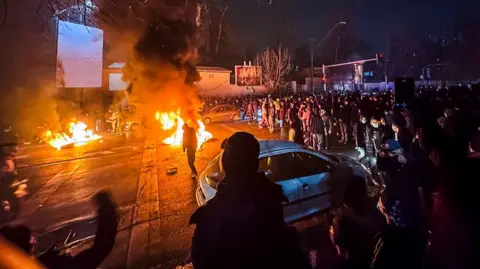
The Human Rights Activist News Agency has corroborated the deaths of nearly 500 protesters and dozens of security personnel nationwide. Furthermore, an estimated 10,600 individuals have been detained during the two weeks of unrest. The US has voiced its concern and threatened intervention, though President Trump has indicated that Iranian leaders have reached out for negotiation, while also suggesting that the US might need to act preemptively.
Options reportedly being considered by the US range from military strikes to increased online support for anti-government elements, cyber warfare, and further sanctions. In response, Iran’s parliament speaker has declared that any US attack would make Israel and regional US military and shipping centers legitimate targets.
The protests, initially triggered by economic hardship, have broadened their scope to challenge the very foundation of Iran’s leadership, specifically targeting Supreme Leader Ayatollah Ali Khamenei. The attorney general’s pronouncements equating protest to being an “enemy of God,” a capital offense, underscore the severity of the government’s stance. Khamenei himself has dismissed the demonstrators as mere “vandals” seeking to appease foreign powers.
Iran has officially declared three days of mourning for those it terms “martyrs killed in Iranian national battle against the US and Israel.” Hospitals have reported being overwhelmed with casualties, with some accounts detailing direct shots to the head and heart of young protesters, many of whom did not survive the journey to medical facilities.
Information gathering within Iran remains extremely challenging due to an ongoing government-imposed internet shutdown, a measure described as more severe than during previous uprisings. This makes independent verification of events difficult, though some footage has managed to surface, offering glimpses into the grim reality on the ground.
Verified videos depict intense clashes between protesters and security forces in various cities, including Mashhad. These visuals show masked individuals taking cover, vehicles ablaze, and the distinct sounds of gunfire. In Tehran, footage captures widespread street demonstrations and calls for the end of clerical rule.
Iranian President Masoud Pezeshkian has attributed the unrest to external influences from the US and Israel, alleging they have trained individuals and infiltrated the country with terrorists. However, authenticated footage directly contradicts this by showing Iranian security officers firing upon gatherings of protesters in multiple regions.
The internet shutdown, the most restrictive in recent memory, severely limits access to the outside world, with only a domestic intranet remaining largely functional. Experts suggest that while satellite connections like Starlink might offer a workaround, users are cautioned about potential government tracing.
Reza Pahlavi, the exiled son of Iran’s last shah, has publicly acknowledged the bravery of the protesters and pledged his support, suggesting that the current regime is facing internal dissent within its own security forces. He has encouraged continued peaceful protest, advising demonstrators to remain in groups for safety.
Simultaneously, incidents have been reported in the UK where Iran’s flag was removed from its embassy balcony, prompting Iran to summon the UK ambassador. These protests are the most significant since the 2022 “Women, Life, Freedom” uprising, which saw widespread casualties and detentions.







![[post_title]](https://samony.com.ng/wp-content/uploads/2026/01/1768220216_Fermin-Aldeguer-remains-hospitalised-after-leg-surgery-1024x682.jpg?lm=6964E63B "Breaking: Fermin Aldeguer Injury Update and Recovery Timeline")


