

Messi’s Inter Miami: More Than Just Star Power Driving MLS Success?
Inter Miami’s recent surge to the MLS Cup final, highlighted by their commanding 5-1 victory over New York City FC, begs a few questions. Obviously, Lionel Messi’s presence elevates any team. Tadeo Allende’s hat-trick deserves applause, not forgetting goals from Mateo Silvetti and Telasco Segovia. And yes, Messi chalked up an assist. But is it just Messi, or is something more foundational happening in Miami?
We’ve seen the “star power” model falter before in MLS. Big names alone don’t guarantee championships. Remember Beckham’s Galaxy? There was hype, sure, but translating that into consistent dominance took time and strategic team building.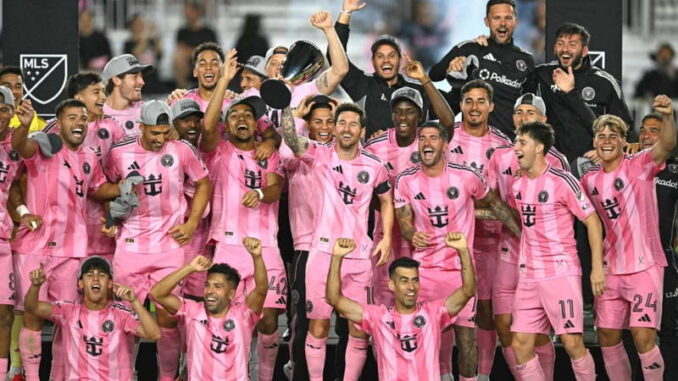 >
>
Miami’s route wasn’t straightforward. New York got a goal, the score being 2-1 at one point. Before Segovia and Allende added to the score.
It’s tempting to credit Messi entirely. However, let’s examine the supporting cast. Allende’s hat-trick signals the emergence of a player stepping up. Silvetti and Segovia chipping in suggests a team benefiting from Messi’s gravitational pull, yes, but also capable of capitalizing on the opportunities he creates. The contributions from Rodrigo De Paul and Jordi Alba also play their roles.
Look at the goals, too. Silvetti’s strike involved a build-up with De Paul, Alba, and Messi. This points to a cohesive attacking strategy, not just individual brilliance. Miami appears to be crafting a system where Messi enhances, but doesn’t solely dictate, the team’s success.>
Their opponent in the final, the Vancouver Whitecaps, present an intriguing challenge. Vancouver previously dominated Miami in the CONCACAF Champions Cup, achieving a 5-1 aggregate victory. This earlier defeat serves as a stark reminder that Miami isn’t invincible. The Whitecaps’ earlier win over San Diego to secure the Western Conference title also makes this an interesting encounter.
It’s worth noting the timing of Miami’s turnaround. Did Messi’s arrival simply flick a switch? Or did it accelerate a process already underway? My experience suggests it’s usually a combination of both. Talented players often need the right environment to flourish.
There’s no denying the “Messi effect” boosts ticket sales, viewership, and overall league buzz. This heightened attention benefits all MLS teams. But for Miami to truly cement a legacy, they need to demonstrate sustained success beyond the current season.
Can they maintain this level of performance? Can they adapt when opponents inevitably devise strategies to contain Messi? These are the questions that will determine if this Inter Miami run is a fleeting moment or the start of a dynasty.
Consider the broader implications for MLS. Miami’s success, driven by a mix of superstar power and strategic team construction, could become a blueprint for other teams. We might see more clubs investing in both marquee signings and developing a robust supporting cast.
The Vancouver final will be telling. Will Miami avenge their earlier defeat? Or will Vancouver expose vulnerabilities in Miami’s system? The outcome will reveal much about Miami’s resilience and tactical adaptability. It will also be a good test to see if the so-called “Messi effect” can carry them through a difficult challenge, or if other players will step up to deliver victory.
This challenge – building a truly competitive team around a global icon – is a test for Miami’s management. They need to keep attracting talent, developing youth players, and fostering a winning culture. It’s a long game, and Messi’s presence, while invaluable, is only one piece of the puzzle. So far, the signs are encouraging, but the real test lies ahead. It’s more than just Messi. It’s about building something sustainable.


![[post_title]](https://samony.com.ng/wp-content/uploads/2025/11/1764503209_Girl-14-gives-birth-at-home-and-dumps-dead-baby-300x158.jpg?lm=692C2EAC "Unraveling Teen Pregnancy and Infanticide: A Call for Systemic Solutions, Not Just Outrage")
![[post_title]](https://samony.com.ng/wp-content/uploads/2025/11/Natasha-threatens-Senator-Osita-Ngwu-over-deleted-WhatsApp-comments-300x169.jpeg?lm=692C2EE8 "Decoding Senatorial Spats: Power, Perception, and the Perils of Public Feuds")
![[post_title]](https://samony.com.ng/wp-content/uploads/2025/11/1764503327_MTV-to-shut-down-international-music-channels-300x186.png?lm=692C2F22 "MTV International Music Channels Shut Down: End of an Era for Linear Music TV?")

![[post_title]](https://samony.com.ng/wp-content/uploads/2025/11/Nigerian-Stocks-lose-N65-trillion-in-November-worst-monthly-loss-300x185.jpg?lm=692C2A03 "Nigerian Stocks Just Had a Rough November: Here’s What’s Really Going On")


![[post_title]](https://samony.com.ng/wp-content/uploads/2025/11/1764503209_Girl-14-gives-birth-at-home-and-dumps-dead-baby-1024x538.jpg?lm=692C2EAC "Unraveling Teen Pregnancy and Infanticide: A Call for Systemic Solutions, Not Just Outrage")
