![[post_title]](https://samony.com.ng/wp-content/uploads/2025/11/1764166741_The-Frame-art-TV-comparison-Samsung-vs-Hisense-vs-TCL-1024x532.jpg?lm=69270C56)
Art TVs Compared: Samsung Frame vs. Hisense CanvasTV vs. TCL Nxtvision – Are They Worth It?
Art TVs are having a moment. Samsung kicked things off with the Frame, pitching a TV that disappears into your décor. Now, Hisense and TCL compete for a slice of that market. But are these “art TVs” genuinely good TVs, or are you paying a premium for aesthetics? I spent some time living with the Samsung Frame (both the standard and Pro versions), the Hisense CanvasTV, and the TCL Nxtvision to figure out what’s what.
Right off the bat, understand this: an art TV prioritizes looks over raw performance. You won’t get the same brightness or color accuracy as a similarly priced “regular” TV. The picture quality? Middle-of-the-road. Black levels? Not great, even for an LCD. Yet, people still buy them. Why? Because a large, black rectangle dominates a room when switched off. Turning that into a framed piece of art? That’s a different story; it becomes a focal point, a conversation starter. >
>
Samsung’s Frame essentially invented this category. Up until recently, it was the only real option. Now, we have alternatives. The core concept remains: an edge-lit, matte-screen TV designed to spend most of its life displaying art. Let’s delve into how they stack up, not just as TVs, but as art pieces.
What Makes an Art TV an Art TV?
Several things separate an art TV from a standard display. Edge lighting is key. Instead of a full array of LEDs behind the screen, the LEDs sit around the perimeter. That allows for a slimmer profile, letting the TV hug the wall and appear more like a framed picture. Plus, it is more energy-efficient.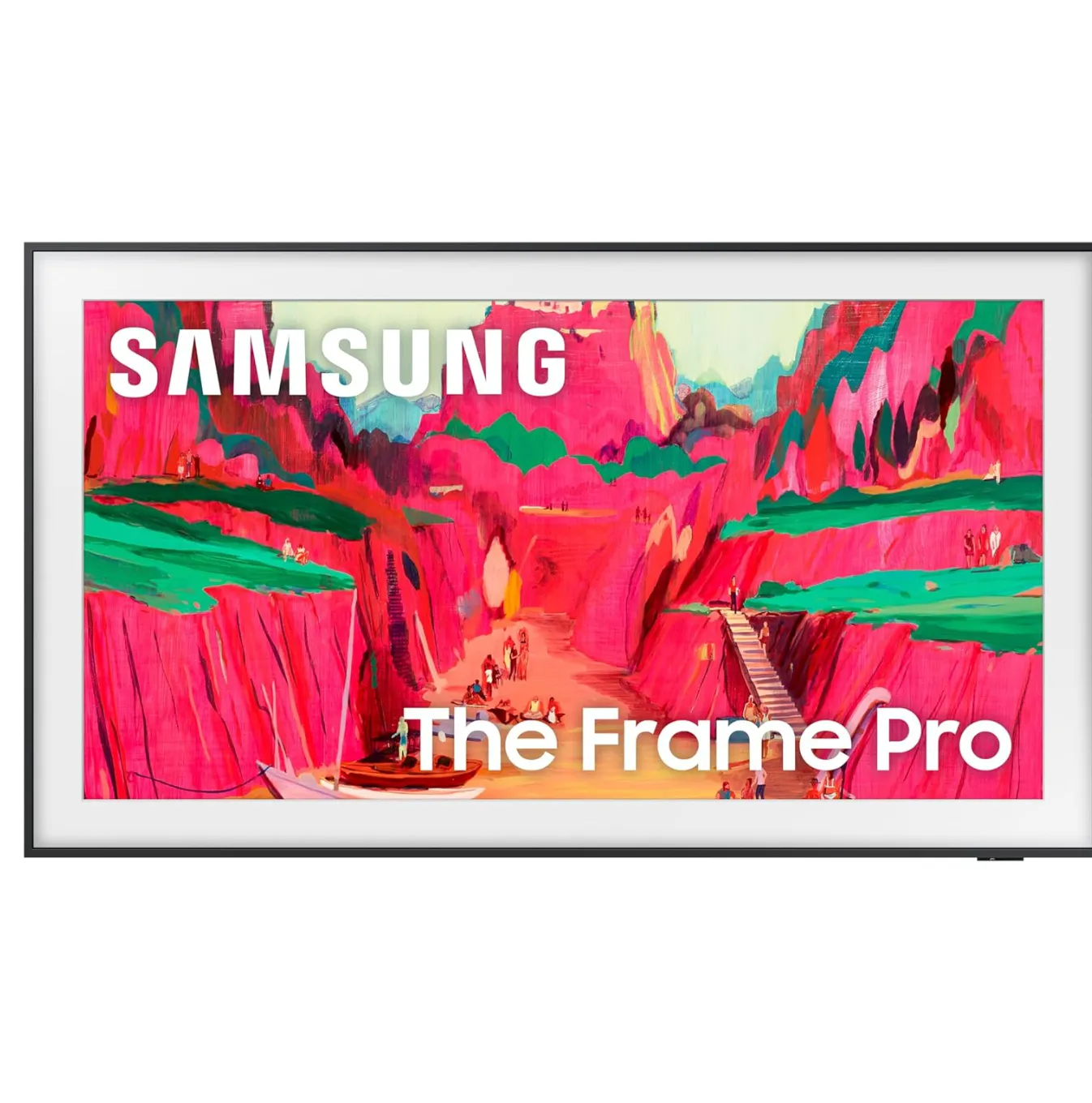 >
>
Then comes the matte finish. Glossy screens on regular TVs reflect everything – lamps, windows, you name it. This causes distracting glare. A matte screen diffuses light, minimizing reflections and lending the TV a canvas-like appearance.
These TVs are designed to be flush-mounted, cables hidden for a seamless look. They generally include wall mounts designed for this purpose. That brings us to an annoying part of this process.
Cable Conundrums and Installation Quirks
Hiding cables proves essential. A dangling power cord ruins the illusion of a framed artwork. For the Hisense and TCL, hiding HDMI cables from connected devices becomes another factor.
Samsung attempts to address this differently. The standard Frame uses an external “One Connect Box” for all connections, linked to the TV via a single, thin cable. It is better than a power cord, but still requires some management. The Frame Pro attempts a wireless “Connect Box.” This sounds ideal, but introduces its own problems. It still needs a power cable, and this one is even thicker than the One Connect cable! It also has to stay within 10 meters of the TV, away from metal objects, for optimal performance. Some users have also reported connectivity issues. Gamers, beware: The wireless connection adds noticeable latency, making it unsuitable for anything beyond casual gaming unless you use the Micro HDMI port (defeating the purpose of wireless connectivity).
In this respect, the basic Samsung Frame makes the most sense. Wireless is not always better.
The Bezel Battle: To Frame or Not To Frame
Magnetic bezels designed to look like picture frames add to the artistic effect. Hisense and TCL include them; Samsung sells them separately. Installation is straightforward, instantly elevating the appearance.
While the bezels are welcome, don’t expect to fool anyone completely. A closer look reveals the TV underneath. Third-party options from companies like Deco TV Frames or Etsy offer even more elaborate designs, though at a premium. The fact that Samsung, which started this trend, does not include even a basic bezel feels like a calculated upsell.
Art Quality: A Matter of Subtlety
When displaying art, the Samsung Frame and Frame Pro look more believable. Their matte screens minimize reflections and make the artwork pop. The Frame Pro gets brighter, which enhances the art in bright rooms. However, this becomes a liability in dim environments. The art appears too bright, destroying the illusion. The ambient light sensor can’t dim it enough. The other TVs, being dimmer, avoid this issue.
Both Samsung models offer a small selection of free art. Accessing a library of over 3,000 pieces requires a $50/year subscription to the Samsung Art Store. You could source images yourself and load them via USB, but you miss out on curated collections.
Hisense provides over 1,000 pre-loaded artworks, including famous pieces. Impressively, the art looks just as detailed as Samsung’s offerings.
The TCL Nxtvision falters here. Art image quality is inconsistent. Some look sharp, others appear blurry or unevenly lit.
How Well Do These “Art TVs” Function as Actual TVs?
The very features that enhance their appeal as art pieces diminish their performance as TVs. Edge lighting limits backlight control, resulting in poor black levels and noticeable “blooming” around bright objects. Black bars in movies appear gray. Black uniformity suffers. The matte coating exacerbates these issues, especially in ambient light. Shadow detail gets lost in darker scenes.
Brightness is also a concern. The Frame Pro is the brightest, exceeding 1,000 nits (and 800 in Filmmaker Mode). It doesn’t quite deliver the specular highlights of other TVs in this price range, and, as mentioned, its brightness hinders its art mode. The other models are dimmer: 661 nits for the Frame, 527 for the Hisense, and a mere 441 for the TCL. This limits their impact in brightly lit rooms.
Color accuracy follows suit. The Frame Pro, in Filmmaker Mode, delivers the most accurate colors. The Frame’s colors look muted, while the Hisense and TCL struggle with blues, yellows, oranges, and browns.
Smart Features and Gaming
Hisense and TCL run Google OS, an intuitive and responsive platform. Samsung’s Tizen OS, on the other hand, feels clunky and comes with annoying default settings.
For gaming, the Hisense and TCL support variable refresh rates up to 144Hz, with FreeSync and G-Sync compatibility. The Frame supports up to 120Hz on larger sizes. However, the Frame Pro’s wireless connection introduces lag.
The Verdict: Art or Artifice?
Art TVs represent a trade-off. They succeed to varying degrees in displaying art, but compromise on picture quality. But for many buyers, that’s okay. What matters most is the ability to blend into the décor.
For those prioritizing aesthetics, the Samsung Frame and Hisense CanvasTV stand out. The TCL lags behind in both art and TV performance. The Frame Pro, while brighter, suffers from its finicky wireless connection. The original Frame provides a better balance. If you don’t want to pay for the Samsung name (and the extra costs of bezels and an Art Store subscription), the Hisense CanvasTV is a compelling alternative.
Ultimately, deciding on the right “art TV” hinges on your priorities. Do you value pure picture performance, or are you willing to sacrifice some fidelity for a display that enhances your living space even when it’s switched off? Consider carefully before you commit.




![[post_title]](https://samony.com.ng/wp-content/uploads/2025/12/1764867688_Gen-Z-admit-to-overthinking-in-winter-as-half-use-300x158.png?lm=6931BE6C "Gen Z’s Winter Overthinking: Tech Dependence vs. Grounding Solutions")
![[post_title]](https://samony.com.ng/wp-content/uploads/2025/12/Iran-Sends-Delegation-To-World-Cup-Draw-After-Threats-To.jpg?lm=6931BEBA "Navigating Geopolitics: Lessons from Iran’s World Cup Dance and the Ever-Present Data Game")
![[post_title]](https://samony.com.ng/wp-content/uploads/2025/12/1764867072_Lego-announces-NASA-Artemis-SLS-rocket-set-to-lift-off-300x169.jpg?lm=6931BC04 "LEGO’s Artemis: More Than a Toy, a Gateway to STEM Engagement?")

![[post_title]](https://samony.com.ng/wp-content/uploads/2025/12/1764869561_Wizkid-Set-to-Host-GOAT-Concert-in-Lagos-This-December.jpeg?lm=6931C5BB "Wizkid’s Lagos Show: True Homecoming or Calculated Move?")