


Huawei has launched its Nova 15 series in China, marking a significant strategic move in the competitive mid-range smartphone market. The new lineup, comprising the Nova 15, 15 Pro, and 15 Ultra, integrates features traditionally reserved for flagship devices, such as advanced imaging capabilities and satellite communication. This approach signals Huawei’s intent to elevate the mid-tier experience for a younger, design-conscious demographic.
At the forefront of these innovations is the camera system, particularly on the Nova 15 Ultra. This premium model introduces a variable aperture lens, ranging from f/1.4 to f/4.0, a technology previously seen in Huawei’s high-end Pura and Mate series. Coupled with a 100x digital zoom and a periscope lens offering 3.7x optical magnification, the Ultra aims to redefine photographic versatility within its segment. The Pro model also features a 3x optical zoom telephoto lens, while all models benefit from a 1.5MP multispectral “Red Maple” true-color lens designed to enhance skin tones and color accuracy in varied lighting conditions.
Display technology across the series also receives substantial upgrades. The Nova 15 Pro and Ultra models are equipped with expansive 6.84-inch LTPO OLED panels, boasting an exceptional peak brightness of 4000 nits. This ensures superior legibility even under direct sunlight, providing a vivid and immersive visual experience. The standard Nova 15 features a flat 6.7-inch OLED display, catering to users who prefer a traditional screen for activities like gaming.
Design remains a core focus for the Nova 15 series, which maintains an impressively slim profile. The Nova 15 Pro, for example, measures a mere 6.9mm in thickness, distinguishing it in a market often characterized by bulkier devices. Available in a consistent palette of Green, Purple, White, and Black, the Ultra variant elevates its premium feel with Xuanwu hardened Kunlun Glass, particularly on its 1TB storage option, enhancing durability and aesthetic appeal.
Underpinning the series’ performance are Huawei’s proprietary Kirin chipsets. The Nova 15 operates on the Kirin 8020, while the Pro and Ultra models utilize the more powerful Kirin 9010S/9020S, ensuring robust processing capabilities. The devices run on HarmonyOS 6, which integrates enhanced “Xiaoyi” AI tools for streamlined user interactions, including single-tap check-ins and advanced AI call noise reduction, effectively minimizing environmental distractions during conversations.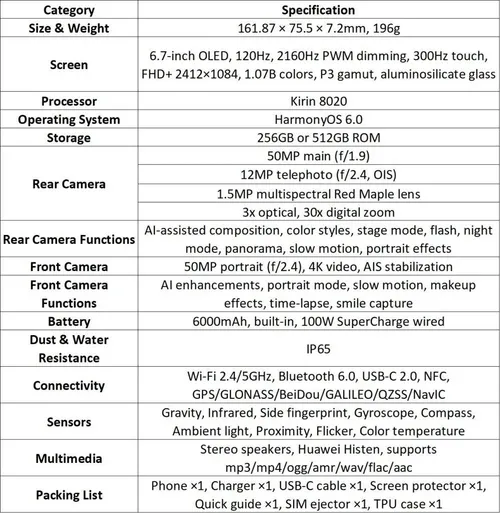
Battery endurance and charging speed are also key highlights. The Nova 15 series incorporates large silicon-based batteries, ranging from 6000mAh to 6500mAh, designed for extended usage. These cells support 100W Super Fast Charge Turbo, allowing for rapid power replenishment. The Nova 15 Ultra further offers the convenience of 50W wireless charging, catering to users seeking flexible power solutions.
Huawei continues to expand its satellite communication offerings, providing a crucial safety feature. The Nova 15 Ultra supports full Tiantong satellite calling, enabling voice communication in areas without cellular coverage. Even the Nova 15 and 15 Pro models include Beidou satellite messaging capabilities, offering a vital lifeline for emergency situations or connectivity in remote locations, underscoring Huawei’s commitment to comprehensive connectivity solutions.
Positioned competitively, the Nova 15 series starts at approximately 2,699 yuan (around $383 USD) in China. This pricing strategy reflects Huawei’s ambition to bridge the gap between lifestyle-oriented smartphones and high-performance flagships. The Nova 15 Ultra stands out for users prioritizing advanced camera technology and a premium slim design, while the base Nova 15 offers compelling value for those seeking core features without the ultra-premium additions.







