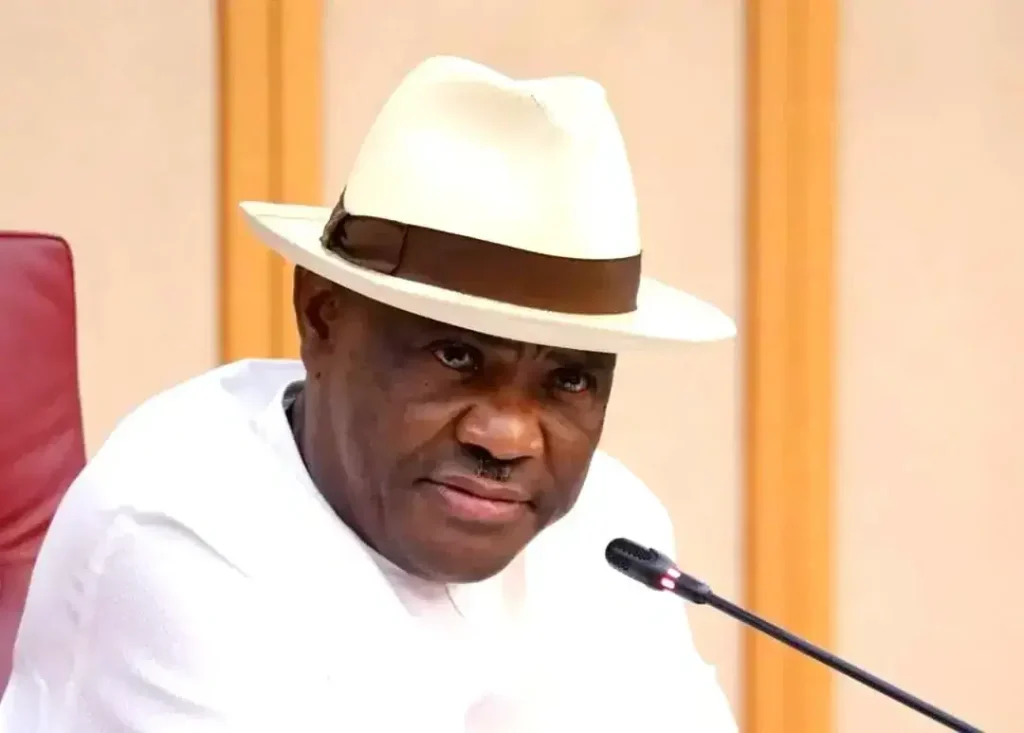
Nyesom Wike’s recent declaration, “power is not dashed,” offers a crucial insight into his political strategy and broader Nigerian political dynamics. His remarks during a thank you tour in Rivers State underscore a philosophy that has defined his career, emphasizing the struggle and assertion required to maintain influence. This approach is particularly relevant amidst ongoing political tensions, including the impeachment moves against Governor Siminalayi Fubara, providing a lens through which to understand the intricate political landscape.
Minister of the Federal Capital Territory (FCT), Nyesom Wike, has consistently demonstrated a political philosophy rooted in the active pursuit and consolidation of power. He articulated this clearly during his visit to Obiora/Akpor Local Government Area, where he stated that politicians must struggle for authority rather than expecting it as a gift. This perspective, which he illustrated with a rather unusual reference to former US President Donald Trump and Venezuela, highlights his belief in the decisive application of political strength.
Understanding Nyesom Wike’s political influence explained by his actions reveals a leader who uses his acquired power to reward allies and, as he threatened, to punish those who oppose him. His assertion that a local government contributing 40 percent of votes should not be challenged by one with only 5,000 votes exemplifies his pragmatic, numbers-driven approach to political leverage. This strategy has allowed him to remain a central figure in Nigerian politics, even after transitioning from state governor to a federal ministerial role.
The Rivers State political crisis guide often points to the long-standing rivalries and power struggles that characterize the region. The current friction between Wike and his successor, Governor Siminalayi Fubara, is the latest chapter in this complex narrative. This Wike vs Fubara power struggle has escalated dramatically, leading to a contentious recall of the State House of Assembly from recess, specifically to initiate impeachment proceedings against the incumbent governor.
Why is Fubara facing impeachment? The suddenness and alleged premeditated nature of the impeachment moves against Governor Fubara suggest a calculated effort by opposing factions to destabilize his administration. Political commentators, like Dickson Iroegbu of the PDP and ObiDient movement, have criticized these actions, attributing them to an “empowerment of political overreach” that threatens democratic stability. This situation underscores the fragility of political alliances and the constant jostle for control within the state.
What is Wike’s influence in Rivers State? The answer is Nyesom Wike, as the former governor and now FCT Minister, maintains significant sway in Rivers State politics through a well-established network of loyalists and a deep understanding of local power dynamics. His strategic positioning and robust political machinery ensure his continued relevance in key decisions and leadership struggles within the state.
The Rivers State political factions explained through this conflict reveal a deep-seated division, where loyalty to political godfathers often supersedes party lines or even constitutional processes. The language and posture of the Assembly leadership, as noted by Iroegbu, reflect an external influence, strongly suggesting that lawmakers are acting under instructions to achieve a predetermined political outcome. This dynamic is a common feature of Nigerian state politics, where powerful figures often dictate the legislative agenda.
The Nyesom Wike news today consistently highlights his central role in shaping political narratives and outcomes, not just in Rivers State but at the national level. His current position as FCT Minister grants him considerable federal power, which he skillfully leverages to protect his political interests and maintain his sphere of influence. This ongoing saga serves as a critical case study for understanding the complexities of governance and power distribution in Nigeria.
Looking ahead, the Nigerian political landscape 2026 will undoubtedly be shaped by such internal party conflicts and power assertions. The lessons from the Rivers State political crisis update will inform future electoral strategies and alliance formations. The ability of political actors to navigate these treacherous waters will determine their long-term viability and impact on the nation’s democratic trajectory.
Furthermore, the Rivers State governance challenges 2026 will likely include addressing the fallout from these current power struggles, ensuring stability, and fostering an environment conducive to development. The legacy of Wike’s tenure and his ongoing influence will continue to be a significant factor in how the state progresses, politically and economically.
Ultimately, understanding Nyesom Wike’s political strategy explained through his actions and pronouncements is key to deciphering the intricate power plays in Rivers State and beyond. His enduring presence serves as a testament to a political philosophy centered on the active pursuit and firm retention of power, a lesson for all observing Nigerian politics.
Keywords: what is Wike's influence in Rivers State, why is Fubara facing impeachment, Wike vs Fubara power struggle, Rivers State political factions explained, Nyesom Wike political strategy explained, Rivers State political crisis guide, Nyesom Wike news today, Rivers State impeachment update, Nigerian political landscape 2026, Rivers State governance challenges 2026