A recent viral post on X has brought renewed attention to the often misunderstood and strict marriage practices within the Jehovah’s Witness community. Many are asking, how do Jehovah’s Witnesses view divorce, especially in light of claims that infidelity is the sole permissible ground for ending a marriage. This revelation, shared by a Nigerian social media user, sparked widespread debate, highlighting the unique challenges faced by members when marital issues arise. The discussion underscores a deeply held religious doctrine that dictates the dissolution of marriage with unwavering adherence to specific scriptural interpretations.
For Jehovah’s Witnesses, marriage is a sacred covenant, viewed as a gift from God and a lifelong commitment. Their understanding of divorce stems directly from their interpretation of the Bible, particularly the teachings of Jesus Christ. They believe that marriage is meant to be a permanent union between one man and one woman, with both partners working to uphold its sanctity. This foundational belief shapes every aspect of their marital guidance and disciplinary actions regarding separation.
The answer is, Jehovah’s Witnesses adhere to a strict biblical interpretation. They believe the only scriptural ground for divorce permitting remarriage is sexual immorality (‘porneia’). Other issues, such as abuse or irreconcilable differences, are not considered valid reasons for dissolving the marriage bond in God’s eyes.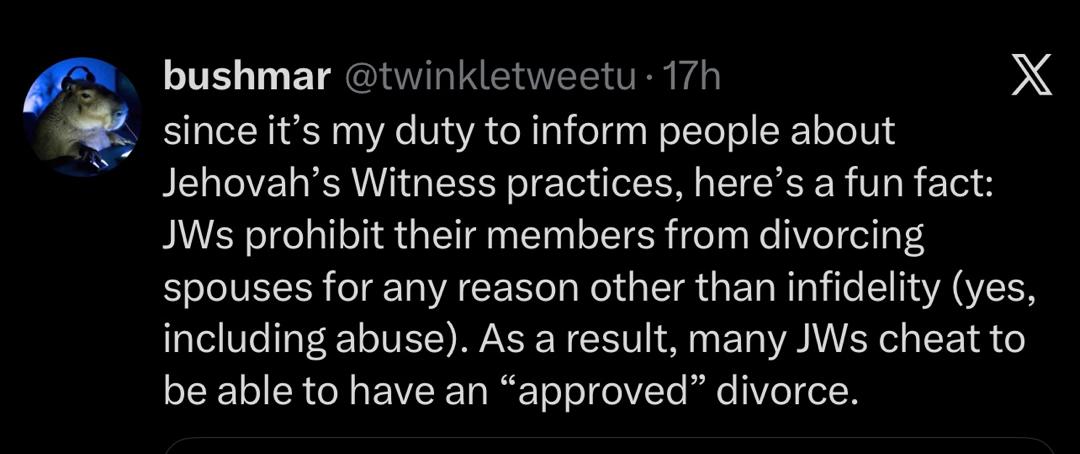
This singular focus on “porneia” as the only basis for a scriptural divorce is a cornerstone of Jehovah’s Witness doctrine. It implies that if a spouse commits adultery, the innocent mate has the biblical right to divorce and is then free to remarry. However, if divorce occurs for any other reason, such as emotional neglect, financial irresponsibility, or even physical abuse, the individuals are not considered scripturally free to remarry by the congregation, even if legally divorced by the state. This often leads to complex personal dilemmas for adherents.
The strictness of these rules has, predictably, led to significant challenges and sparked considerable Jehovah’s Witness divorce controversy. The X user’s claim that some members resort to deliberate infidelity to gain an “approved” divorce highlights the extreme pressures individuals might face within the system. While such actions would be deeply condemned by the organization, the very existence of such a rumor speaks volumes about the perceived rigidity of the rules and the desperation some might feel when trapped in an unhappy or abusive marriage with no scriptural exit.
When examining Jehovah’s Witness vs Christian divorce practices more broadly, significant differences emerge. While many Christian denominations also uphold the sanctity of marriage, their interpretations of divorce grounds can vary widely. Some Protestant churches may allow for divorce in cases of desertion or abuse, in addition to infidelity, and permit remarriage under certain circumstances. The Jehovah’s Witness stance, however, remains notably narrower, offering less flexibility and putting greater emphasis on enduring the marriage unless the specific condition of sexual immorality is met.
To fully grasp the implications, it’s crucial that Jehovah’s Witness marriage rules explained are understood within their theological context. Marriage is seen as a reflection of Christ’s relationship with the congregation, requiring self-sacrificing love, patience, and forgiveness. Couples are encouraged to attend meetings, study the Bible together, and apply scriptural principles to resolve conflicts. The emphasis is always on reconciliation and preserving the union, with divorce being a last resort and only permissible under the gravest of scriptural violations.
The congregation provides various forms of support for married couples, including counsel from elders and practical advice based on Bible principles. However, if a member divorces for non-scriptural reasons and remarries, they may face disciplinary action, including being disfellowshipped (excommunicated) or marked, which impacts their standing within the community. This adds another layer of social and spiritual pressure to remain in a marriage, even when it is deeply troubled.
In an era where societal norms around marriage and divorce are constantly evolving, a Jehovah’s Witness marriage update on their internal guidelines is unlikely to show significant shifts. The organization holds fast to its traditional interpretations, often placing it at odds with modern legal and social frameworks. This steadfastness, while admirable to some for its commitment to principle, can be a source of criticism for others who view it as inflexible and potentially harmful in situations involving domestic abuse or severe marital dysfunction.
For individuals navigating marital difficulties within the faith, seeking a comprehensive Jehovah’s Witness divorce guide can be challenging, as the emphasis is overwhelmingly on preservation rather than dissolution. Resources typically focus on strengthening the marriage through biblical counsel, rather than outlining pathways to divorce. This means that members in distress often rely heavily on the guidance of local elders, who are tasked with interpreting and applying the strict scriptural directives to individual cases, offering support within the confines of established doctrine.
Looking ahead, those seeking the best Jehovah’s Witness marriage advice 2026 will likely find that core principles remain unchanged. The enduring guidance will continue to emphasize communication, mutual respect, love, and adherence to biblical standards. While the world around them may shift, the fundamental approach to marriage as a sacred, lifelong bond, with specific, narrow grounds for scriptural divorce, is expected to persist as a defining characteristic of the faith’s teachings.
Ultimately, the question of how do Jehovah’s Witnesses view divorce reveals a deeply ingrained theological perspective that prioritizes scriptural fidelity above all else. While this strict adherence aims to uphold the sanctity of marriage as ordained by God, it also creates unique and often difficult challenges for individuals within the faith. The ongoing discussions, sparked by viral social media posts and personal testimonies, continue to shed light on the complex interplay between religious doctrine, personal well-being, and the enduring quest for understanding within the Jehovah’s Witness community.