


Military officers in Guinea-Bissau announced they had seized control of the West African nation last Wednesday, citing a plot to destabilize the country with the alleged backing of a prominent drug baron. This event has ignited widespread skepticism among analysts and political figures, raising questions about the authenticity of the takeover. Gunfire was heard near the presidential palace, and President Umaro Sissoco Embaló was reportedly detained, with soldiers addressing the nation on state television. However, these developments have been met with considerable doubt, with prominent international figures suggesting the president himself may have orchestrated the events.
The military insists it has taken charge but rejects the label of a “coup,” instead framing their actions as a necessary intervention to thwart a clandestine political agenda. They claim to have uncovered a plan by unnamed politicians, supported by a “well-known drug baron,” to undermine Guinea-Bissau’s stability. The country has long been recognized as a significant transit point for illicit drugs, a reality that adds a complex layer to the unfolding events and the military’s justification for intervention.
This alleged takeover followed closely on the heels of a presidential election held just three days prior, in which President Embaló was seeking a second term. His main challenger, Fernando Dias da Costa, was supported by former Prime Minister Domingos Pereira, who was disqualified from the race due to late submission of his candidacy papers. The election results were scheduled for release the day after the military’s announcement, adding a further element of timing and potential motive to the unfolding crisis.
On the day of the reported takeover, President Embaló informed a French news outlet that he had been arrested by uniformed men within the presidential palace. Subsequently, military officials appeared on state television to declare their deposition of the president, asserting their objective was to prevent national destabilization. The electoral process was suspended, and the planned release of poll results was blocked. Embaló also briefly communicated to France 24, stating, “I have been deposed.”
Skepticism surrounding the military’s narrative is pronounced, with the opposition, civil society groups, and politicians from neighboring West African countries questioning the official account. President Embaló’s swift departure from Guinea-Bissau on a Senegalese military flight, accompanied by his family and luggage, has been cited as a particularly suspicious detail. Observers point out that deposed leaders in recent African coups have not typically been allowed to leave their countries so readily, fueling speculation that the event was not a genuine seizure of power.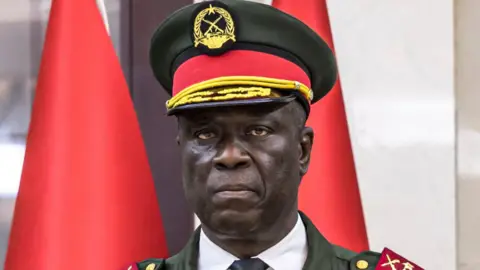
Further fueling the doubts is the appointment of General Horta N’Tam as the new military leader, a figure reportedly close to President Embaló. Critics have long accused Embaló of fabricating coup attempts to suppress dissent, allegations he has consistently denied. His past actions, including the dissolution of parliament following a reported coup plot, have led some to believe he might orchestrate events to prevent unfavorable election outcomes from being published.
Political analysts suggest that while an independent military intervention to resolve a potential political stalemate is plausible, the president’s history of dissolving parliament and postponing elections lends credence to theories of a staged event. The timing of the military’s intervention, just before election results were due, has intensified these suspicions, with some suggesting it was a move to preemptively nullify any outcome unfavorable to the incumbent.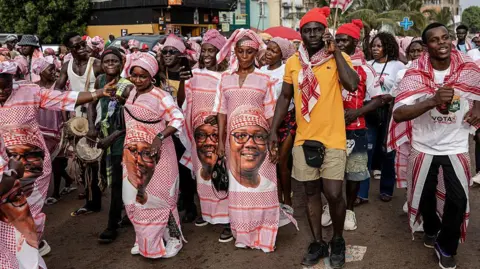
Analysts also acknowledge that significant tensions within the political elite, coupled with the disqualification of a key presidential candidate, could have genuinely contributed to a military intervention. However, the lack of a clear, forceful detention of the president and the subsequent ease with which he departed the country remain points of contention. The involvement of the drug trade, as alleged by the military, remains a significant concern given Guinea-Bissau’s notorious reputation as a transit hub for narcotics.
General N’Tam has been sworn in as interim president, slated to serve a one-year transition period, and has appointed a new cabinet. President Embaló has since traveled to Congo-Brazzaville, reportedly displeased by the Senegalese Prime Minister’s description of the event as a “sham.” Meanwhile, Fernando Dias da Costa, who claims to have evaded arrest, has been granted asylum in Nigeria. Protests have erupted in the capital, with demonstrators demanding the release of Domingos Pereira and the publication of election results, highlighting the deep divisions and uncertainty gripping the nation.



![[post_title]](https://samony.com.ng/wp-content/uploads/2025/12/1765552056_Lady-reflects-on-her-past-says-shes-done-with-multiple-300x150.jpg?lm=693C2FBA "Nigerian Woman Shifts from Multiple Dates to Monogamy at 28")
![[post_title]](https://samony.com.ng/wp-content/uploads/2025/12/As-Your-Servant-Here-We-Welcome-You-With-Our-Whole-300x225.jpeg?lm=693C3005 "Rivers State Governor Fubara Joins APC Amidst Chairman Okocha’s Pledge of Support")
![[post_title]](https://samony.com.ng/wp-content/uploads/2025/12/1765552177_Loose-Womens-Judi-Love-issues-health-warning-as-son-taken-300x158.jpg?lm=693C3032 "Judi Love Issues Health Warning Amid Severe UK Flu Surge")




