

Australia’s ambitious renewable energy push faces a significant environmental test as a proposed wind farm near the Victoria-South Australia border sparks intense debate over the protection of internationally significant wetlands and endangered species. The Kentbruck Green Power Hub, planned for a site adjacent to the Ramsar-listed Long Swamp and national parks, highlights the complex challenge of balancing the nation’s decarbonisation goals with its biodiversity conservation commitments.
ASX-listed HMC Capital is developing the project, which could see up to 105 wind turbines, each towering 270 metres, erected within a pine plantation just hundreds of metres from critical habitats. The fate of the project now rests with Victorian Planning Minister Sonya Kilkenny, whose decision is anticipated to set a crucial precedent for future green energy developments across Australia, particularly concerning their proximity to sensitive ecological areas.
Conservationists, led by Mark Bachmann, founder of Nature Glenelg Trust, have spent over a decade restoring Long Swamp, an 18-kilometre stretch of wetlands granted Ramsar protection in 2018. This site is a vital drought-refuge habitat, teeming with over 90 waterbird species, including the critically endangered Australasian bittern, of which fewer than 2,000 remain globally. Bachmann argues that siting a major development so close to such a crucial ecosystem makes avoiding impact impossible.
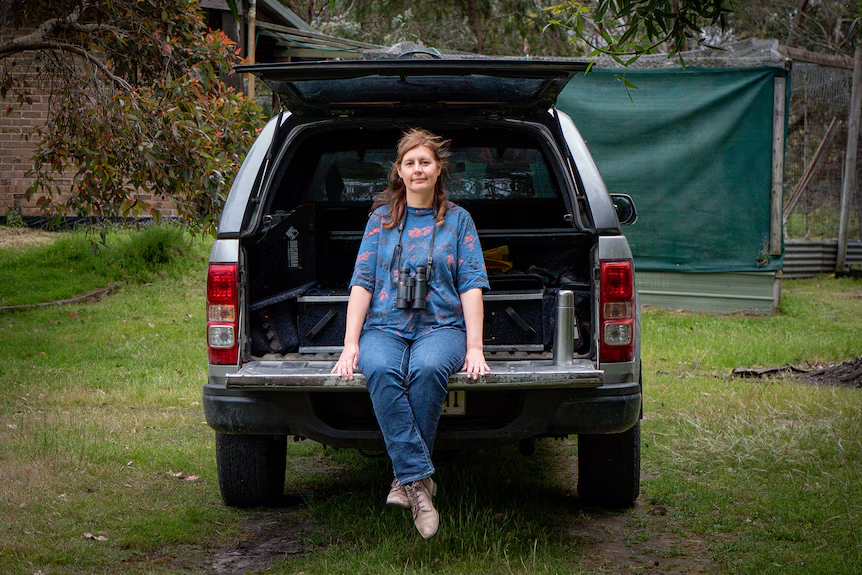
Ecologists, including local resident Cassie Hlava, express profound concerns about the wind farm’s potential impact on the diverse wildlife. Environmental surveys identified 24 endangered species in the area, raising fears of turbine collisions, habitat fragmentation, and disrupted flight paths. The critically endangered orange-bellied parrot, with fewer than 100 individuals left in the wild, and the vulnerable southern bent-wing bat are among the species most at risk, with experts noting that even small losses could be catastrophic for their precarious populations.
Leading conservation scientists advocate for stronger national planning guidelines that include clearly designated “no-go zones” for high biodiversity areas. Professor Brendan Wintle of the University of Melbourne suggests that avoiding just 30 per cent of Australia’s most ecologically important land could protect up to 90 per cent of threatened species habitat while still achieving renewable energy targets. Ornithologists like Eric Woehler and Hugh Possingham recommend substantial buffer zones, ideally 5 kilometres, between turbines and protected sites, and the implementation of detection systems or turbine shutdowns during critical migration periods.
Conversely, HMC Capital asserts its commitment to environmental stewardship, citing five years of rigorous monitoring and design modifications, including the removal of turbines within 500 metres of the wetland and 5 kilometres of bat caves. The company has also pledged $1 million annually for species protection and recovery. Proponents highlight the project’s economic benefits, forecasting 5 per cent of Victoria’s electricity needs, creating 100 local jobs, and providing low-cost renewable energy for the Alcoa Aluminium Smelter in Portland, contributing significantly to the state’s decarbonisation efforts.
The project underscores a broader national challenge: how to rapidly expand renewable energy infrastructure without compromising the very natural environments it aims to protect. While recent federal environmental reforms aim to strengthen protections and streamline approvals, concerns remain about ministerial discretion. The Kentbruck decision will serve as a critical indicator of Australia’s capacity to navigate this delicate balance, ensuring that its green energy future does not come at the irreparable cost of its unique biodiversity.
Local sentiment in Nelson is mixed, with some residents expressing concerns beyond wildlife, such as the increased risk of bushfires in the forestry area, a detail the wind farm developers state they have mitigation methods for. The ongoing debate encapsulates the complex trade-offs inherent in the global transition to a sustainable energy future, demanding innovative solutions and robust regulatory frameworks to safeguard both climate and conservation priorities.







