

Analyzing Leadership Transitions: The Case of Muhammadu Sa’ad Abubakar and the Sokoto Caliphate
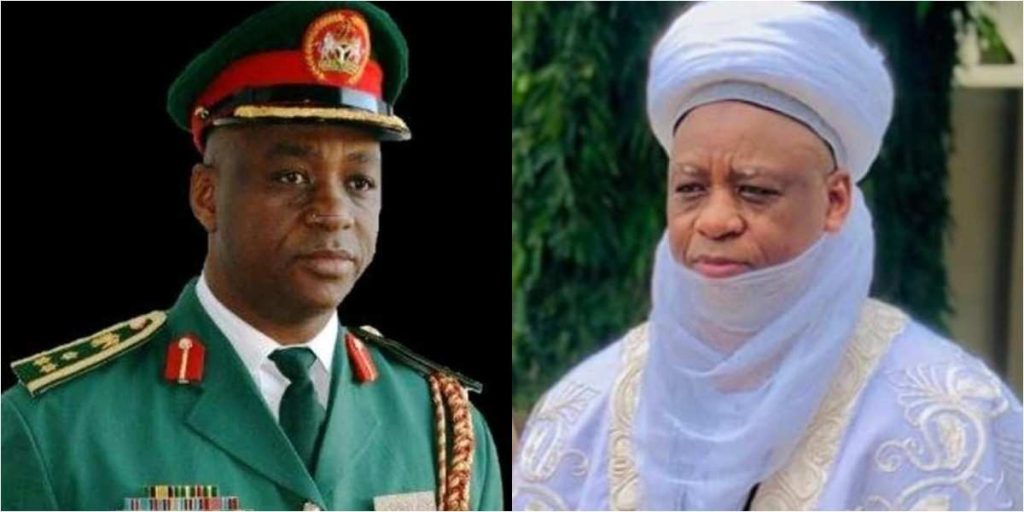
The story of Muhammadu Sa’ad Abubakar, transitioning from a Brigadier General in the Nigerian Army to the 20th Sultan of Sokoto, provides a compelling lens through which to view leadership, tradition, and power in contemporary Nigeria. It’s more than just a biography; it underscores the complex interplay between military service, religious authority, and hereditary succession.
Abubakar’s early life mirrors the trajectory of many Nigerian elites. Born into privilege as the son of the then-Sultan, his education at Sultan’s Ward Primary School and the prestigious Barewa College foreshadowed his future prominence. His subsequent enrollment in the Nigerian Defence Academy provided a path towards a military career, a familiar route for those destined for leadership roles in Nigeria.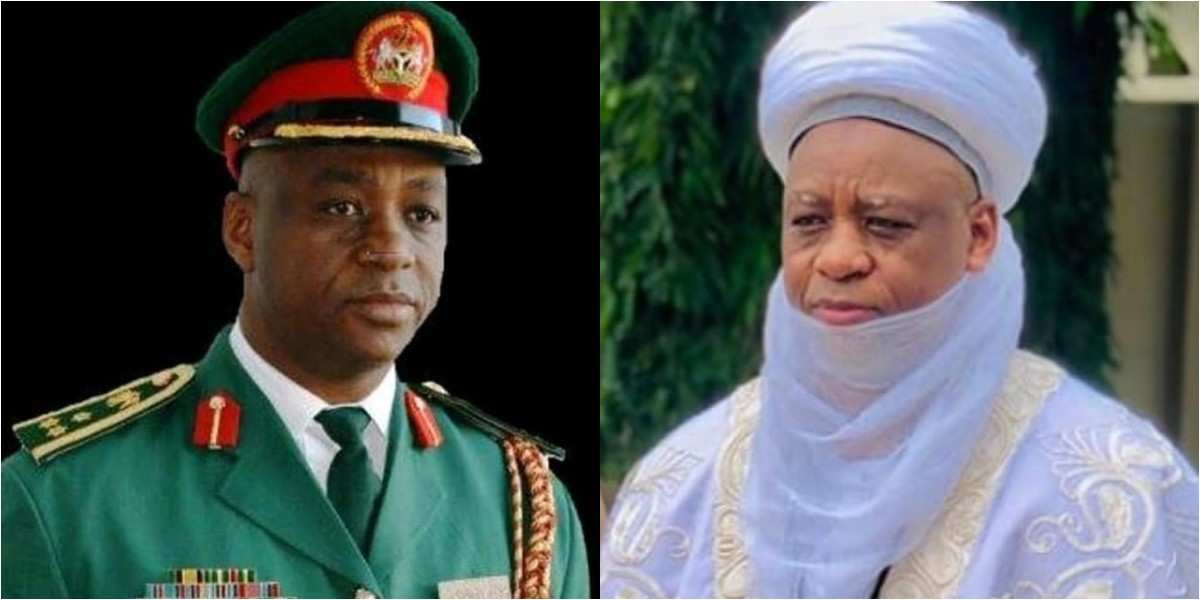 >
>
His military career, spanning over three decades, is noteworthy. Rising to the rank of Brigadier General, Abubakar participated in peacekeeping operations in Chad and commanded a tank battalion during ECOMOG operations in Sierra Leone. The experience he gained as Nigeria’s Defence Attaché to Pakistan offered him valuable international exposure. It’s easy to see how these roles sculpted his leadership style and prepared him, in ways he likely didn’t anticipate, for the Sultanate. The discipline, strategic thinking, and diplomatic skills honed in the military are undeniably assets in navigating the intricate dynamics of religious and traditional leadership.
Yet, it’s his ascension to the Sultanate in 2006 that presents a particularly interesting case study. Following the death of his elder brother, Abubakar retired from military service. Suddenly, he stepped into a role steeped in centuries of tradition and religious significance. This transition wasn’t simply about filling a vacancy; it signified the continuation of a historical legacy, one with deep roots in the socio-political fabric of Northern Nigeria.
The Sultan of Sokoto isn’t just a ceremonial figurehead. He holds significant influence as the spiritual leader of Nigerian Muslims and leads the Qadiriyya Sufi order. He also serves as President-General of the Nigerian Supreme Council for Islamic Affairs (NSCIA). Consequently, his pronouncements and actions carry considerable weight, affecting millions of lives and shaping public discourse. This is where Abubakar’s leadership is most critical. He adeptly blends the gravitas of tradition with the pragmatic approach developed during his military tenure.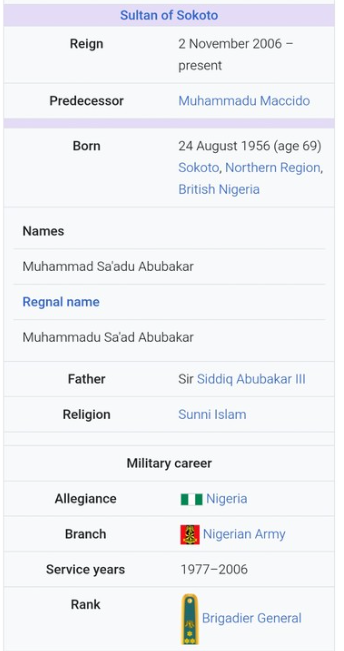 >
>
This challenge – balancing religious authority with contemporary realities – is what makes Abubakar’s reign so intriguing. He must navigate religious sensitivities, mediate disputes, and advocate for the needs of his community within the framework of a modern nation-state. It’s a tightrope walk, and there are no easy answers.
It’s worth noting that the Sultanate itself isn’t immune to criticism. Some question the continued relevance of traditional institutions in a democratic society. Others scrutinize the perceived concentration of power and influence within the Sultanate. These criticisms are not unique to Sokoto; similar debates surround traditional leadership structures in various parts of Africa.
Still, the Sultanate’s enduring influence speaks volumes. It suggests that traditional institutions, when led effectively, can play a vital role in promoting social cohesion, conflict resolution, and community development. Abubakar’s background, bridging the military and religious spheres, provides a unique perspective in this endeavor.
Given these facts, how has Abubakar managed to maintain stability and relevance? He champions education, promotes interfaith dialogue, and advocates for good governance. These efforts position him as a modern leader while simultaneously respecting the traditions of the Sokoto Caliphate. He often speaks out against extremism and violence, advocating for peaceful coexistence and mutual understanding. These are vital messages in a country grappling with religious and ethnic tensions.
The Sultan’s ability to communicate effectively across different audiences is crucial. He engages with government officials, religious leaders, and community members, fostering a sense of inclusion and participation. This inclusive approach helps legitimize his authority and strengthens his position as a unifying figure.
To that end, the enduring legacy of Muhammadu Sa’ad Abubakar hinges on his ability to adapt the Sokoto Caliphate to the demands of the 21st century. It requires a delicate balance of preserving tradition while embracing progress, maintaining religious authority while fostering inclusivity. This is not just a test for Abubakar; it is a test for the relevance of traditional institutions in modern Africa. His successes and failures will inevitably shape the future of the Sokoto Caliphate and influence the broader landscape of religious and political leadership in Nigeria.

![[post_title]](https://samony.com.ng/wp-content/uploads/2025/12/Anthony-Joshua-Makes-Weight-For-Miami-Clash-With-Jake-Paul.jpg?lm=6933F6A2 "Joshua vs. Paul: Boxing’s Future or Just Another Sideshow?")
![[post_title]](https://samony.com.ng/wp-content/uploads/2025/12/1765013220_2Baba-accuses-family-of-destroying-marriage-300x150.jpg?lm=6933F6E7 "2Baba Family Feud: Unpacking Celebrity Relationship Controversies")
![[post_title]](https://samony.com.ng/wp-content/uploads/2025/12/1765013591_World-Cup-2026-live-England-Scotland-and-USA-to-learn-300x193.jpeg?lm=6933F85A "2026 World Cup: Navigating FIFA’s Politics, Logistics, and Legacy")
![[post_title]](https://samony.com.ng/wp-content/uploads/2025/12/OpenAI-beats-Google-Meta-and-Grok-in-all-AI-poker-tournament-300x169.jpg?lm=6933F3D9 "OpenAI’s AI Poker Win: A Glimpse into LLM Strengths and Flaws")
![[post_title]](https://samony.com.ng/wp-content/uploads/2025/12/Ned-Nwoko-Renews-Push-For-Social-Media-Regulation-After-Viral-300x169.jpg?lm=6933DAB6 "Nigeria Debates Social Media Regulation Amid Free Speech Concerns")

![[post_title]](https://samony.com.ng/wp-content/uploads/2025/12/PSG-vs-Rennes-predictions-Champions-to-respond-after-Monaco-defeat-1024x576.jpg?lm=6933FDAB "PSG vs. Rennes: Betting Tips, Analysis & Predictions for Ligue 1 Clash")
