

![[post_title]](https://samony.com.ng/wp-content/uploads/2025/11/1764313735_FCC-Omidiran-others-await-swearing-in-Full-list.jpg?lm=69294A87)
Analyzing the Federal Character Commission Appointments: More Than Meets the Eye?
The recent confirmation of Hon. Ayo Omidiran as the Executive Chairman of the Federal Character Commission (FCC), alongside 37 commissioners, sparks a familiar debate. These appointments, representing all 36 states and the FCT, aim to ensure equitable representation in federal institutions. But, does this process actually deliver on its promise, or is it just another layer of bureaucracy?
On the surface, the thorough screening process – CCB clearances, police reports, DSS vetting – sounds reassuring. The Senate Committee on Federal Character and Inter-Governmental Affairs seems to be doing its due diligence. Yet, something feels a little too… pat. One wonders how many truly qualified individuals might be overlooked in favor of political loyalists.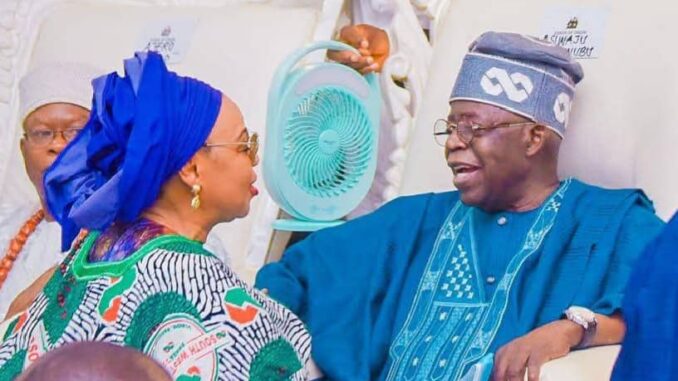 >
>
It’s no secret that these positions often become rewards for political service. The selection process, shrouded in some degree of mystery, leaves room for manipulation. Past experiences have shown that “federal character” can sometimes morph into “federal connection,” benefiting a select few rather than the broader population.
Take, for instance, the geographic spread of appointees. It’s commendable in principle, but does representation guarantee competence? A commissioner from a specific state might not necessarily possess the skills to navigate complex issues related to equitable resource allocation. It’s more than just ticking boxes; it’s about impact. The confirmation of individuals like Peter Ogbonna Eze (Enugu State) and AbdulWasiu Kayode Bawa-Allah (Lagos State), while seemingly routine, underscores the need for closer scrutiny of qualifications and track records.
The task before the new FCC leadership is immense. Nigeria grapples with deep-seated inequalities. Addressing these requires more than just filling quotas. It demands innovative solutions, transparency, and a genuine commitment to fairness. The retention of Mohammed Musa as Secretary of the Commission offers a sense of continuity, perhaps bringing some institutional memory to the new team.>
However, the composition of the FCC also prompts questions about its independence. How can commissioners, potentially beholden to political patrons, objectively assess imbalances and enforce compliance? This challenge necessitates a robust system of checks and balances. Civil society organizations and the media must hold the FCC accountable.
It’s worth noting the Senate President’s call for the appointees to “serve in the interest of the nation.” A well-intentioned statement, to be sure, but one that rings hollow without tangible mechanisms to ensure adherence. What specific metrics will be used to measure the FCC’s success? How will citizens be able to track progress? These questions demand answers.
The inclusion of figures like Hon. Jerry Alagbaoso (Imo) and Hon. Ayo Omidiran, former members of the House of Representatives, raises an important point: experience in governance is beneficial, but isn’t enough. They must demonstrate an unwavering commitment to the principles of federal character, even when it requires challenging the status quo.
Ultimately, the success of the FCC hinges on its ability to transcend political considerations and prioritize meritocracy. We need to see a demonstrable shift in hiring practices, resource allocation, and access to opportunities. Until then, these appointments will remain a symbolic gesture rather than a substantive step towards a more equitable Nigeria.
The FCC’s mandate extends beyond mere representation. It must actively promote inclusive policies that address the root causes of inequality. This requires collaborating with other government agencies, the private sector, and civil society organizations. It also means investing in education, skills development, and entrepreneurship programs that empower marginalized communities.
Frankly, I’ve witnessed similar cycles of appointments and pronouncements before. The rhetoric is familiar, the promises grand. The proof, as always, will be in the pudding. Will this new FCC truly champion fairness and equity, or will it simply perpetuate the existing system? Only time will tell. For now, a healthy dose of skepticism seems warranted.
The FCC’s actions in the coming months will be crucial in shaping public perception. Openly sharing data on its activities and inviting public input can foster trust and accountability. Regular performance reviews, coupled with clear consequences for non-compliance, can help ensure that the FCC remains focused on its core mission.
These appointments, while significant, are just one piece of the puzzle. Building a truly equitable Nigeria requires a multi-faceted approach that addresses systemic issues and promotes inclusive growth. The FCC has a vital role to play, but its success depends on the collective efforts of all stakeholders.

![[post_title]](https://samony.com.ng/wp-content/uploads/2025/11/1764313735_FCC-Omidiran-others-await-swearing-in-Full-list-300x204.jpg?lm=69294A88 "Federal Character Commission Appointments: Fair Representation or Political Patronage?")
![[post_title]](https://samony.com.ng/wp-content/uploads/2025/11/1764314628_Man-Utd-news-Ruben-Amorim-eyes-not-satisfied-transfer-as-300x158.jpg?lm=69294E04 "Manchester United’s Winter Crisis: AFCON Absences, Transfer Targets, and Amorim’s Test")

![[post_title]](https://samony.com.ng/wp-content/uploads/2025/11/Dream-Wedding-Turns-Deadly-Bride-Dies-Just-Hours-After-Saying-300x188.jpeg?lm=69294F02 "Wedding Day Tragedy: Bride’s Sudden Death Sparks Questions")
![[post_title]](https://samony.com.ng/wp-content/uploads/2025/11/1764316806_Most-remarkable-anomaly-yet-on-3IATLAS-journey-to-Earth-could-300x158.jpg?lm=69295688 "Is That Comet an Alien Ship? The Clock’s Ticking on the 3I/ATLAS Mystery.")

![[post_title]](https://samony.com.ng/wp-content/uploads/2025/11/1764312575_Drunk-slobbering-partner-always-wants-kinky-action-when-hes-drunk-1024x538.jpg?lm=69294600 "Drunk Partner, Toxic Friends: Relationship Red Flags and How to Respond")
![[post_title]](https://samony.com.ng/wp-content/uploads/2025/11/5-Signs-That-Your-Ancestors-Are-Angry-At-You.jpeg?lm=692947B5 "Ancestral Influence: Fact or Fiction?")
![[post_title]](https://samony.com.ng/wp-content/uploads/2025/11/1764314628_Man-Utd-news-Ruben-Amorim-eyes-not-satisfied-transfer-as-1024x538.jpg?lm=69294E05 "Manchester United’s Winter Crisis: AFCON Absences, Transfer Targets, and Amorim’s Test")
