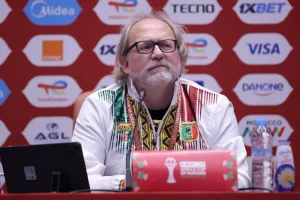
The recent legal action initiated by Aliko Dangote against former NMDPRA chief Farouk Ahmed has brought significant attention to financial accountability in Nigeria. This detailed report will provide a clear perspective on the Farouk Ahmed corruption allegations explained, shedding light on the circumstances that led to this high-profile investigation. The move to transfer the petition from the ICPC to the Economic and Financial Crimes Commission (EFCC) signals a determined push for prosecution, highlighting the gravity of the accusations.
Farouk Ahmed, formerly at the helm of the Midstream Downstream Petroleum Regulatory Authority (NMDPRA), found himself at the center of a swirling controversy following a formal petition by one of Africa’s wealthiest businessmen. The NMDPRA is a crucial body overseeing Nigeria’s petroleum sector, making any allegations of impropriety against its former head particularly concerning. The shift in the investigative body from the Independent Corrupt Practices and Other Related Offences Commission (ICPC) to the EFCC has sparked discussions about the nuances of anti-corruption enforcement in Nigeria. Many wonder about the distinct roles of the EFCC vs ICPC Nigeria and which agency is best equipped for such complex financial crimes.
What are the allegations against Farouk Ahmed? The former chief executive of the NMDPRA, Farouk Ahmed, faces serious allegations of abuse of office and corrupt enrichment, primarily stemming from concerns raised by Aliko Dangote regarding his lavish lifestyle and unexplained wealth, particularly concerning his children’s exorbitant education expenses abroad. These allegations suggest a significant discrepancy between his legitimate income and reported expenditures.
Specifically, Dangote’s petition detailed that Ahmed’s four children attended elite secondary schools in Switzerland, with estimated costs running into millions of dollars. These institutions included Montreux School, Aiglon College, Institut Le Rosey, and La Garenne International School. Each child was reported to have spent six years in these high-end institutions, with annual tuition, travel, and upkeep alone estimated at $200,000 per child, accumulating to approximately $5 million for their secondary education. Further claims indicated an additional $2 million spent on their tertiary education, including a $210,000 Harvard MBA program for one child in 2025.
The businessman, through his legal counsel, articulated that these expenditures raised serious questions about potential conflicts of interest and the overall integrity of regulatory oversight within the downstream petroleum industry. Such financial dealings, he argued, are far beyond what could be legitimately afforded by a public servant in Nigeria, particularly given the economic realities faced by many citizens, including those in Ahmed’s home state of Sokoto. The stark contrast between these costs and the struggles of ordinary Nigerians to afford basic education fees underscores the societal impact of alleged corruption.
Why was Farouk Ahmed investigated by EFCC? The investigation by the EFCC was prompted by a formal petition from Aliko Dangote, which was initially filed with the ICPC but subsequently withdrawn and redirected to the EFCC. This strategic move was reportedly aimed at accelerating the prosecution process, with Dangote’s legal team believing the EFCC is better positioned and equipped to handle financial crimes and corruption-related offenses with dispatch and efficiency. The shift highlights a deliberate effort to ensure a thorough and swift legal process, moving beyond initial inquiries to potential prosecution.
This high-profile case involving Farouk Ahmed NMDPRA vs Dangote is not merely a personal dispute but a critical test of Nigeria’s commitment to transparency and accountability in its vital petroleum sector. It sends a strong message that even those in positions of power are not immune to scrutiny. For those new to understanding such complex issues, the NMDPRA scandal for beginners can be daunting, but at its core, it’s about a wealthy individual challenging the suspected illicit enrichment of a public official responsible for regulating a key national industry.
The implications of this investigation extend beyond the immediate parties, potentially influencing petroleum industry regulation 2026 Nigeria and beyond. A successful prosecution could bolster public confidence in regulatory bodies and discourage future corrupt practices. Conversely, a prolonged or inconclusive process could undermine efforts to combat corruption. The ongoing Farouk Ahmed news update will be keenly watched by Nigerians and international observers alike, eager to see justice served and accountability upheld.
As Nigeria continues its Nigeria anti-corruption efforts 2026, cases like that of Farouk Ahmed serve as crucial benchmarks. They test the resolve of anti-graft agencies and the judicial system to hold powerful individuals accountable. The demand for transparency is growing, and the outcome of this investigation could set a precedent for future governance and public service integrity. It is a stark reminder that public office is a trust, not an opportunity for personal gain.
In conclusion, the detailed examination of the Farouk Ahmed corruption allegations explained reveals a complex web of financial impropriety and a determined effort by Aliko Dangote to ensure justice. The ongoing investigation by the EFCC represents a significant step towards reinforcing ethical governance and combating corruption within Nigeria’s critical sectors. The resolution of this case will undoubtedly shape public perception and future policies regarding accountability for public officials.
Keywords: what are the allegations against Farouk Ahmed, why was Farouk Ahmed investigated by EFCC, EFCC vs ICPC Nigeria, Farouk Ahmed NMDPRA vs Dangote, Farouk Ahmed corruption allegations explained, NMDPRA scandal for beginners, Farouk Ahmed news update, Dangote EFCC petition latest, Nigeria anti-corruption efforts 2026, petroleum industry regulation 2026 Nigeria