


European Union leaders are convening in Brussels for a critical summit, facing a momentous decision on whether to leverage billions of euros in frozen Russian assets to support Ukraine’s ongoing military and economic needs. The bloc is considering a proposal to loan approximately 90 billion euros from Russia’s frozen holdings, which are predominantly managed by the Belgian-based financial institution Euroclear. This potential financial lifeline comes as Ukraine’s resources are projected to dwindle within months without substantial new funding.
Most of Russia’s approximately 210 billion euros in assets held within the EU are managed by Euroclear. However, Belgium and several other member states have expressed reservations, voicing opposition to the direct use of these funds. This stance has created significant hurdles in achieving the unanimous support typically required for such financial decisions. A cautious optimism prevails among some European officials regarding the possibility of an agreement, though concerns about potential repercussions and legal complexities remain.
The summit occurs at a particularly sensitive juncture in the conflict. Recent statements from former US President Donald Trump have suggested that a peace deal is nearing, though Russia has not officially responded to any new proposals. The Kremlin has, however, indicated that a European-led multinational force supported by the US would be unacceptable, underscoring the delicate geopolitical landscape.
European Commission chief Ursula von der Leyen has championed the plan, emphasizing that it would not only bolster Ukraine’s capacity to continue fighting but also increase the financial burden on Russia. The proposed loan represents a significant portion of the estimated €137 billion Ukraine may require through 2026 and 2027. Previously, the EU has only utilized the interest generated by these frozen assets, not the principal sum itself.
Alternative proposals have been floated, including the EU borrowing funds on international markets, a strategy supported by Belgium. However, this would necessitate unanimous consent, a prospect complicated by Hungary’s firm opposition to any further EU financial aid for Ukraine. The urgency of the situation is palpable, with Ukrainian President Volodymyr Zelensky expected to attend the summit to advocate for the crucial support.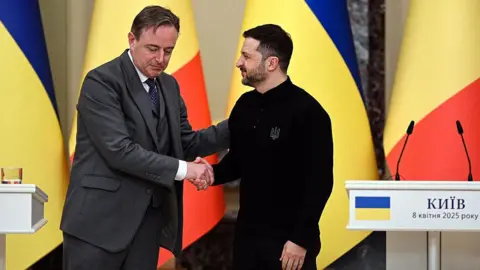
Despite some opposition, EU officials maintain confidence in the legal framework underpinning the use of frozen Russian assets. German Chancellor Friedrich Merz has been a vocal proponent, asserting that the move would send a clear message to Moscow about the futility of continued aggression. Nevertheless, Belgian Prime Minister Bart De Wever and his Defence Minister Theo Francken have voiced strong doubts, warning against the loan from Euroclear.
Hungary, led by Prime Minister Viktor Orban, remains the most significant obstacle, with its delegation reportedly suggesting the plan was removed from the agenda, a claim refuted by the European Commission. Slovakia’s Robert Fico has also expressed reservations, particularly if the funds are earmarked for weapons procurement rather than reconstruction.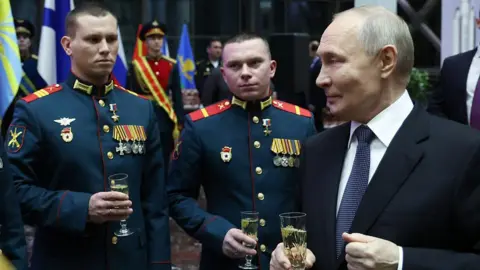
Should the proposal proceed to a vote, it would require a two-thirds majority of member states. European Council President António Costa has assured that no vote will be taken against Belgium’s explicit wishes, emphasizing a commitment to continued dialogue with the Belgian government. This approach acknowledges the potential legal and financial risks associated with the plan, including warnings from ratings agency Fitch and Euroclear’s own chief executive.
Belgium’s concerns are amplified by the potential for legal challenges, with a worst-case scenario involving a court ordering the return of funds to Russia. While some nations have offered financial guarantees, Belgium seeks concrete assurances. EU officials, however, remain optimistic that any repayment would ultimately be tied to Russian reparations to Ukraine, which would then be channeled back to the EU.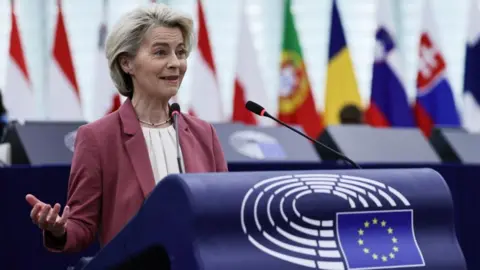
Italy’s Prime Minister Giorgia Meloni has indicated support, contingent on a solid legal basis, warning that a weak legal foundation would hand Russia a significant victory. Other nations, including Malta, Bulgaria, and the Czech Republic, are also reportedly hesitant, highlighting the complex negotiations ahead to secure the necessary support for Ukraine.


![[post_title]](https://samony.com.ng/wp-content/uploads/2025/12/Airtel-Africa-taps-Elon-Musks-Starlink-to-launch-direct-to-cell-service-300x158.png?lm=69434F92 "Airtel Africa, Starlink Partner for Direct-to-Cell Across 14 Markets")


![[post_title]](https://samony.com.ng/wp-content/uploads/2025/12/Senate-throws-weight-behind-state-police-300x147.jpg?lm=69434C10 "Nigerian Senate Backs State Police to Tackle Insecurity")


![[post_title]](https://samony.com.ng/wp-content/uploads/2025/12/1766018679_Florida-teen-undergoes-17-hour-surgery-to-amputate-170-pound-leg-that.png?lm=69434E77 "Florida Teen Undergoes Amputation for Rare 170-Pound Leg")

![[post_title]](https://samony.com.ng/wp-content/uploads/2025/12/Airtel-Africa-taps-Elon-Musks-Starlink-to-launch-direct-to-cell-service-1024x538.png?lm=69434F92 "Airtel Africa, Starlink Partner for Direct-to-Cell Across 14 Markets")
