

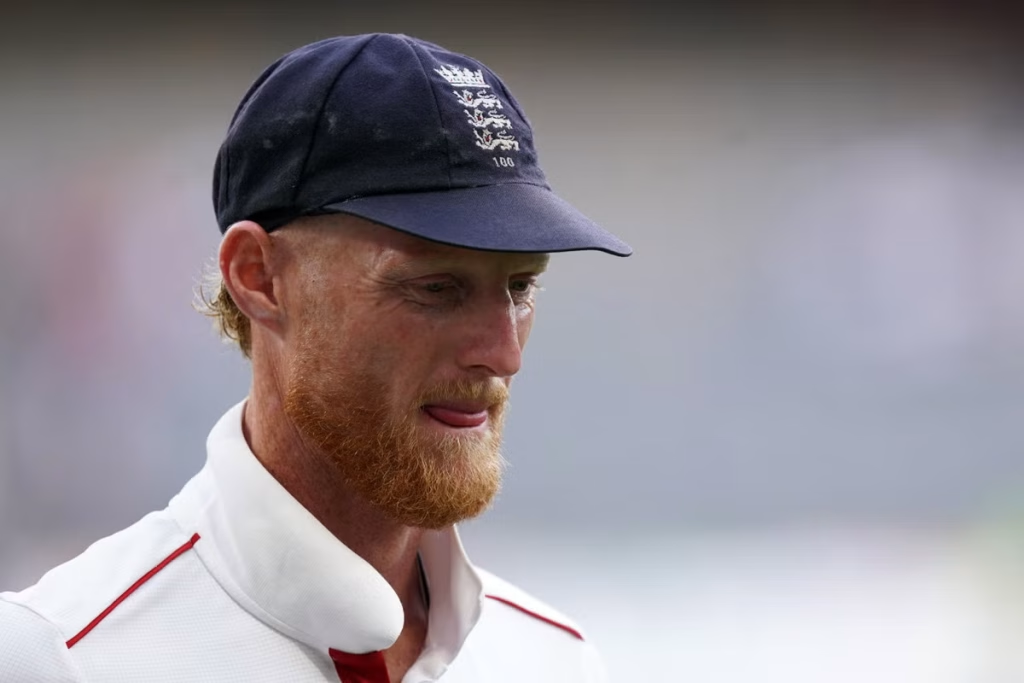
Analyzing England’s Ashes Strategy: Beyond “Rubbish” and “Arrogance”
The Ashes. It’s more than just a cricket series; it’s a crucible where reputations are forged and shattered. England’s recent first Test defeat against Australia ignited a firestorm of criticism, sparking debates about arrogance, preparation, and even the character of the team. But let’s dig deeper than the headlines.
The Independent’s report highlights Ben Stokes’ response to accusations of “arrogance,” leveled after a particularly poor performance in Perth. He’d prefer to be called “rubbish.” That’s a telling sentiment, hinting at a deeper understanding of the fans’ frustration and a desire to reconnect with them. This isn’t simply damage control; it’s an attempt to reframe the narrative.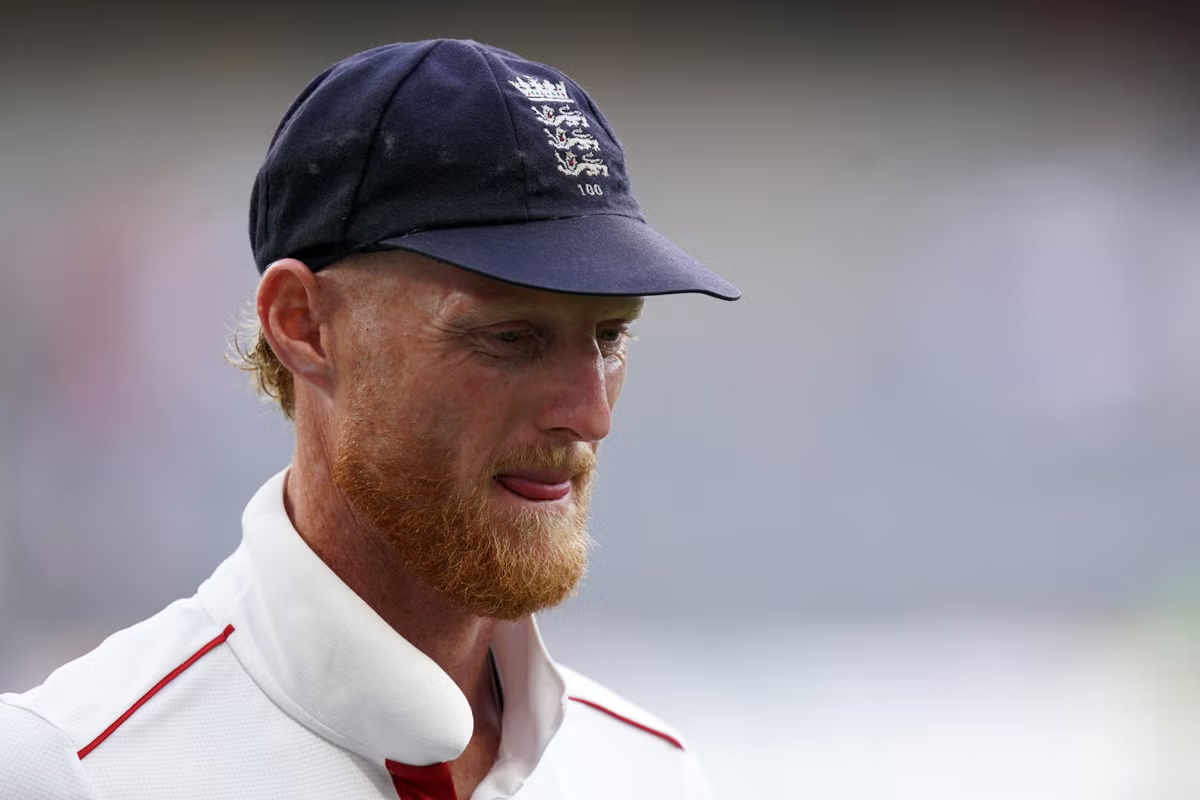 >
>
One can question whether “arrogant” is the correct descriptor. From what I see, it’s not just about individual cockiness. Consider the broader pre-series choices. The decision to sit senior players out of a crucial warm-up match appears, to some, as a miscalculation, a misplaced confidence perhaps. Was this arrogance or merely a strategic gamble that backfired? The line is blurry.
It’s also vital to note that pre-series preparations are very important. To send senior players to weekend’s pink ball warm-up match in Canberra makes a lot of sense to get them warmed up for the big show.
The fans’ disappointment is understandable. They invested their time, money, and hopes. Stokes acknowledges their pain, emphasizing the shared desire for victory. He’s right. There’s a unity in the desperation for an Ashes win. This shared feeling may galvanize the team.>
Still, what does a unified fan base truly amount to? A supportive crowd is invaluable, but it doesn’t automatically translate into wickets and runs. The team needs a coherent strategy, a mental fortitude that withstands the relentless pressure of the Australian attack.
Mitchell Johnson’s scathing critique adds another layer of complexity. Former players turned pundits often deliver strong opinions. Johnson has history with England; this is undeniable. The criticism could be a calculated move to put England under more stress or an honest opinion. It’s hard to say.
Here’s where my own experience comes in. I’ve observed this pattern before: a team makes bold declarations, then falters, leading to accusations of hubris. The truth is often somewhere in between. Confidence is essential, but it must be grounded in preparation, adaptability, and respect for the opposition.
It’s worth noting that Stokes emphasizes the series is not over. Four games remain, and the team is “absolutely desperate” to turn things around. This is the mindset needed. Yet, desperation alone won’t suffice. They need to fix the issues that plagued them in Perth: loose shot selection, inconsistent bowling, and a tendency to collapse under pressure.
England also needs to learn from their mistakes. The pink-ball Test in Brisbane presents a new opportunity. Can they adapt their approach to the conditions? Can they find a way to neutralize the Australian pace attack? The answers to these questions will determine their fate.
But, winning the Ashes requires resilience, not just skill. The mental game is paramount. Can Stokes inspire his team to overcome the negativity and self-doubt? Can they maintain their composure when the pressure mounts?
This challenge is considerable. Australia is a formidable opponent, particularly on home soil. They are hungry for victory and will not relinquish their advantage easily.
Ultimately, the series will be decided by more than just “rubbish” performances or accusations of “arrogance.” It will be determined by the team that displays the greatest resilience, adaptability, and tactical acumen. Let’s see if England can dig deep and rewrite their Ashes story.

![[post_title]](https://samony.com.ng/wp-content/uploads/2025/11/1764385317_Two-people-injured-in-Black-Friday-shooting-at-Bay-Area-300x200.png?lm=692A6226 "Black Friday Shooting: Security, Shopping Frenzy, and Societal Concerns")
![[post_title]](https://samony.com.ng/wp-content/uploads/2025/11/1764383628_Mercy-Aigbe-Breaks-Down-in-Tears-During-Mothers-Service-of-300x128.jpg?lm=692A5B8F "Nollywood’s Dark Side: Are Beauty Standards Crushing Talent?")

![[post_title]](https://samony.com.ng/wp-content/uploads/2025/11/You-can-pick-up-32GB-of-DDR5-RAM-with-a-300x156.jpg?lm=692A5D40 "iBuyPower Black Friday PC Deals: A Gamer’s Guide")

![[post_title]](https://samony.com.ng/wp-content/uploads/2025/11/1764383277_Santos-x-Sport-confira-a-transmissao-da-Jovem-Pan-ao-300x169.jpeg?lm=692A5A2F "Sports Broadcasting Evolving: Digital Plays")


![[post_title]](https://samony.com.ng/wp-content/uploads/2025/11/1764385317_Two-people-injured-in-Black-Friday-shooting-at-Bay-Area-1024x683.png?lm=692A622E "Black Friday Shooting: Security, Shopping Frenzy, and Societal Concerns")
![[post_title]](https://samony.com.ng/wp-content/uploads/2025/11/1764383628_Mercy-Aigbe-Breaks-Down-in-Tears-During-Mothers-Service-of-1024x435.jpg?lm=692A5B8F "Nollywood’s Dark Side: Are Beauty Standards Crushing Talent?")
