

Egypt has secured its passage to the Africa Cup of Nations (AFCON) knockout stages after a contentious 1-0 victory over South Africa in their Group B fixture. The decisive goal came from a Mohamed Salah penalty, awarded following a lengthy VAR review, a decision that sparked significant debate and overshadowed other controversial incidents in the match. This progression confirms Egypt’s top spot in the group but also extends Salah’s absence from his Premier League club, Liverpool, for several crucial fixtures.
The pivotal moment occurred in the first half when Liverpool’s star forward, Mohamed Salah, went down inside the South African box after contact from defender Khuliso Mudau. Salah clutched his face following the challenge, but referee Pacifique Ndabihaweniman initially waved play on, prompting a review by the Video Assistant Referee system. The subsequent deliberation was notably prolonged, intensifying scrutiny on the nature of the contact.
After an extensive examination of the incident, the referee was directed to the pitchside monitor. Following his review, Ndabihaweniman reversed his initial decision, pointing to the penalty spot and issuing yellow cards to both Mudau and South Africa’s Lyle Foster, who vehemently protested the perceived softness of the foul. The decision drew strong reactions from both sets of players and coaching staff, highlighting the divisive impact of VAR interventions.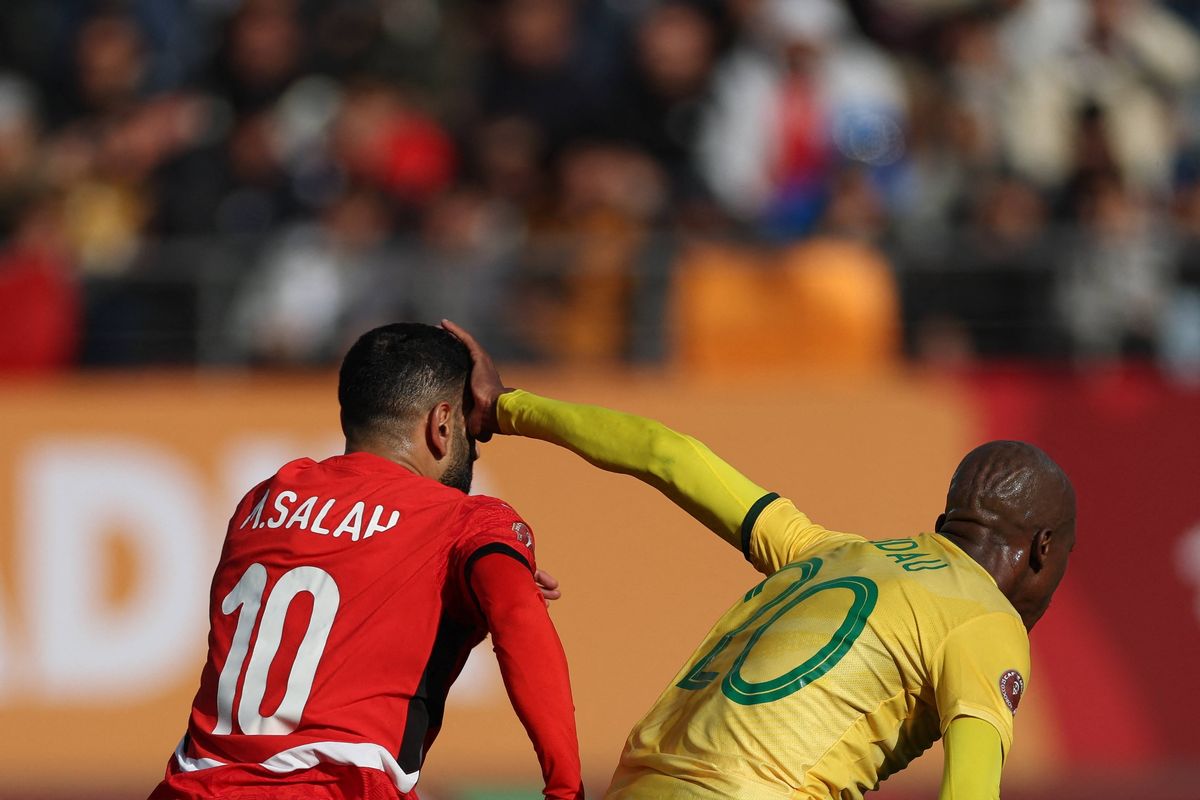
Undeterred by the controversy, Mohamed Salah stepped up to take the penalty. With characteristic composure, he dispatched the ball with a delicate chip directly down the middle of the goal, leaving the South African goalkeeper with little chance. This successful conversion not only broke the deadlock but also marked a crucial step towards Egypt’s qualification for the tournament’s next phase, adding to his significant international goal tally.
Egypt’s advantage, however, was soon complicated by a disciplinary lapse. Defender Mohamed Hany received a second yellow card shortly before half-time for an unnecessary foul committed near the halfway line, resulting in his dismissal. This reduction to ten men for the remainder of the match injected further tension into the contest, forcing Egypt to play a significant portion of the game at a numerical disadvantage and inviting pressure from their opponents.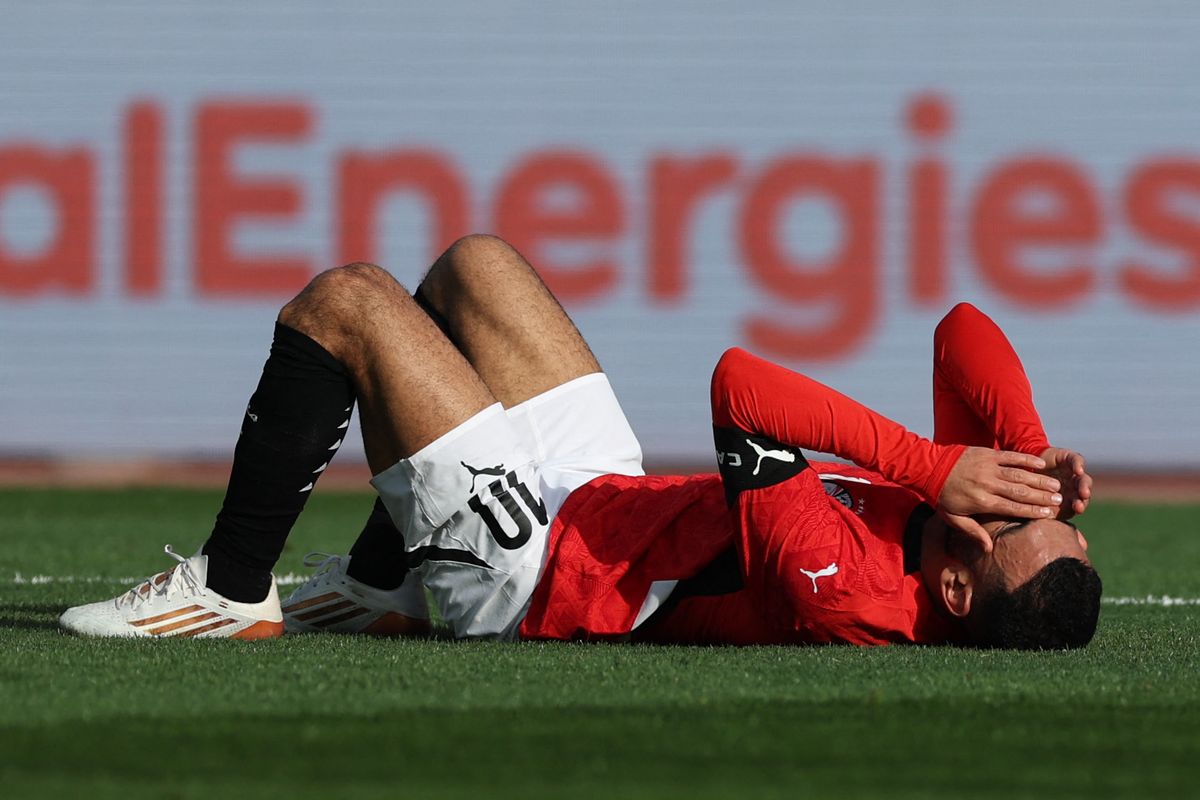
The drama continued into the final moments of the match when South Africa believed they deserved a penalty. A shot from Teboho Mokoena was blocked by the sliding arm of Egyptian defender Yasser Ibrahim inside the penalty area. Despite clear contact and Ibrahim’s arm being within the box, a subsequent VAR review concluded that no penalty should be awarded, with officials seemingly determining the arm was used to break his fall rather than intentionally block the shot.
This second major VAR decision of the game, denying South Africa a late equalizer, ignited further protests and frustration from the Bafana Bafana bench and players. Yasser Ibrahim, visibly relieved by the verdict, bowed his head in prayer as the referee instead awarded a free-kick just outside the area. The incident underscored the ongoing debate surrounding VAR’s application and interpretation in high-stakes matches.
With this hard-fought victory, Egypt now sits comfortably at the top of Group B, having accumulated six points from two matches. Their progression to the last 16 is secured, irrespective of the outcome of their final group stage fixture. The Pharaohs will next face Angola, aiming to consolidate their position as group leaders and carry momentum into the knockout rounds.
The extended run for Egypt in the AFCON tournament means that Mohamed Salah’s return to Liverpool will be further delayed. The 33-year-old forward is now confirmed to miss several significant Premier League and domestic cup matches for his club. These fixtures include encounters against Wolverhampton Wanderers, Leeds United, and Fulham, presenting a considerable challenge for Liverpool during a critical phase of their season.
The Last 16 matches of the Africa Cup of Nations are scheduled to take place between January 3rd and January 6th. Should Egypt continue their strong performance and advance deeper into the competition, Salah’s absence from Anfield could extend even further, impacting Liverpool’s title aspirations and cup campaigns. His prolonged unavailability underscores the significant impact international tournaments have on club football.




![[post_title]](https://samony.com.ng/wp-content/uploads/2025/12/SUMMER-GRILL-Barry-Ryan-on-why-a-new-winning-era-1024x683.png?lm=694EE5B5 "Barry Ryan Confident Erebus Motorsport Ready for New Era of Victory")


