

![[post_title]](https://samony.com.ng/wp-content/uploads/2025/12/1765934642_NASCAR-US-news-Denny-Hamlin-blasts-Larry-McReynolds-SiriusXM-over.jpeg?lm=69420632)
NASCAR driver and team co-owner Denny Hamlin has publicly challenged SiriusXM NASCAR Radio and veteran analyst Larry McReynolds over their prior coverage of the recently settled antitrust lawsuit. Hamlin’s pointed remarks on social media came despite the legal dispute’s resolution, signaling that for him, the matter of journalistic accountability remained unresolved. He specifically questioned whether those who initially dismissed the lawsuit would now issue apologies given the evidence that emerged.
The contentious antitrust case, brought by Hamlin’s 23XI Racing alongside Front Row Motorsports, contested NASCAR’s long-standing charter system. The lawsuit sought to address concerns over team sustainability, revenue distribution, and the overall business model for independent racing operations. Its eventual settlement brought significant structural changes aimed at ensuring long-term stability and greater equity for teams within the sport’s complex economic framework.
Hamlin’s frustration escalated following a promotional post by McReynolds for his SiriusXM show. Responding directly, Hamlin wrote, “Now that the case is settled and the evidence is out, will you or anyone on Channel 90 be issuing an apology for what you all said about 23XI/FRM when the lawsuit was filed?” This direct challenge underscored his belief that the early commentary lacked factual basis and unfairly characterized the involved teams.
From Hamlin’s perspective, much of the initial media narrative painted the challenging teams as mere disruptors or “troublemakers” rather than legitimate stakeholders advocating for essential business reforms. He argued that the commentary often assumed malicious intent and overlooked the underlying issues within NASCAR’s power structure that the lawsuit aimed to expose and rectify. This framing, he contended, prejudiced public opinion before the full scope of the legal arguments became clear.
Hamlin further pushed back against criticisms suggesting his teams were “biting the hand that feeds us,” a common refrain in such disputes. He retorted that such a view ignored the fundamental reasons necessitating the legal action in the first place, implying that the lawsuit was a difficult but necessary step to ensure the long-term health and viability of team ownership in NASCAR. This highlighted a deeper tension between tradition and the evolving financial realities of the sport.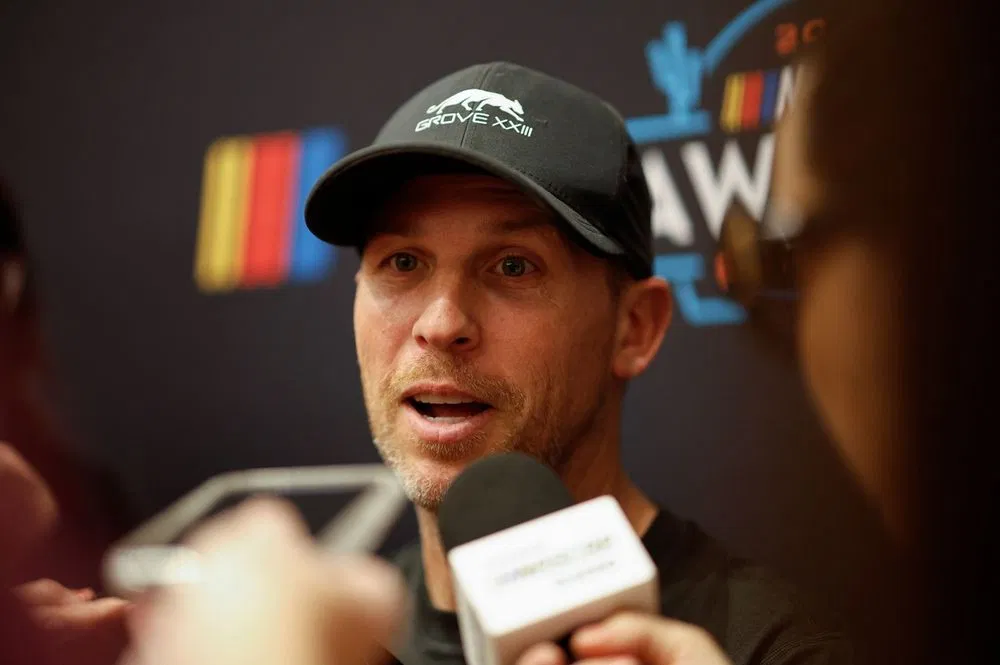
The incident drew attention to the broader dynamics between sports media and the entities they cover. While McReynolds, a respected voice with a long career, was promoting his show, Hamlin’s response transformed a routine interaction into a debate about media responsibility. Another SiriusXM personality’s call for unity and moving forward post-settlement was met with a stark counter-argument from Hamlin, emphasizing his desire for more than just closure.
Hamlin clarified that his challenge was not an attack on McReynolds’ long-standing contributions to NASCAR, but rather a demand for accountability over specific public statements. He articulated this distinction clearly, stating, “I respect the work Larry has done for this sport. But respect doesn’t mean you don’t get questioned when you’re wrong.” His culminating declaration, “Animosity ends with accountability,” quickly became a focal point of the exchange, signaling a refusal to simply overlook perceived misrepresentations.
The public exchange quickly resonated across the vast NASCAR fan base, eliciting a divided response. Many supporters applauded Hamlin for his willingness to confront what they perceive as a media ecosystem overly aligned with the sanctioning body, praising his use of platform to advocate for team interests. Conversely, some critics viewed his comments as overly confrontational, particularly at a time when the sport sought to transition beyond a period of legal tension and rebuild trust.
Beyond the immediate personalities involved, Hamlin’s commentary underscored a persistent tension within the NASCAR garage and its broader ecosystem. The settlement of the antitrust lawsuit, while resolving the legal specifics, did not fully dissipate the underlying debates surrounding NASCAR’s power structure, revenue distribution, and the control of its public narrative. This incident brought those simmering discussions back to the forefront.
Hamlin’s unique position as both an active driver for Joe Gibbs Racing and a co-owner of 23XI Racing grants him a distinct vantage point into both the competitive and business facets of the sport. This dual role provides him with not only insight into the financial pressures faced by team owners but also the credibility and platform to challenge established narratives and media interpretations, a rarity among active competitors.
The episode thus became a significant moment for examining journalistic ethics within sports reporting, particularly when covering sensitive topics like legal disputes that pit stakeholders against the sport’s governing body. It raised questions about the impartiality of analysis, the influence of relationships between media personalities and sanctioning bodies, and the responsibility to report on complex issues with full information.
Ultimately, while the courtroom battle over NASCAR’s charter system has concluded, the public debate concerning transparency, media accountability, and the equitable future of the sport continues. Denny Hamlin’s outspoken challenge serves as a powerful reminder that even after legal resolutions, the quest for a fair and fully informed discourse within the high-stakes world of professional racing remains an active and evolving pursuit.



![[post_title]](https://samony.com.ng/wp-content/uploads/2025/12/How-to-watch-todays-Alaves-vs-Sevilla-Copa-del-Rey-300x169.jpg?lm=694201D8 "Alaves vs Sevilla Copa del Rey Live Stream and TV Details")
![[post_title]](https://samony.com.ng/wp-content/uploads/2025/12/How-Silicon-Valley-turned-Trump-into-a-fellow-broligarch-300x156.jpg?lm=69420219 "Trump’s Alliance with Big Tech: Reshaping AI Policy")




