

Manchester United’s “No Excuses” Mandate: A Critical Look at Pressure and Performance
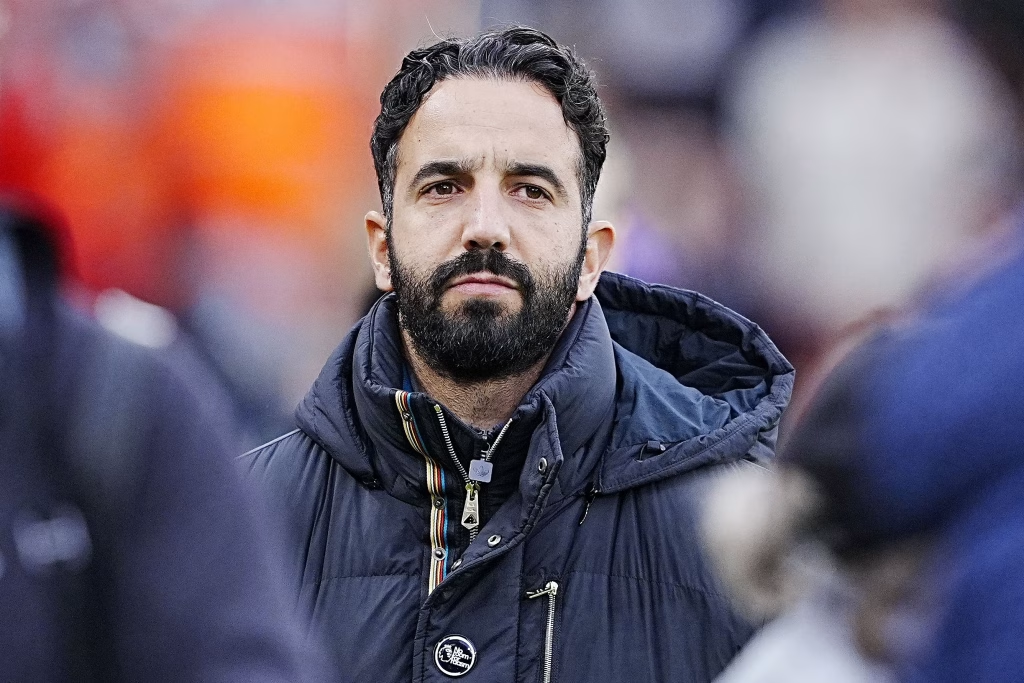
Ruben Amorim’s recent comments about Manchester United’s “no excuses” culture ignited a familiar debate. He’s right; a club of that stature should be held to the highest standard. It’s part of the territory. Yet, the “no excuses” mantra can be a double-edged sword in modern football.
Manchester United’s current situation is interesting. They sit tenth in the league, a position that certainly invites scrutiny. You can see Amorim’s point. A club with United’s resources and history should be higher. Is it simply a case of underperformance? Or are more complex factors at play?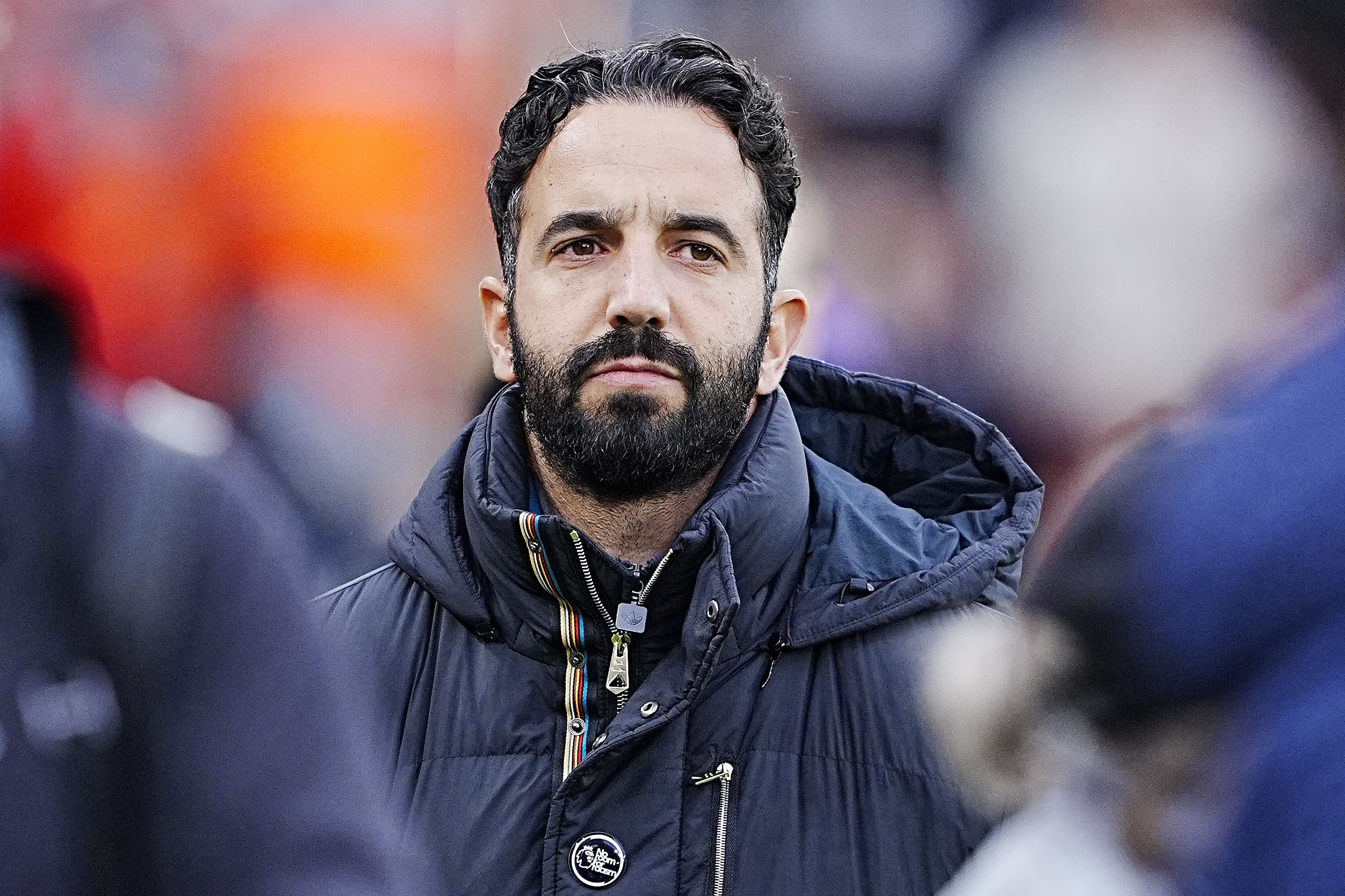 >
>
The recent form is a mixed bag. A brief winning streak followed by disappointing draws—that inconsistency is precisely what fuels the doubts. And the defeat to a ten-man Everton side? That’s the kind of result that intensifies pressure and starts conversations about deeper problems.
Amorim acknowledged those dropped points. He touched on the fact that his side held control in several games, only to relinquish it. Such comments underscore a sense of frustration, an awareness that potential is not translating into tangible results.
The upcoming match against Crystal Palace presents a fascinating contrast. Palace may have less preparation time, but Oliver Glasner seems to have found a tactical approach that works. Amorim was quick to acknowledge the progress Palace has made under Glasner, an indicator of respect for a fellow manager.>
He went on to highlight the differences in playing styles between his team and Crystal Palace, attributing Palace’s stronger performance to them “doing things better”. This candid assessment acknowledges Palace’s current strength and subtly directs attention towards analyzing the specific areas where his side falls short.
It is worth noting that the “no excuses” environment isn’t unique to United. High expectations are typical for clubs with history and financial clout. Pressure comes with the territory. It’s how the club handles that pressure that determines its trajectory.
The absence of key players like Matheus Cunha, Benjamin Sesko, and Harry Maguire for United’s next match adds another layer of complexity. Injuries and absences inevitably influence team dynamics and tactical choices. It’s a challenge that all managers face, and how they adapt reveals much about their strategic abilities.
Amorim references drawing inspiration from other managers. He aims to constantly learn and improve his team. This highlights a willingness to evolve and adapt, essential qualities for any leader in a sport where tactics and strategies are constantly evolving.
The real question surrounding Manchester United is not whether they should be under pressure, but how that pressure is being channeled. A “no excuses” policy, if implemented poorly, can stifle creativity and breed fear of failure. It can lead to short-term fixes instead of addressing underlying systemic issues.
From my experience, a truly effective environment blends high expectations with support. It encourages accountability and innovation. It allows players to take risks without the paralyzing fear of repercussions for every mistake.
United’s challenge isn’t a lack of talent or resources. It’s about creating a system where that talent can flourish consistently. It requires building a cohesive team identity. A team that not only strives for success but also learns from setbacks, adapts to evolving challenges, and ultimately embodies the spirit of relentless improvement. To get there, the club must carefully balance the demand for immediate results with the need for long-term strategic vision. Because, frankly, you can’t simply demand success. You have to cultivate it.
United’s future hinges not just on eliminating “excuses,” but on creating an environment where excuses become unnecessary, replaced by a culture of ownership, continuous learning, and unwavering commitment to collective progress. It’s a nuanced equation, and getting it right will define the club’s trajectory in the seasons to come. That pressure isn’t going anywhere, and whether the team buckles or thrives under it will be the story to watch.

![[post_title]](https://samony.com.ng/wp-content/uploads/2025/11/Protest-in-Enugu-community-as-gunmen-kidnap-five-villagers-injure-300x239.jpg?lm=692AE997 "Enugu Insecurity: Protests Expose a State’s Security Crisis")
![[post_title]](https://samony.com.ng/wp-content/uploads/2025/11/1764420089_Jarvis-unboxes-robot-costume-Verydarkman-ordered-for-her-from-China-300x157.jpg?lm=692AE9FD "AI Influencers: Navigating Novelty, Authenticity, and the Evolving Digital Landscape")
![[post_title]](https://samony.com.ng/wp-content/uploads/2025/11/Zverev-and-Sinner-share-off-season-moment-224x300.jpg?lm=692AE683 "Tennis Stars’ Maldives Trip Reveals Friendship Amidst Rivalry")

![[post_title]](https://samony.com.ng/wp-content/uploads/2025/11/Leicester-City-v-Sheffield-United-Championship-stats-head-to-head-300x169.jpg?lm=692AE81E "Championship Table Analysis: Surprises, Trends, and Promotion Battles Heat Up")

![[post_title]](https://samony.com.ng/wp-content/uploads/2025/11/Protest-in-Enugu-community-as-gunmen-kidnap-five-villagers-injure.jpg?lm=692AE995 "Enugu Insecurity: Protests Expose a State’s Security Crisis")
![[post_title]](https://samony.com.ng/wp-content/uploads/2025/11/1764420089_Jarvis-unboxes-robot-costume-Verydarkman-ordered-for-her-from-China-1024x535.jpg?lm=692AE9FE "AI Influencers: Navigating Novelty, Authenticity, and the Evolving Digital Landscape")
