

Microsoft’s Copilot on Holiday Sweaters: A Sign of the Times, or Too Much Integration?
Microsoft’s holiday sweaters. They are a quirky tradition, a self-aware nod to the company’s past, and generally a fun bit of merchandise. This year’s sweater, crammed with pixelated icons from Windows’ glory days – Notepad, Reversi, even the MSN butterfly – evokes nostalgia. Clippy, that persistent paperclip, makes a welcome return. These details usually spark joy.
The inclusion of icons from more recent ventures—a Minecraft Creeper, a “50” for Microsoft’s anniversary—makes sense. This company, after all, is not afraid to sell merchandise that uses its own product as a selling point. But then there’s Copilot.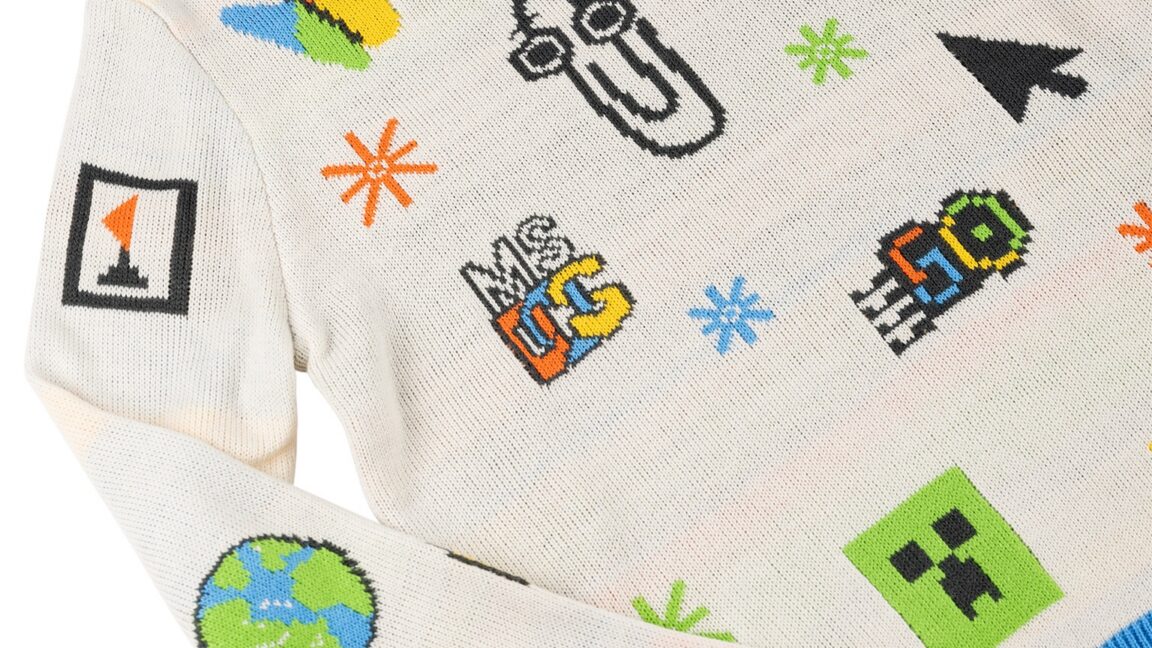 >
>
There it is, a monochrome, pixelated Copilot icon slapped onto the sleeve. It feels…forced. It’s not that AI has no place in the conversation. It’s that it feels less organic and more like, “Hey, remember Copilot? It’s still here!”
It’s worth considering this is not just about a sweater. It speaks to Microsoft’s broader strategy: Copilot, Copilot everywhere. Integrate it into everything. Make it ubiquitous. A bit like Clippy, but with far more processing power.
Having watched this industry for a while, I have seen similar tactics. Pushing new tech, emphasizing its importance, and subtly embedding it into the everyday experiences is just business. Yet, there’s a line between integration and inundation. The sweater is arguably crossing it.>
The argument, one imagines, goes something like this: Get Copilot in front of as many eyeballs as possible. Brand recognition. Familiarity breeds adoption. But what if it breeds resentment instead? What if people start associating Copilot with unwanted intrusions?
There’s the rub. The nostalgia factor of the sweater works because it taps into fond memories (or, at least, amusing ones). Does anyone have fond memories of Copilot? It’s too early to tell. For many, it’s just another AI assistant vying for attention. It lacks the historical baggage, the endearing awkwardness, of Clippy.
Still, Microsoft must be given credit for consistent branding. They are going all-in on AI and integrating it into every product that they sell. The goal is clearly to make it an indispensable part of the user experience. The intent is obvious. This challenge is now how to make the product useful.
Microsoft’s aggressive push of Copilot raises questions about user choice. Are we being given a genuinely helpful tool, or are we being nudged, perhaps a little too firmly, toward a future where AI is interwoven into every aspect of our digital lives? It’s a future that, for some, might feel less like progress and more like an obligation.
Given these facts, one has to wonder, will the Copilot icon on the sweater drive sales? Probably not. Will it get people talking? Absolutely. And perhaps that’s the point. Even negative attention is attention.
It’s worth noting that the tech landscape is littered with examples of companies pushing technologies too hard, too soon. Remember Microsoft Bob? Or Google Glass? Innovation is essential, but timing and user reception are everything.
Microsoft’s strategy with Copilot is high-stakes. Succeed, and they cement their position as an AI leader. Stumble, and they risk alienating users and undermining the very technology they’re trying to promote.
In any case, the Copilot sweater serves as a small but telling illustration of this broader trend. It encapsulates the industry’s relentless pursuit of AI integration. It might not be the most elegant execution, but it’s certainly effective at getting our attention.
The debate continues. Is this a smart move by Microsoft, or a tone-deaf marketing ploy? That depends on your perspective. Either way, it’s a conversation worth having. So, buy the sweater if you want a conversation starter.

![[post_title]](https://samony.com.ng/wp-content/uploads/2025/12/1764621821_How-Are-I-bonds-Taxed-8-Common-Situations-300x169.jpg?lm=692DFE00 "I Bonds: The Tax Secret No One Tells You")
![[post_title]](https://samony.com.ng/wp-content/uploads/2025/12/Some-politicians-funding-terrorism-in-Nigeria-Former-Chief-of-300x169.jpg?lm=692DFA3A "Nigeria Terrorism: Ex-Military Chief Alleges Politician Funding")
![[post_title]](https://samony.com.ng/wp-content/uploads/2025/12/1764620883_Ellie-Goulding-confirms-shes-pregnant-as-she-shows-off-baby-300x158.jpg?lm=692DFA56 "Okay, Ellie Goulding’s Baby News: More Than Just a Bump in the Road?")
![[post_title]](https://samony.com.ng/wp-content/uploads/2025/12/Nigeria-Renews-Commitment-to-End-AIDS-by-2030.webp-300x265.webp?lm=692DF86F "Nigeria’s AIDS Fight: Are We Winning, or Just Hoping?")
![[post_title]](https://samony.com.ng/wp-content/uploads/2025/12/1764620614_Why-Trump-and-his-Republican-allies-cant-agree-on-an-300x200.jpg?lm=692DF949 "Obamacare Premiums About to Spike? Republicans Scramble for a Fix.")


![[post_title]](https://samony.com.ng/wp-content/uploads/2025/12/Top-10-sectors-that-drove-Nigerias-Q3-GDP.jpg?lm=692DFFE3 "Nigeria’s Q3 GDP Shows Economy Diversifying Beyond Oil Dependence")
![[post_title]](https://samony.com.ng/wp-content/uploads/2025/12/1764621821_How-Are-I-bonds-Taxed-8-Common-Situations-1024x576.jpg?lm=692DFE00 "I Bonds: The Tax Secret No One Tells You")
![[post_title]](https://samony.com.ng/wp-content/uploads/2025/12/Some-politicians-funding-terrorism-in-Nigeria-Former-Chief-of-1024x576.jpg?lm=692DFA3B "Nigeria Terrorism: Ex-Military Chief Alleges Politician Funding")
