

![[post_title]](https://samony.com.ng/wp-content/uploads/2025/12/1764666684_Lucy-Dare-has-spoken-about-her-battle-with-Crohns-disease-1024x683.jpeg?lm=692EAD41)
Crohn’s Disease: A Diagnostic Odyssey and the Ongoing Patient Struggle
The story of Lucy Dare and her battle with Crohn’s disease underscores some persistent challenges within the healthcare system, especially regarding inflammatory bowel disease (IBD) diagnosis and management. Dare’s experience, detailed in a recent article, illuminates the often-arduous journey many patients face. It also highlights the need for improved awareness and understanding of Crohn’s and colitis among both the public and medical professionals.
Dare’s initial symptoms manifested at a young age: rectal bleeding, abdominal pain, fatigue, and frequent bowel movements. These symptoms, while classic indicators of IBD, were initially misattributed to an eating disorder. A common, even predictable, misdiagnosis, particularly in young women presenting with weight loss. Her experience spotlights a disturbing trend: the potential for diagnostic overshadowing, where pre-existing biases can cloud clinical judgment.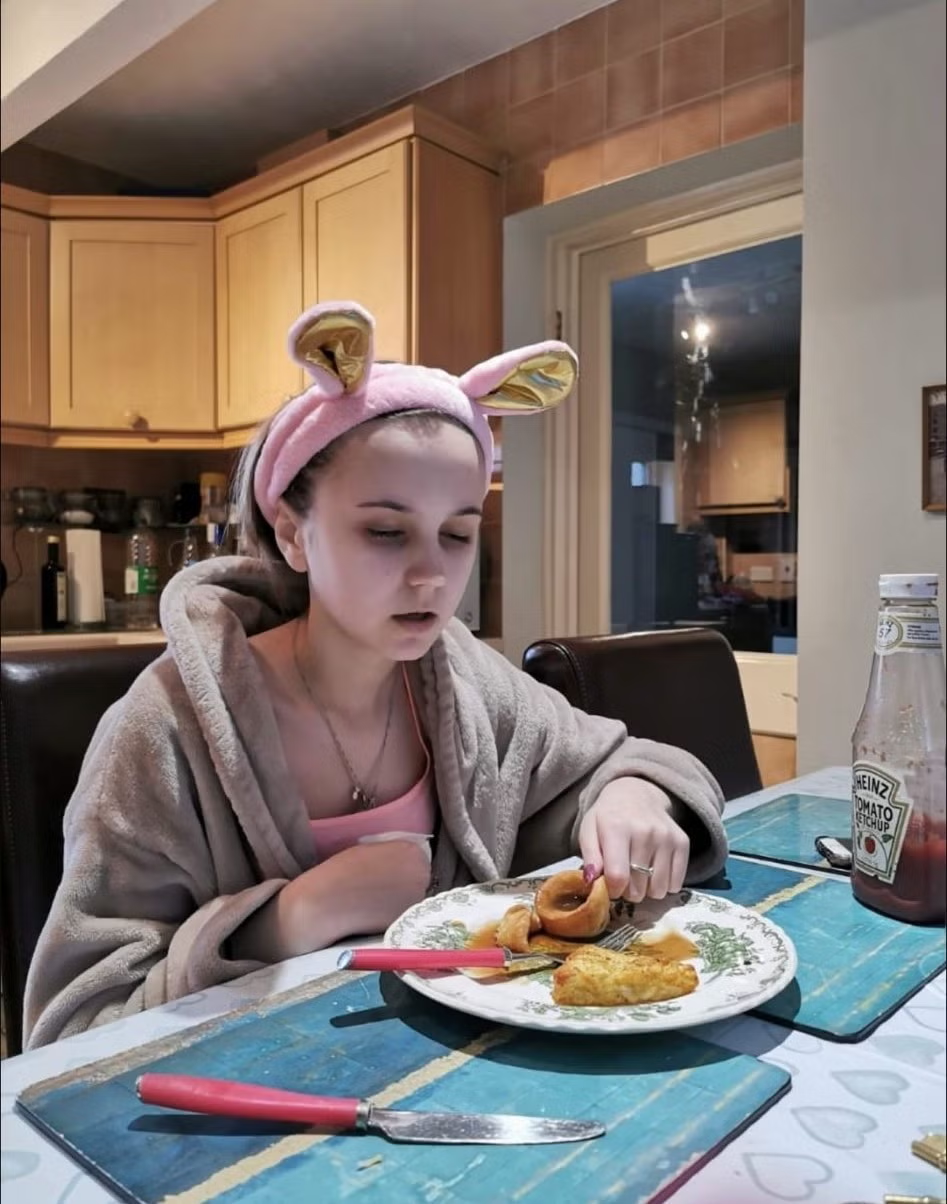 >
>
Six months in an eating disorder unit ultimately yielded no improvement. Only after this lengthy and inappropriate intervention did doctors consider an endoscopy and colonoscopy, which finally revealed the Crohn’s diagnosis. That’s a significant delay, with real consequences for a young person’s development and well-being.
Once diagnosed, Dare began treatment with infliximab and azathioprine, along with a liquid diet. Things, however, took a turn for the worse. Excruciating abdominal pain led to a hospital admission where, shockingly, the initial assessment downplayed her distress. The initial suggestion that her symptoms were psychosomatic is infuriatingly common for IBD patients, adding insult to injury and delaying essential intervention.
It took her mother’s persistence to get a CT scan, which revealed a perforated bowel. Emergency surgery followed, along with the removal of a significant portion of her small intestine. The gravity of her condition at that point is chilling. >
>
Dare’s story isn’t an isolated incident. Many IBD patients report similar delays in diagnosis, often facing skepticism and misdiagnosis. The impact of this diagnostic delay on a patient’s life can be devastating. It can lead to disease progression, the need for more aggressive treatments, and a significant decline in quality of life.
Dare’s ongoing struggles, even after diagnosis and surgery, demonstrate the chronic and debilitating nature of Crohn’s disease. She struggles to work, experiences anxiety related to her condition, and continues to seek effective treatments. It’s a constant battle, and one that demands both medical and social support.
Crohn’s & Colitis UK stresses the importance of early detection and intervention. The organization’s IBD Nursing Lead, Pearl Avery, rightly points out that too many people wait over a year for a correct diagnosis. She emphasizes that people experiencing symptoms such as blood in their stool, stomach pain, weight loss, and diarrhea shouldn’t hesitate to seek medical help.
Yet, something feels incomplete. While raising awareness is crucial, it feels like putting a band-aid on a deeper wound. The medical community must actively combat its own biases and improve diagnostic practices. I’ve seen too many instances where young women, in particular, are quickly dismissed.
What can we do? Medical education needs to address diagnostic biases. Tools like symptom checkers are helpful, but they’re not a substitute for thorough and empathetic medical evaluation. And more research is needed, both into the causes of IBD and into strategies for personalized management.
It’s worth noting that managing Crohn’s disease requires a multi-faceted approach. Medication is vital, but lifestyle factors also play a critical role. Diet, exercise, and stress management can significantly impact disease activity and overall well-being. Dare’s use of fitness to manage her symptoms highlights the importance of this holistic approach.
Dare’s experiences underscores how crucial patient advocacy is. Her mother’s unwavering support was instrumental in getting her the care she needed. Patients need to be empowered to advocate for themselves and to question medical opinions when they feel unheard.
The future of IBD management hinges on earlier diagnosis, personalized treatment strategies, and a healthcare system that truly listens to patients. Dare’s story is a wake-up call. We need to do better. We have to. It’s not enough to simply raise awareness; we need to transform the system.


![[post_title]](https://samony.com.ng/wp-content/uploads/2025/12/1764665117_Liz-Hurley-looks-25-in-teeny-string-bikini-as-she-300x158.jpg?lm=692EA720 "Liz Hurley’s Bikini Pics: What’s the Real Story With “Ageless” Beauty?")
![[post_title]](https://samony.com.ng/wp-content/uploads/2025/12/1764664559_Noni-Maduekes-damaged-relationship-with-Chelsea-star-after-Arsenal-incident-300x158.jpg?lm=692EA4F2 "Madueke’s Homecoming: Rivalry, Loyalty, and Football’s Shifting Sands")

![[post_title]](https://samony.com.ng/wp-content/uploads/2025/12/Helicopter-Vehicle-Used-For-Kidnapping-In-Catholic-School-In-Niger-300x169.jpeg?lm=692E5EF9 "Decoding Banditry’s Ascent: The Helicopter is a Symptom, Not the Disease")
![[post_title]](https://samony.com.ng/wp-content/uploads/2025/12/Upper-Eyre-Peninsula-site-selected-for-proposed-5-billion-desalination-300x169.jpeg?lm=692E7281 "Whyalla Desalination: Balancing Mining Needs with Spencer Gulf’s Fragile Ecosystem")



![[post_title]](https://samony.com.ng/wp-content/uploads/2025/12/1764665117_Liz-Hurley-looks-25-in-teeny-string-bikini-as-she-1024x538.jpg?lm=692EA720 "Liz Hurley’s Bikini Pics: What’s the Real Story With “Ageless” Beauty?")
