

![[post_title]](https://samony.com.ng/wp-content/uploads/2025/12/Why-do-we-love-a-spooky-ghost-story-at-Christmas.jpeg?lm=69455331)
The festive season, often associated with warmth, joy, and light, paradoxically harbors a deep-rooted European tradition of embracing the macabre: the Christmas ghost story. From classic literature to modern television adaptations, tales of spectral encounters and supernatural phenomena have long been intertwined with holiday celebrations, prompting curiosity about the psychological underpinnings of this enduring festive fascination. Charles Dickens’s quintessential “A Christmas Carol,” a narrative steeped in ghostly visitations and moral reckoning, stands as a prime example of this peculiar yuletide custom.
This enduring appeal finds a significant explanation in the northern hemisphere’s winter setting. The short, dim days and extended nights of the season naturally invite introspection and contemplation of darker, more profound themes, including the supernatural. The stark contrast between the cozy sanctuary of illuminated homes and the cold, dark world outside creates a palpable sense of liminality – a threshold space between light and shadow, the old year’s end and the new year’s beginning. This atmospheric duality fosters an environment ripe for considering undefined entities like ghosts and spirits, which inhabit such transitional realms.
Religious themes inherent to Christmas also contribute to this supernatural inclination. While the Christian narrative celebrates the joyous birth of Jesus, the solemn prospect of his eventual death and resurrection remains an ever-present undertone. Many traditional Christmas carols subtly allude to this darker aspect; for instance, “We Three Kings” describes myrrh, a gift to the infant Jesus, as an anointing oil for burial, echoing themes of sorrow and mortality. Ghost stories, frequently exploring concepts of judgment, retribution, and the afterlife, naturally align with these moral and theological perspectives.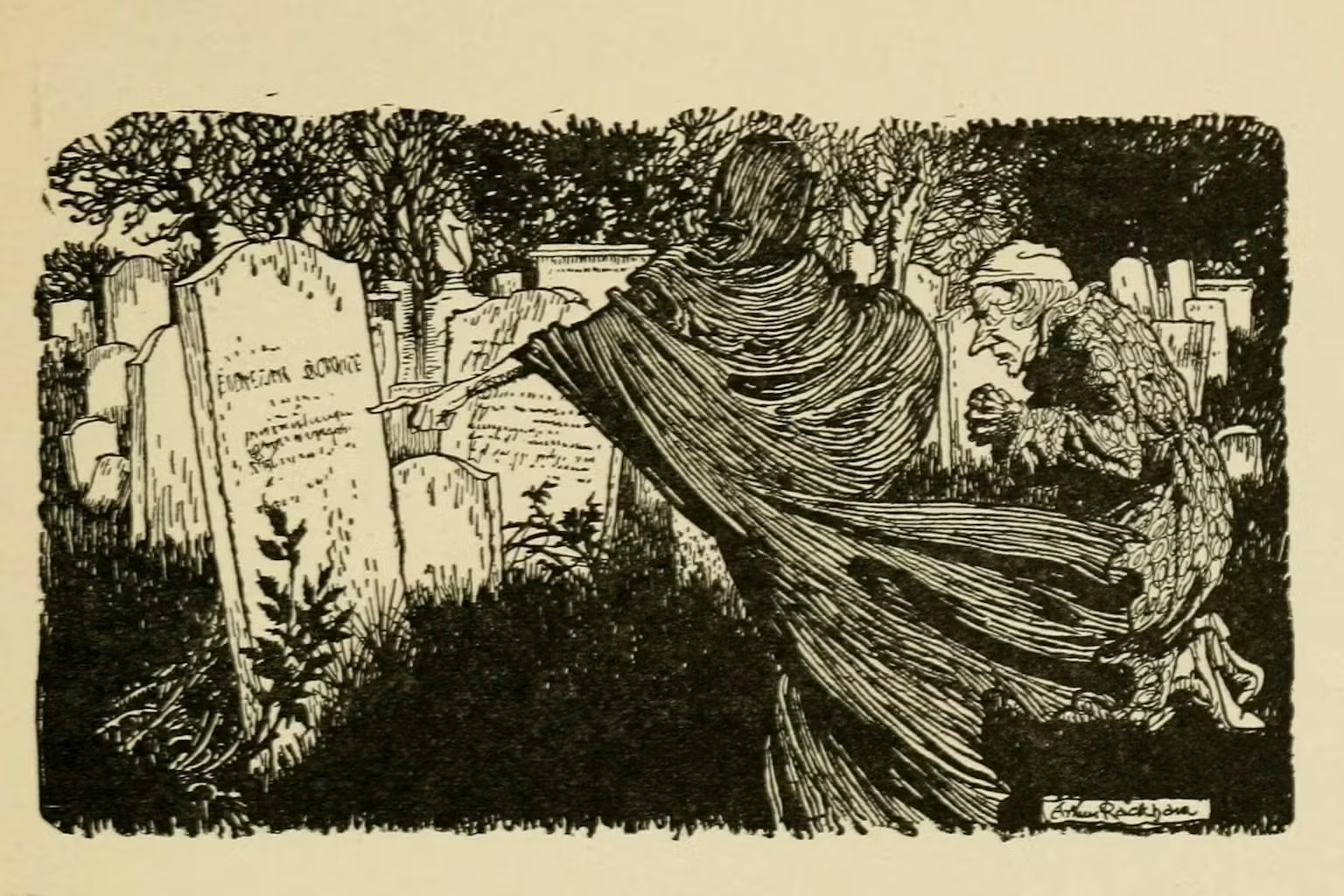
Historically, the surge in popularity of Christmas ghost stories during the Victorian era is often linked to their capacity to inject Christian values and moral lessons into an increasingly secular society. Dickens’s “A Christmas Carol” perfectly illustrates this, using the supernatural to deliver a powerful message of redemption and social responsibility. These narratives served not only as entertainment but also as moral compasses, reminding audiences of virtues and potential consequences in a compelling, albeit chilling, manner.
Beyond individual reflection, the communal experience of sharing ghost stories holds significant psychological value. Seminal ghost story author M.R. James famously began this tradition by telling his tales to students and friends during Christmas Eve gatherings at the University of Cambridge. Such collective encounters foster a unique form of bondedness and shared identity, as individuals collectively engage with suspense and thrill. Research suggests that this shared experience can enhance wellbeing by strengthening social ties and providing a safe space to explore universal fears.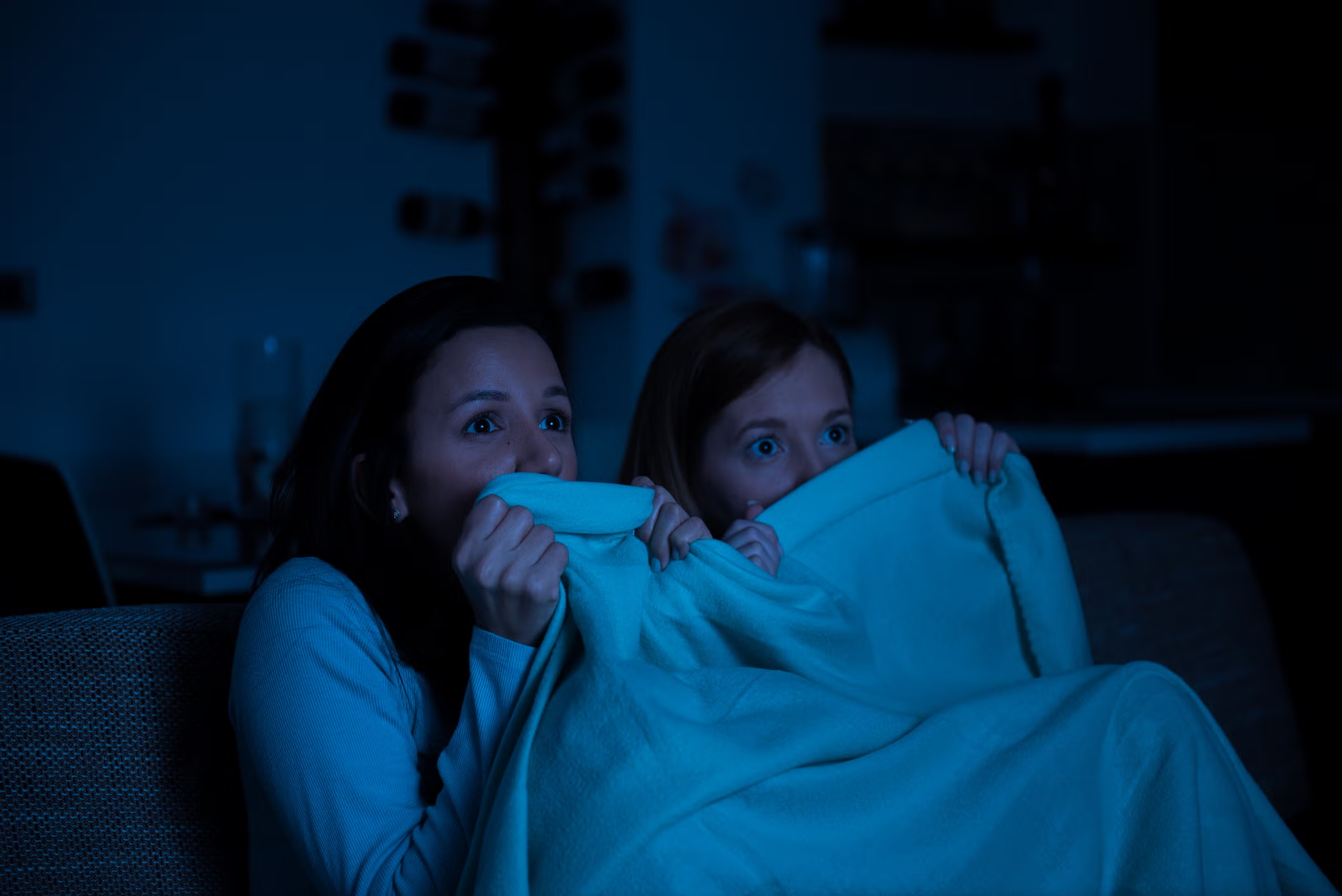
The concept of “collective continuity” further elucidates the wellbeing benefits derived from such traditions. By transmitting values and ideas across generations, storytelling rituals like Christmas ghost tales help people cope with the inherent fear of their own mortality. Terror management theory posits that individuals mitigate death anxiety by investing in social groups, thereby achieving a sense of symbolic immortality. The enduring nature of the group and its traditions, including shared narratives, allows individuals to feel part of something greater and more lasting than themselves.
Ghost stories often inherently encapsulate themes of continuity, featuring spirits from the past interacting with those in the present, bridging temporal divides. This resonates with ancient winter festivals, such as Yule, which predated Christmas and focused heavily on honoring ancestors and the cyclical nature of life and death. The narratives provide a cultural mechanism for acknowledging the past and its influence on the present, reinforcing a sense of enduring lineage and shared human experience.
Contemporary adaptations continue this rich tradition. Master of the modern ghost story, Mark Gatiss, has crafted festive supernatural tales for the BBC in recent years, drawing inspiration from classic authors like E.F. Benson, who himself was influenced by M.R. James’s storytelling. His upcoming adaptation, “A Room in the Tower,” based on E.F. Benson’s short story, is slated for Christmas Eve broadcast. Gatiss’s League of Gentlemen co-writers Reece Shearsmith and Steve Pemberton have also contributed to the genre with “The Bones of St. Nicholas” as part of their “Inside No. 9” series, available for streaming.
For those keen to delve into this chilling festive tradition, a wealth of options awaits. Classic BBC adaptations like Dickens’s “The Signalman” and M.R. James’s “Whistle and I’ll Come To You” are available on DVD, offering a nostalgic journey into the genre’s golden age. Additionally, anthologies of written Christmas ghost stories, such as “Chill Tidings,” provide a literary avenue to explore these captivating narratives. The festive season, it seems, remains an ideal time to embrace the thrill of the spectral.

![[post_title]](https://samony.com.ng/wp-content/uploads/2025/12/1766151464_Anthony-Joshua-vs-Jake-Paul-ring-girl-is-perfect-model-300x158.png?lm=6945552B "Marissa Ayers: Rising Star and Ring Girl at Joshua-Paul Bout")
![[post_title]](https://samony.com.ng/wp-content/uploads/2025/12/Bangladesh-Violence-continues-after-youth-protest-leaders-death-300x169.jpg?lm=69455087 "Bangladesh: Media Outlets Attacked Amidst Ongoing Unrest")
![[post_title]](https://samony.com.ng/wp-content/uploads/2025/12/1766149667_Aitch-reveals-sweet-gesture-to-sister-after-Im-A-Celeb-300x158.jpg?lm=69454E25 "Aitch Fulfills Heartfelt Promise to Sister After Reality TV Stint")
![[post_title]](https://samony.com.ng/wp-content/uploads/2025/12/1766149615_Louvre-issues-major-update-after-staff-strikes-outside-museum.jpg?lm=69454DEF "Louvre Museum Reopens Amid Staff Disputes and Security Challenges")
![[post_title]](https://samony.com.ng/wp-content/uploads/2025/12/1766148466_9-Types-of-Insurance-You-Dont-Need-300x200.jpg?lm=69454974 "Navigating Insurance: Policies Consumers Often Do Not Need")
![[post_title]](https://samony.com.ng/wp-content/uploads/2025/12/Alleged-Christian-genocide-Terrorists-have-placed-a-bounty-on-my-300x150.jpg?lm=69454999 "Nigerian Cleric Alleges Terrorist Bounty Amidst Christian Massacres")

![[post_title]](https://samony.com.ng/wp-content/uploads/2025/12/1766151171_Honda-wouldnt-even-be-in-top-10-without-mid-year-engine-1024x682.jpg?lm=69455406 "Honda’s 2025 MotoGP Season Transformed by Crucial Engine Upgrades")
![[post_title]](https://samony.com.ng/wp-content/uploads/2025/12/1766151464_Anthony-Joshua-vs-Jake-Paul-ring-girl-is-perfect-model-1024x538.png?lm=6945552C "Marissa Ayers: Rising Star and Ring Girl at Joshua-Paul Bout")
![[post_title]](https://samony.com.ng/wp-content/uploads/2025/12/Bangladesh-Violence-continues-after-youth-protest-leaders-death-1024x576.jpg?lm=69455087 "Bangladesh: Media Outlets Attacked Amidst Ongoing Unrest")
