

Nigeria’s Aviation Sector: Navigating Safety Concerns, Trapped Funds, and Expanding Operations
Nigeria’s aviation industry finds itself at a critical juncture. Recent developments highlight the government’s focus on passenger safety and financial stability, while also signaling ambition for expanded operational capacity. Let’s dig into what’s unfolding.
The suspension of Dana Air’s operations has sparked considerable debate. The Minister of Aviation and Aerospace Development, Festus Keyamo, framed it starkly: a choice between safety and potential disaster. The decision stemmed from what he described as “damning reports” regarding the airline’s safety record and adherence to required standards. I’ve seen similar situations before. A regulator steps in, citing safety concerns, and an airline faces a grounding. It’s rarely a simple situation, and the ripple effects are always significant.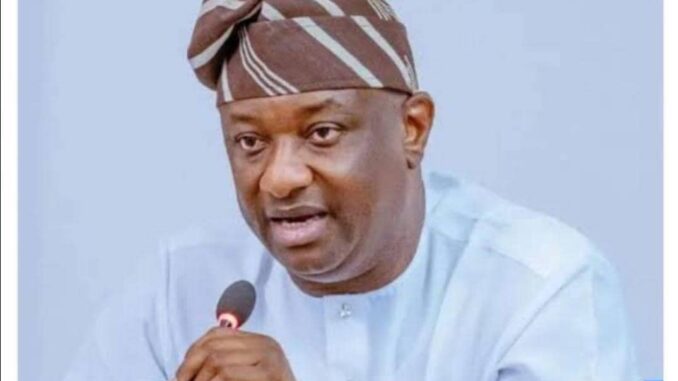 >
>
What happens to passengers holding tickets? Keyamo has directed the Nigeria Civil Aviation Authority (NCAA) to investigate how to refund passengers and travel agents holding funds trapped by Dana Air’s suspension. The government is considering pursuing the airline’s assets to recoup these funds. They might even block individuals associated with Dana Air from re-entering the aviation sector under a different guise until debts get settled. This aggressive approach underscores the government’s commitment to protecting consumers. It remains to be seen how effectively they can recover these funds. The process will likely be complex.
There’s a bigger picture too. The move to extend operating hours at Owerri, Enugu, Yola, and Ilorin airports signals a push for increased air connectivity across Nigeria. The Nigeria Airspace Management Agency (NAMA) granted approval for these airports to operate until 10 pm, responding to calls from stakeholders. Air Peace has also received ad-hoc approval to operate into Anambra and Asaba airports. This expansion addresses a long-standing issue – the concentration of flight operations in Lagos and Abuja.
NAMA’s Director General, Engr Ahmed Umar Farouk, indicated that they can’t yet support extended hours at all airports nationwide. It seems capacity constraints currently limit broader implementation. Still, the move to extend hours at these key regional airports could significantly boost economic activity and passenger convenience.>
It’s worth noting the government’s commitment to investing in NAMA’s infrastructure. President Bola Tinubu has approved special funds to upgrade NAMA equipment, moving away from budgetary provisions. The agency has already invested in a fully functional flight calibration unit. This unit ensures the accuracy of navigational aids and validates instrument approach procedures. They’ve even signed agreements with Sierra Leone and Liberia to offer calibration services. It suggests a broader ambition to position Nigeria as a regional leader in aviation safety and technical expertise.
Now, let’s acknowledge some potential challenges. Increased operating hours demand robust infrastructure, including reliable power supply, efficient air traffic control systems, and adequate security measures. Maintaining safety standards across multiple airports operating extended hours will require diligent oversight from the NCAA. Moreover, the government’s pursuit of Dana Air’s assets could face legal hurdles, and the process may take time.
One also wonders if going after the assets of the airline is an effective strategy. How much can truly be recovered in a relatively short amount of time? What does this say about the ease of doing business in Nigeria? What message does it send to foreign investors?
Despite these challenges, the steps taken show a proactive approach by the government. It’s not just about addressing immediate crises like Dana Air’s suspension. It also involves strategic investments in infrastructure and a push for greater operational efficiency. This challenge requires a delicate balance between ensuring safety, protecting passenger rights, and fostering a thriving aviation industry.
It’s also interesting to see NAMA signing deals with other African nations to provide calibration and validation services. A deeper dive into these deals would reveal interesting insights into the strategy being used to position Nigeria as a leader in aviation in the region. This sort of cross-border collaboration bodes well for the future of aviation safety across the continent.
It seems the administration prioritizes the creation of an environment where airlines adhere to strict safety protocols and passengers receive the service they expect. Yet, it also needs to craft an environment in which airlines can thrive.
The Nigerian aviation industry is certainly one to watch. It’s going to be interesting to observe how these developments unfold in the coming months. The next couple of years are certainly going to be transformative.

![[post_title]](https://samony.com.ng/wp-content/uploads/2025/12/Setting-the-Record-Straight-On-The-Defamation-Case-Involving-Senator-300x150.jpg?lm=69348567 "Defamation in the Digital Age: Evidence Trumps Agitation")
![[post_title]](https://samony.com.ng/wp-content/uploads/2025/12/Allegations-baseless-entirely-untrue-Ex-Army-chief-Yahaya-on-links-300x200.jpg?lm=69348583 "Terrorism Financing Allegations: Separating Vendetta from Verifiable Facts")

![[post_title]](https://samony.com.ng/wp-content/uploads/2025/12/1765049341_How-pregnancy-is-being-criminalised-in-post-Roe-America-300x169.jpeg?lm=69348401 "Pregnancy Criminalized: America’s Post-Roe Reality")

![[post_title]](https://samony.com.ng/wp-content/uploads/2025/12/1765049531_George-Clarke-to-lose-place-in-Strictly-semi-final-as-worrying-300x158.jpg?lm=693484BF "Is George Clarke Doomed on Strictly? This TikToker’s “Jinx” Has Everyone Freaking Out")


![[post_title]](https://samony.com.ng/wp-content/uploads/2025/12/1765051311_Im-worried-Lady-releases-chat-with-Harrison-Gwamnishu-days-1024x535.jpg?lm=69348BB2 "Gwamnishu’s Arrest: Truth and Allegations")
![[post_title]](https://samony.com.ng/wp-content/uploads/2025/12/Setting-the-Record-Straight-On-The-Defamation-Case-Involving-Senator.jpg?lm=69348565 "Defamation in the Digital Age: Evidence Trumps Agitation")
![[post_title]](https://samony.com.ng/wp-content/uploads/2025/12/Allegations-baseless-entirely-untrue-Ex-Army-chief-Yahaya-on-links.jpg?lm=69348581 "Terrorism Financing Allegations: Separating Vendetta from Verifiable Facts")
