

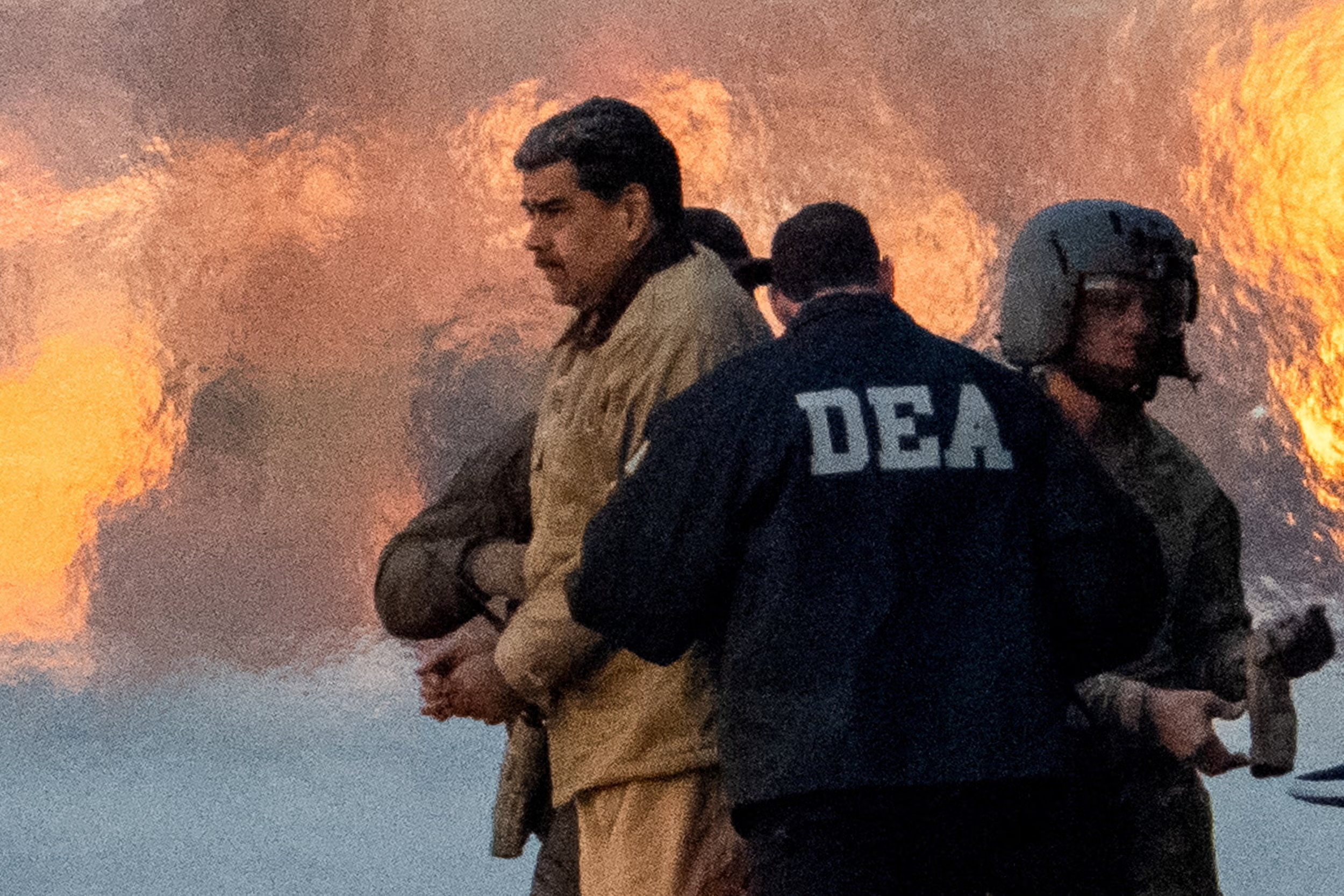
The recent arrest of authoritarian leader Nicolás Maduro has profoundly reshaped the political landscape, intensifying the push for Venezuela independence from US influence. Following Maduro’s capture by U.S. forces, Venezuela’s government swiftly moved to assert its sovereignty, demonstrating a clear intent to distance itself from American control. This pivotal moment underscores a long-standing struggle for autonomy in the South American nation, now brought to a head by unprecedented events.
In Caracas, the immediate aftermath saw ruling party lawmakers, including Maduro’s son, gather for a National Assembly swearing-in. Delcy Rodríguez, Maduro’s former vice president, was inaugurated as interim president, vowing to navigate the nation through this tumultuous period. This Nicolas Maduro arrest update revealed a government determined to maintain its structure and condemn what it perceived as an illegitimate foreign intervention, signaling a unified front against external pressures.
What is happening in Venezuela following the arrest of Nicolás Maduro? The nation is experiencing a significant political upheaval, with its government asserting independence from the U.S. and an interim president taking power. Maduro’s capture on narco-terrorism charges has triggered a reevaluation of power dynamics and international relations for the country.
Maduro himself made his first court appearance in a U.S. courtroom, pleading not guilty to federal drug-trafficking charges. He declared himself “innocent” and a “decent man,” denying the accusations that led to his dramatic capture from his home. This legal battle in the U.S. adds another layer of complexity to Venezuela’s already volatile political situation, drawing global attention to the charges.
How to understand Venezuela politics amidst such drastic changes? Venezuela’s political history is marked by periods of strong leadership and external intervention, often fueled by its vast oil reserves. The current crisis is a culmination of economic hardship, internal dissent, and escalating tensions with the United States, making it a critical case study in geopolitical power struggles and national sovereignty.
The U.S. administration, led by President Donald Trump, stated its intention to “run” Venezuela temporarily, though Secretary of State Marco Rubio clarified that direct day-to-day governance was not the goal. Instead, the U.S. aimed to enforce an existing “oil quarantine” and pressure for policy changes, particularly regarding the oil industry and drug trafficking. This approach highlights the ongoing application of US sanctions Venezuela guide policies.
The dynamic between Maduro vs interim president Rodríguez illustrates the deep division within Venezuela’s political landscape. While Maduro remains a figurehead for his loyalists, Rodríguez’s inauguration aims to establish a new, albeit controversial, leadership. This internal power struggle, exacerbated by external pressures, dictates the immediate future of the nation, with both factions vying for legitimacy and control.
Despite initial defiance, Rodríguez later conveyed a desire for “respectful relations” with the U.S., a notable shift in tone. This conciliatory message came after Trump’s warning of a “very big price” if Venezuela did not comply with U.S. demands. Such diplomatic overtures demonstrate the intricate dance between national pride and the pragmatic need for international engagement, especially when facing significant external pressure.
The broader implications of the Venezuela political crisis explained extend beyond its borders, threatening regional stability. Maduro’s son, Nicolás Maduro Guerra, warned that normalizing the kidnapping of a head of state could jeopardize any nation refusing to submit to external powers. This sentiment resonates across Latin America, raising concerns about international law and the sovereignty of smaller nations in the face of superpower intervention.
Looking ahead, the Venezuela political forecast 2026 suggests a period of continued uncertainty and potential for significant shifts. The nation’s ability to navigate its economic woes, political divisions, and international pressures will define its trajectory. Scenarios range from further destabilization to a gradual re-establishment of democratic processes, heavily influenced by both internal reforms and external diplomatic efforts.
When considering Venezuela US relations vs Cuba, distinct yet similar patterns emerge. Both nations have experienced prolonged periods of U.S. sanctions and political isolation. However, Venezuela’s situation is complicated by its recent history of internal conflict and a more direct, forceful U.S. intervention regarding its leadership, setting a different precedent for regional diplomacy and sovereignty.
For those seeking a US Venezuela relations guide 2026, it’s clear that future interactions will be shaped by the outcomes of current legal battles and political transitions. Any re-establishment of diplomatic ties or easing of sanctions would likely depend on significant policy changes within Venezuela and a willingness from the U.S. to engage in a more cooperative framework, moving beyond coercive measures.
The Venezuela government news today continues to highlight the nation’s efforts to assert its autonomy while grappling with the aftermath of Maduro’s arrest. From legislative sessions reinforcing national resolve to diplomatic statements aimed at de-escalation, Venezuela remains at the forefront of global attention, a testament to its strategic importance and the complexities of its political evolution.
Ultimately, the path towards genuine Venezuela independence from US influence will be arduous and multifaceted. It requires not only internal unity and economic recovery but also a recalibration of international relationships. The recent events serve as a stark reminder of the delicate balance between national sovereignty and global power dynamics, shaping Venezuela’s destiny for years to come.
Keywords: what is happening in Venezuela, how to understand Venezuela politics, Maduro vs interim president, Venezuela US relations vs Cuba, Venezuela political crisis explained, US sanctions Venezuela guide, Nicolas Maduro arrest update, Venezuela government news today, Venezuela political forecast 2026, US Venezuela relations guide 2026









