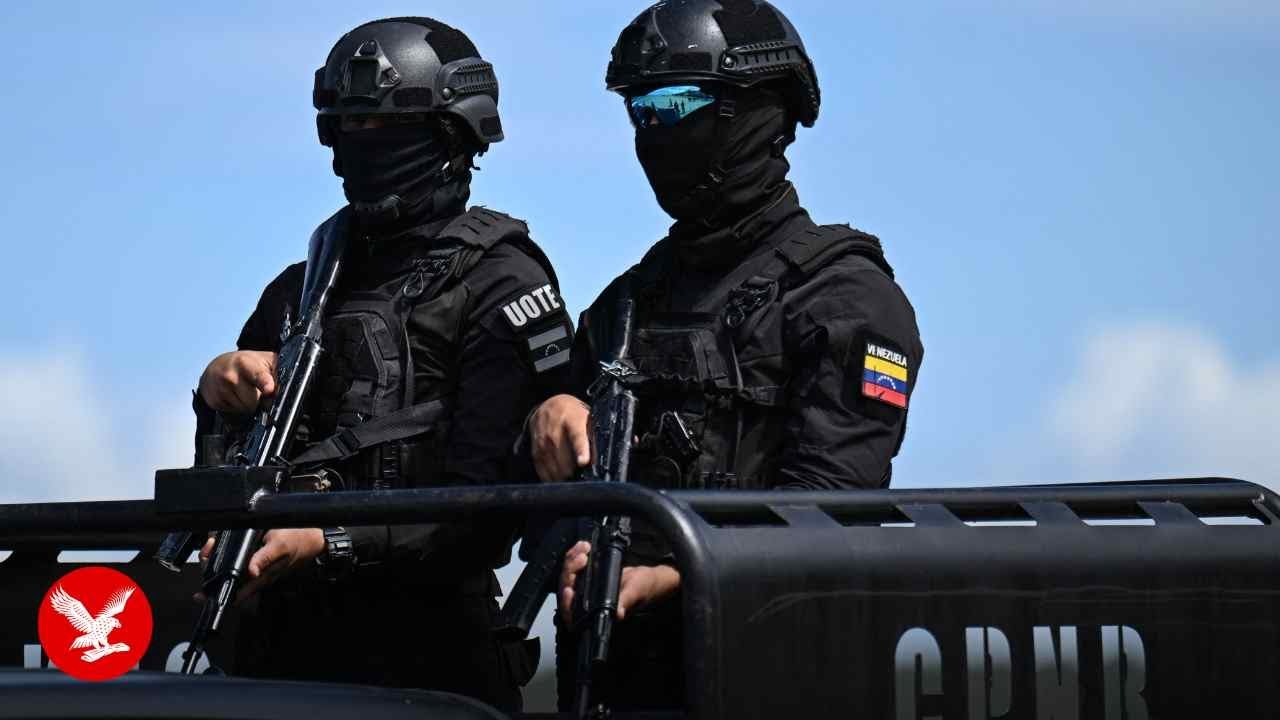
In a dramatic turn of events, the United States has launched a large-scale military strike against Venezuela, with former President Donald Trump claiming that Venezuelan leader Nicolas Maduro has been captured. The unprecedented actions on January 3, 2026, have sent shockwaves across the globe, raising urgent questions about international law, regional stability, and the future of US foreign policy. Initial reports confirmed explosions in and around Caracas, the Venezuelan capital, targeting both civilian and military installations, with significant damage reported at Venezuela’s largest military complex. This development marks a critical escalation in the long-standing tensions between the two nations.
The context leading up to these strikes involves years of diplomatic friction, economic sanctions, and accusations of human rights abuses against the Maduro regime. While specific triggers for this immediate military action remain under intense international scrutiny, a complex web of geopolitical factors, including Venezuela’s alliances with nations like Iran and Russia, likely contributed to the decision. The US government had previously issued stern warnings regarding Venezuela’s internal affairs and its regional influence, signaling a potential shift towards more direct intervention should diplomatic efforts fail to yield desired outcomes or if national security interests were perceived to be at risk.
Reports from the ground detailed a series of at least seven explosions and the presence of low-flying aircraft in the early hours of Saturday morning. Beyond Caracas, attacks were confirmed in Miranda, Aragua, and La Guaira, indicating a coordinated and widespread operation. Prior to the explosions, the US Federal Aviation Authority (FAA) had banned US commercial flights in Venezuelan airspace, citing “ongoing military activity.” This pre-emptive measure underscored the gravity of the impending situation, designed to alert pilots to significant safety-of-flight risks associated with the military operations unfolding.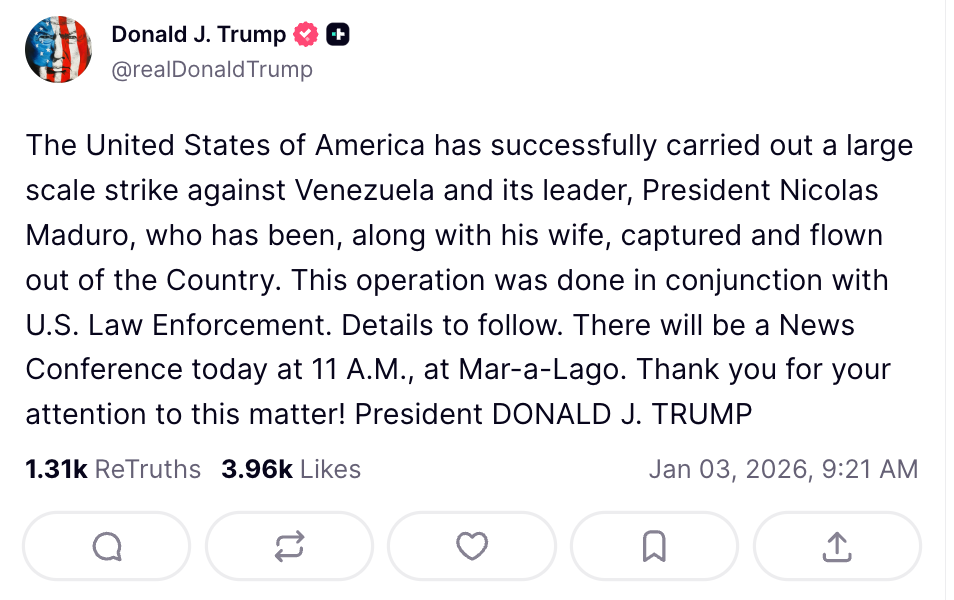
What happened during the US strikes in Venezuela? The United States carried out a large-scale military operation on January 3, 2026, targeting civilian and military installations in and around Caracas, Venezuela, following claims from former President Donald Trump that President Nicolas Maduro had been captured and flown out of the country, sparking international condemnation and local calls for mobilization.
Former President Donald Trump, utilizing his Truth Social platform, confirmed the US attack, stating: “The United States of America has successfully carried out a large scale strike against Venezuela and its leader, President Nicolas Maduro, who has been, along with his wife, captured and flown out of the Country.” He further added that this operation was conducted in conjunction with U.S. Law Enforcement and announced an upcoming press conference at Mar-a-Lago to provide more details, adding another layer of complexity to the unfolding narrative.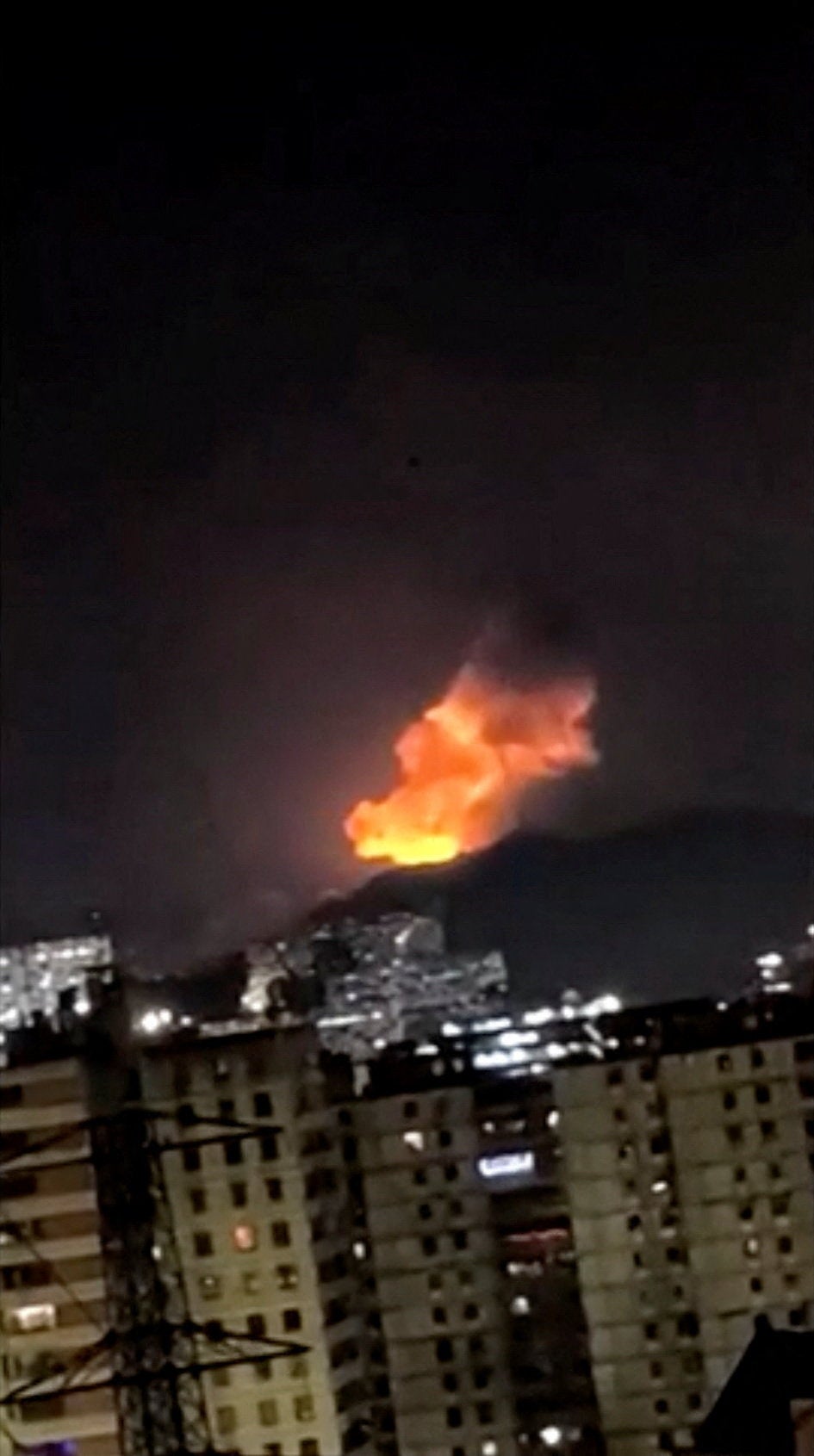
International reactions were swift and varied. Iran, a close ally of Venezuela due to their shared historical enmity with the US, immediately condemned the attack as a “blatant violation of its national sovereignty and territorial integrity.” Iranian state television extensively covered the explosions in Caracas, showing images of the capital and reinforcing its support for the Venezuelan government against what it termed an “imperialist attack.” This condemnation highlights the potential for broader geopolitical ramifications, drawing in other global powers.
Inside Venezuela, the government responded by issuing a powerful call to action, urging its supporters to take to the streets. A statement declared, “People to the streets! The Bolivarian Government calls on all social and political forces in the country to activate mobilization plans and repudiate this imperialist attack.” President Nicolas Maduro reportedly ordered the implementation of “all national defense plans” and declared a “state of external disturbance,” granting him expanded powers to suspend rights and enhance the military’s role in response to the perceived foreign aggression.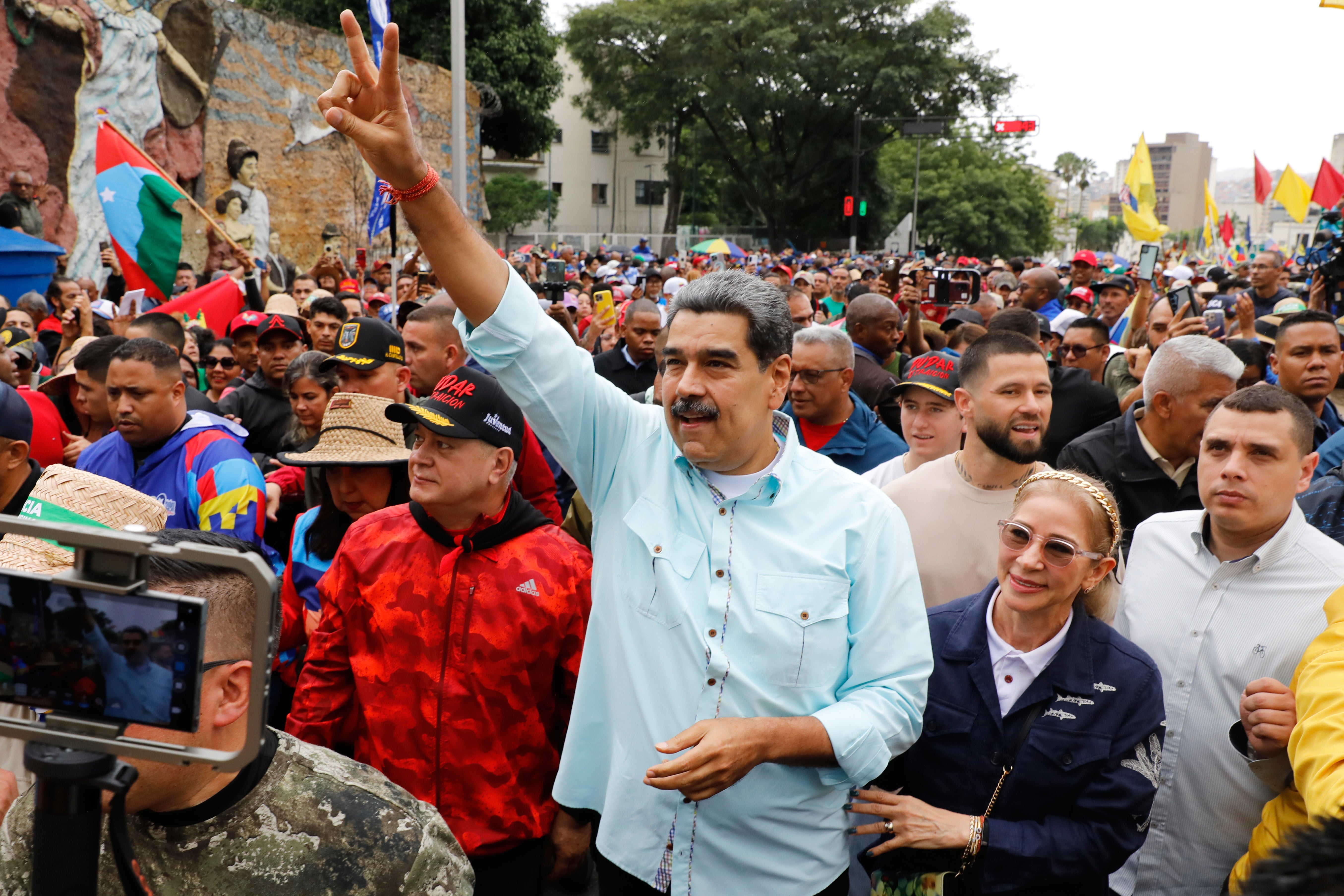
In the aftermath of the strikes, the US embassy in Colombia issued a critical advisory to its citizens, acknowledging reports of explosions in and around Caracas and instructing them to “shelter in place.” The embassy further warned against travel to Venezuela and advised US citizens to establish multiple methods of communication with friends and family outside of the country, emphasizing the rapidly deteriorating security situation and the need for extreme caution amidst the escalating conflict.
The precise details surrounding the US operations and the alleged capture of President Maduro remain shrouded in a fog of war and conflicting reports. A US official, speaking anonymously to Reuters, confirmed the strikes but refrained from providing further specifics, underscoring the sensitive and highly classified nature of the mission. This lack of immediate, comprehensive information from official US sources fuels speculation and uncertainty regarding the full scope and objectives of the intervention, leaving many questions unanswered about the legitimacy and legality of such a drastic action.
The geopolitical ramifications of the US striking Venezuela are immense, potentially reshaping alliances in Latin America and beyond. This intervention could lead to a significant realignment of regional power dynamics, impact global oil markets given Venezuela’s vast reserves, and test the limits of international law and sovereignty. The world watches closely as this unprecedented event unfolds, contemplating the long-term consequences for global stability and the future of international relations, particularly concerning how nations respond to internal crises in other sovereign states.
As the world grapples with the implications of this major development, the focus remains on the evolving situation in Caracas and the broader international response. The claim of Maduro’s capture, if confirmed, would mark a pivotal moment in Venezuela’s political history and a significant victory for US foreign policy objectives in the region. However, the full impact of why US struck Venezuela, and the subsequent fallout, will undoubtedly continue to unfold in the coming days and weeks, demanding careful observation and analysis from experts worldwide.