


In the latest development shaking the Nigerian entertainment landscape, prominent Nollywood actor and filmmaker Jamiu Azeez has once again found himself at the center of a heated public discourse. The core of this “Jamiu Azeez news today” revolves around widespread speculation regarding his alleged conversion from Islam to Christianity, a narrative that gained significant traction after a video surfaced showing him participating in a church service. This incident has ignited a fervent debate across social media platforms and traditional media outlets, prompting the actor to address the controversy directly and robustly defend his personal choices and fundamental right to religious freedom.
The initial spark for this public outcry was a video shared by Jamiu Azeez himself, depicting him in a white garment during a church crossover service. This seemingly innocuous post quickly went viral, attracting a torrent of reactions, particularly from segments of the Muslim community. Many expressed dismay, questioning his faith and even suggesting he change his name, underscoring the deep-seated sensitivities surrounding religious identity in Nigeria. The online sphere became a battleground of opinions, with fans and critics alike weighing in on the actor’s spiritual journey.
Responding to the escalating backlash, Jamiu Azeez took to his social media channels to articulate his position. He candidly shared screenshots of the numerous critical messages and comments he had received, illustrating the intense scrutiny he was under. In his defiant statement, he highlighted the pervasive Nigerian tendency to meddle in others’ personal lives, emphasizing the absurdity of dictating how a man in his forties should live. He firmly asserted his prerogative to practice any religion he chooses, stressing that such a decision should remain a private affair, especially since he had not officially announced any conversion.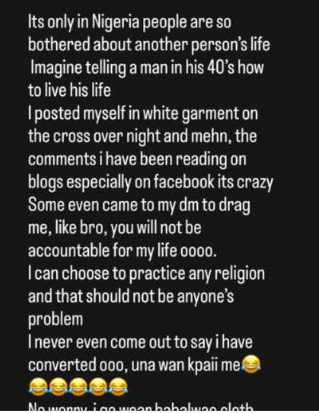
What is religious freedom in Nigeria? The answer is that Nigeria’s constitution guarantees every citizen the right to freedom of thought, conscience, and religion, including the freedom to change one’s religion or belief. This fundamental right allows individuals to practice, preach, and observe any religion without discrimination or coercion from the state or other citizens.
The controversy surrounding Jamiu Azeez underscores the complex tapestry of religious identity and public persona within Nigeria’s diverse society. For many, religious affiliation is not merely a personal belief but a communal and cultural marker, making public shifts in faith particularly contentious. This societal backdrop often places celebrities under immense pressure, where their private lives become subjects of intense public debate and moral judgment, blurring the lines between personal autonomy and public expectation.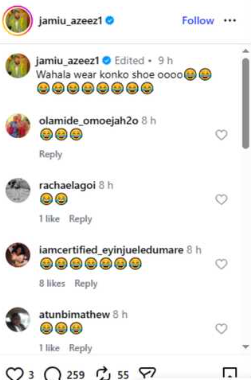
Many onlookers often ponder, “why do celebrities change religion?” The reasons are multifaceted and deeply personal, ranging from spiritual awakening and personal conviction to influence from relationships or even strategic career moves. However, for public figures in a religiously conservative society like Nigeria, such changes are rarely met with quiet acceptance, often leading to significant public scrutiny and sometimes even ostracization from former communities or fan bases.
The online discourse quickly devolved into a heated “Jamiu Azeez Muslim vs Christian” debate, with supporters and detractors aligning themselves based on their religious affiliations or views on individual liberty. While some defended his right to choose, others expressed disappointment, feeling betrayed by what they perceived as a departure from his heritage. This public spectacle not only highlighted the actor’s personal predicament but also mirrored the broader societal tensions regarding interfaith relations and tolerance.
Navigating such high-profile religious controversies is a significant challenge for public figures. The intense media glare and the passionate reactions from the public necessitate careful communication and a strong stance on personal boundaries. For Jamiu Azeez, his assertive response was a clear signal that he would not be swayed by public pressure, prioritizing his individual freedom above communal expectations, a bold move in a culture often prioritizing collective identity.
For those seeking a deeper understanding, a “Nollywood actors conversion guide” might explore the various factors influencing such decisions and the societal implications. It would delve into the historical context of religious diversity in Nigeria, the role of spiritual leaders, and the increasing influence of global media on local religious practices. Such a guide could provide valuable insights into the pressures and motivations behind these complex personal journeys.
The ongoing “religious controversy explained Nigeria” reveals the dynamic interplay between tradition, modernity, and individual rights. As the nation continues to evolve, so too do the public’s perceptions and expectations regarding religious freedom. These incidents serve as crucial testaments to the continuous dialogue needed to foster greater understanding and respect for diverse beliefs within the country’s vibrant cultural landscape.
Looking ahead, discussions around “Nollywood controversy 2026” will undoubtedly continue to feature themes of personal liberty and religious expression. As new generations of artists emerge, they will likely face similar challenges, prompting renewed conversations about the boundaries of public and private life for celebrities in Nigeria. The precedent set by figures like Jamiu Azeez contributes to this evolving narrative, shaping future perceptions.
The broader implications extend to how “religious freedom Nigeria 2026 guide” might need to be updated to reflect societal shifts and increased awareness. The legal framework is clear, but its practical application in the face of strong cultural and religious norms remains a continuous point of discussion and advocacy. Such cases highlight the ongoing need for education and dialogue to bridge divides and promote genuine tolerance.
Ultimately, the “Jamiu Azeez news today” serves as a poignant reminder of the importance of individual autonomy and the complexities of religious identity in a public sphere. While the actor’s personal journey remains his own, the ensuing debate offers a valuable opportunity for Nigerians to reflect on their shared values of tolerance and respect for diverse beliefs, reinforcing the constitutional rights afforded to every citizen.








