


Scientists have long warned that the H5N1 avian influenza virus could potentially transmit from birds to humans, sparking a global health crisis. This highly pathogenic strain of bird flu is prevalent across South and South-East Asia and has sporadically infected humans since its emergence in China in the late 1990s. The World Health Organization has recorded nearly 1,000 human H5N1 cases across 25 countries between 2003 and August 2025, with a significant fatality rate of 48%.
Recent outbreaks in the United States have impacted over 180 million birds and spread to more than 1,000 dairy herds in 18 states, infecting at least 70 people, primarily farmworkers. Tragically, the virus has also claimed the lives of wildlife, including three tigers and a leopard at a rescue center in India. Symptoms in humans typically mirror severe influenza, presenting as high fever, cough, sore throat, muscle aches, and sometimes conjunctivitis, though some infected individuals remain asymptomatic.
Recognizing the persistent threat, Indian researchers from Ashoka University have developed sophisticated modelling to simulate potential H5N1 outbreaks in human populations and identify effective early intervention strategies. This peer-reviewed research, published in BMC Public Health, utilizes real-world data and computer simulations to predict how an outbreak might unfold and what measures could contain it before widespread transmission occurs.
Professor Gautam Menon, one of the lead researchers, emphasized the genuine threat of an H5N1 pandemic, stating that enhanced surveillance and a swift public health response offer the best hope for prevention. A pandemic, he explained, would likely begin subtly with a single bird-to-human transmission, most commonly affecting individuals in close contact with poultry. The critical danger, however, lies in the virus’s potential for sustained human-to-human transmission.
Employing BharatSim, an open-source simulation platform initially designed for COVID-19, the researchers modelled a hypothetical outbreak in a village in Namakkal, Tamil Nadu, a region known for its extensive poultry industry. The model incorporated synthetic communities with realistic household, workplace, and market interactions, seeding the simulation with infected birds to replicate real-world exposure scenarios.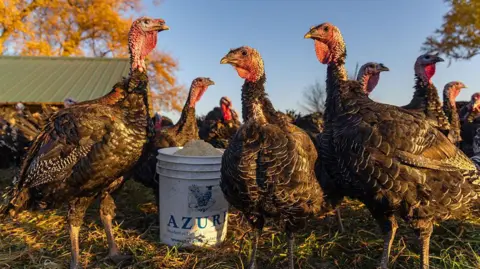
The study’s crucial finding for policymakers is the extremely narrow window of opportunity for effective intervention. Once human cases exceed a threshold of approximately two to ten, the disease is highly likely to spread beyond immediate contacts, making containment significantly more challenging. The research indicates that quarantining households upon the detection of just two cases could almost certainly prevent an outbreak from spiraling out of control.
However, by the time ten cases are identified, the infection has likely disseminated into the broader community, rendering early interventions far less effective. The simulations highlight the complex interplay of interventions such as culling birds, quarantining contacts, and vaccination. Culling birds proves effective only before human transmission occurs.
Isolating infected individuals and quarantining households can halt the virus at the secondary transmission stage. Yet, once tertiary infections emerge, controlling the outbreak requires more stringent measures, akin to lockdowns. Targeted vaccination can raise the threshold for sustained transmission but has limited immediate impact within households. The study also points to a trade-off with quarantine: implementing it too early can increase household transmission, while delaying it renders it largely ineffective.
Researchers acknowledge limitations, including the model’s reliance on a single synthetic village with fixed parameters and its exclusion of factors like migratory bird spread or behavioural changes. Virologist Seema Lakdawala of Emory University further notes that the model assumes highly efficient viral transmission, whereas actual flu transmission can be more complex and variable, with only a subset of infected individuals shedding infectious virus.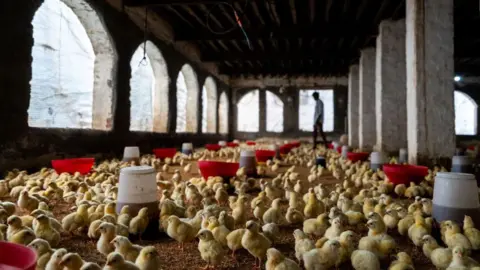
Dr. Lakdawala suggests that if H5N1 becomes established in humans, it could result in a disruption more akin to the 2009 swine flu pandemic than COVID-19, given existing preparedness and available antivirals and candidate vaccines. Nevertheless, complacency is ill-advised, as H5N1 could potentially reassort with existing human flu strains, leading to unpredictable and severe seasonal epidemics.


![[post_title]](https://samony.com.ng/wp-content/uploads/2025/12/1766018679_Florida-teen-undergoes-17-hour-surgery-to-amputate-170-pound-leg-that.png?lm=69434E77 "Florida Teen Undergoes Amputation for Rare 170-Pound Leg")

![[post_title]](https://samony.com.ng/wp-content/uploads/2025/12/Airtel-Africa-taps-Elon-Musks-Starlink-to-launch-direct-to-cell-service-300x158.png?lm=69434F92 "Airtel Africa, Starlink Partner for Direct-to-Cell Across 14 Markets")





