Despite a booming market for sugar-free products, a growing body of research and expert opinion suggests that artificial sweeteners may not offer the healthier alternative many consumers perceive. Dietitians are increasingly challenging long-held sugar myths, pointing to potential adverse health effects linked to sugar substitutes, including cognitive decline and gut microbiome disruption. This shift in understanding prompts a re-evaluation of sugar-free options in a well-balanced diet.
Consumer apprehension regarding sugar consumption has propelled the sugar-free market to significant growth, with projections indicating a global value of $84.3 billion by 2032. A recent survey revealed that 75 percent of Americans actively sought to reduce or avoid sugar, with 22 percent opting for sugar-free choices. Experts attribute this trend partly to fear-based messaging, where persistent myths about sugar’s role in addiction or serious diseases continue to circulate within wellness circles.
Concerns surrounding artificial sweeteners extend beyond mere nutritional value. Research from the American Academy of Neurology indicates that individuals consuming over 190 milligrams of sweeteners daily experienced a 62 percent faster decline in cognitive and memory skills compared to those consuming significantly less. Furthermore, dietitians like Avery Zenker highlight links between artificial sweeteners, such as sucralose, aspartame, and stevia, and altered appetite, increased inflammation, and disruptions to the gut microbiome, which can heighten vulnerability to infections.
Zenker further elaborated on the impact of these substitutes on gut health, stating, “There’s decent evidence they alter the gut microbiome, and disrupt gut barrier function (i.e., contribute to ‘leaky gut’).” This condition, characterized by damage to the intestinal lining, can manifest as bloating or food sensitivities. Some individuals also report experiencing headaches or digestive symptoms directly attributable to artificial sweeteners, reinforcing the notion that these compounds may not offer strong health benefits and could potentially harm health.
Beyond the primary artificial sweeteners, sugar alcohols frequently found in sugar-free treats present their own set of digestive challenges. Registered Dietitian Nutritionist Alison Swiggard explains that compounds like erythritol, xylitol, sorbitol, and maltitol are not fully absorbed in the digestive tract. Instead, they travel to the large intestine where bacterial fermentation leads to increased gas production, bloating, cramping, and loose stools when consumed in substantial quantities.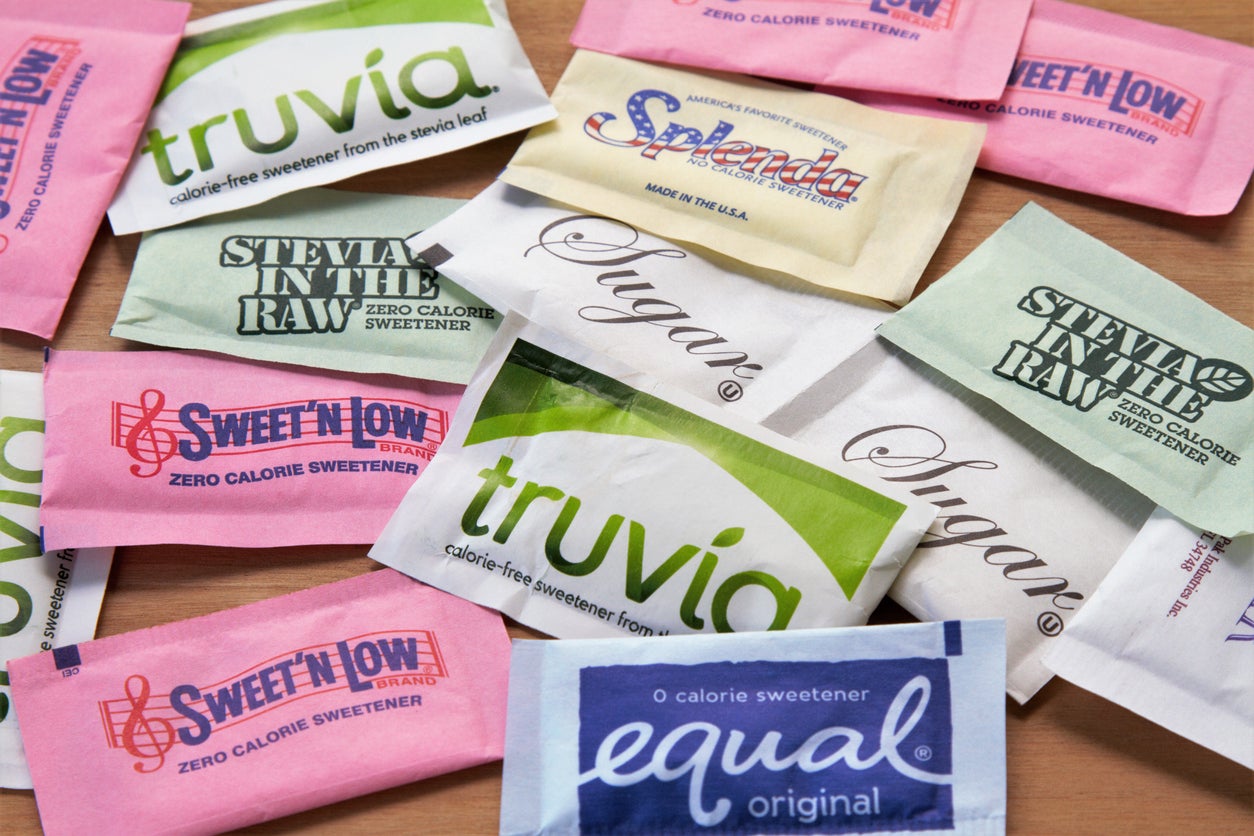
The composition of many sugar-free desserts often includes high levels of saturated fats, such as butter and palm oil, used to maintain flavor, moisture, and structure. Zenker warns that excessive intake of saturated fats is linked to increased risks of cardiovascular disease and high cholesterol. Additionally, some sugar-free options contain significant amounts of refined carbohydrates, like wheat flour and starches, which can contribute to weight gain, systemic inflammation, and worsen insulin sensitivity, critical for stable blood sugar levels.
Zenker emphasizes the potential for refined carbohydrates in sugar-free desserts to undermine health goals. She notes, “The glucose from refined carbs is rapidly absorbed into the bloodstream, increasing blood sugar levels.” Consequently, excessive consumption of these ingredients can still impair insulin sensitivity, disrupt blood sugar regulation, and elevate the risk of type 2 diabetes. Replacing added sugar with high-glycemic index refined carbohydrates offers minimal benefit and may exacerbate certain health risk markers.
Despite these concerns, artificial sweeteners do offer some acknowledged benefits, such as reducing the risk of tooth decay and cavities, according to the Mayo Clinic. For certain individuals, they can serve as a short-term aid for weight management or are consumed for specific medical reasons, particularly diabetes. However, dietitians urge consumers to critically examine ingredient labels and reflect on their motivations for choosing sugar-free options.
Swiggard advises a balanced and mindful approach to consumption. She suggests that if sugar-free choices genuinely provide satisfaction and support, they can be incorporated into holiday eating or daily diets. Conversely, if they feel restrictive or unsatisfying, it may be more nourishing, both physically and emotionally, to enjoy traditional desserts in moderation and with a relaxed mindset, rather than adhering to rigid dietary rules.
For those seeking alternatives without added sugars or artificial sweeteners, Zenker recommends embracing natural, whole-food options. “Using whole food sweeteners like dates, bananas, and applesauce can be nutrient-dense alternatives to sugar,” she advises. While these still contain natural sugars, they are not associated as strongly with the health risks linked to refined sugars, offering a more wholesome approach to satisfying a sweet tooth.