


Violence has broken out in Bangladesh following the death of Sharif Osman Hadi, a prominent figure in the youth movement that led to the ousting of former Prime Minister Sheikh Hasina. Hadi, 32, was shot by masked assailants last week as he left a mosque in Dhaka and succumbed to his injuries on Thursday while receiving treatment in Singapore. His death occurred just one day after Bangladeshi authorities announced the date for the nation’s first elections since the 2024 uprising, an election Hadi had intended to contest as an independent candidate.
News of Hadi’s passing triggered immediate protests, with hundreds of his supporters converging in a central Dhaka square. The demonstrations later escalated, with rioters vandalizing the offices of major Bangladeshi newspapers, including The Daily Star and Prothom Ali. One newspaper building was set ablaze, prompting a swift response from law enforcement and emergency services. Police reported that a significant number of individuals participated in the attacks on the media outlets.
Security forces were deployed to the affected areas to restore order and protect citizens and property. Firefighters worked to extinguish the blaze at the newspaper office and to rescue journalists who were reportedly trapped inside the building. The incident underscores the volatile political climate in Bangladesh, where tensions remain high following the recent period of significant civil unrest and the subsequent change in government.
Hadi was a key leader within the Inqilab Mancha, a prominent student protest group, and had been an outspoken critic of neighboring India, where the former Prime Minister Sheikh Hasina is currently residing in self-imposed exile. His death has been met with widespread condemnation from Bangladeshi political factions, who have urged the interim government to ensure that those responsible are brought to justice swiftly.
Nobel laureate Muhammad Yunus, who heads the caretaker government, described Hadi’s death as an “irreparable loss for the nation.” In a televised address, Yunus emphasized that “the country’s march toward democracy cannot be halted through fear, terror, or bloodshed.” The interim government has declared a day of national mourning for Saturday, reflecting the gravity of the situation and the impact of Hadi’s passing on the country’s political trajectory.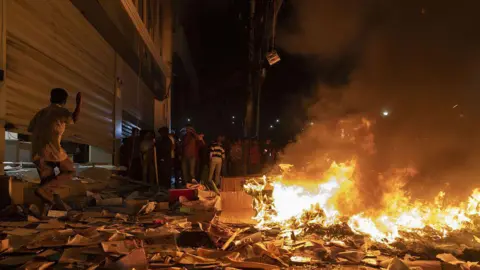
Prior to his death, Yunus had characterized the shooting as a premeditated act aimed at disrupting the upcoming elections. He stated that “the objective of the conspirators is to derail the election” and vowed that “no form of violence intended to disrupt the election will be tolerated.” The incident is viewed as a deeply concerning development for Bangladesh’s democratic transition and its efforts to establish a stable political future following a period of upheaval and authoritarian rule.
Investigations into the shooting are actively underway, and authorities have confirmed the detention of several individuals in connection with the attack. The events of the past week highlight the fragility of the current political landscape and the challenges facing the interim government as it navigates the path towards free and fair elections. The nation now faces the difficult task of addressing the underlying causes of the violence and ensuring accountability for those responsible.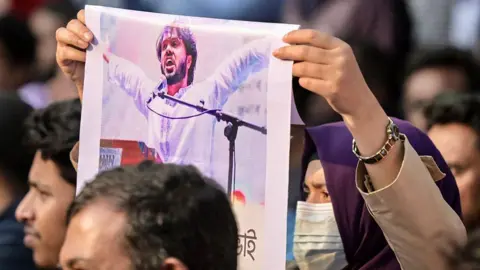
Former Prime Minister Sheikh Hasina fled to India on August 5th of the previous year, following weeks of intense student-led protests that ultimately ended her 15-year tenure, which had been marked by increasingly authoritarian governance. In November, Hasina was sentenced to death on charges of crimes against humanity, having been found guilty of authorizing the use of lethal force against protesters, an action that resulted in the deaths of approximately 1,400 individuals during the period of unrest.

![[post_title]](https://samony.com.ng/wp-content/uploads/2025/12/Ex-Nascar-driver-and-family-believed-to-be-among-seven-killed-300x169.jpg?lm=69448311 "Former NASCAR Star Greg Biffle and Family Die in Statesville Plane Crash")
![[post_title]](https://samony.com.ng/wp-content/uploads/2025/12/Achievements-and-regrets-Peter-Malinauskas-and-Ashton-Hurn-reflect-on-300x169.jpeg?lm=694483D8 "SA Leaders Reflect on Tumultuous 2025 Ahead of State Election")
![[post_title]](https://samony.com.ng/wp-content/uploads/2025/12/NNPC-earns-N445bn-in-PSC-management-fees-in-11-months-300x162.jpg?lm=6944842A "NNPC Collects N445 Billion in Production Contract Fees")

![[post_title]](https://samony.com.ng/wp-content/uploads/2025/12/I-Am-Still-Going-to-Drink-Tonight-Because-of-the-300x150.jpeg?lm=69447DDF "Nigeria’s Petroleum Regulator Shake-Up: Ahmed Removed Amid Dispute")


![[post_title]](https://samony.com.ng/wp-content/uploads/2025/12/1766098226_Niagara-Falls-could-be-getting-its-own-amusement-park-in.png?lm=69448532 "Niagara Falls Poised for Major Tourism Overhaul with New Attractions")
![[post_title]](https://samony.com.ng/wp-content/uploads/2025/12/Ex-Nascar-driver-and-family-believed-to-be-among-seven-killed.jpg?lm=69448310 "Former NASCAR Star Greg Biffle and Family Die in Statesville Plane Crash")
![[post_title]](https://samony.com.ng/wp-content/uploads/2025/12/Achievements-and-regrets-Peter-Malinauskas-and-Ashton-Hurn-reflect-on.jpeg?lm=694483D7 "SA Leaders Reflect on Tumultuous 2025 Ahead of State Election")
