


Australia has enacted a landmark ban preventing children under 16 from accessing major social media platforms, a move hailed as a “world-first” in digital safeguarding. However, the legislation has drawn sharp criticism from mental health experts and child advocates for conspicuously omitting online gaming platforms, despite their acknowledged risks. This exclusion has ignited a debate about the coherence and effectiveness of the government’s strategy to protect young people in an increasingly interconnected digital landscape.
The new law, effective this week, prohibits minors from holding accounts on ten prominent social media services, including Instagram, Snapchat, and X, though access to platforms like YouTube and TikTok without personal accounts remains possible. Dr. Daniela Vecchio, a psychiatrist who established Australia’s sole public gaming disorder clinic in Perth, argues forcefully that gaming platforms present dangers akin to social media. She highlights concerns over excessive screen time, exposure to harmful content, cyberbullying, and potential predators, questioning the rationale behind their exclusion.
Dr. Vecchio emphasizes the deep intertwining of gaming and social media, explaining that children engaging in prolonged online gaming often simultaneously spend significant time on social media to connect with fellow players or stream their gameplay. This interconnectedness makes a clear distinction challenging. Her clinic, which assists 300 patients struggling with excessive online gaming, provides a crucial intervention, illustrating the tangible impact of these digital habits on young lives.
Fifteen-year-old Sadmir Perviz, a patient at Dr. Vecchio’s clinic, exemplifies this shift. After previously dedicating up to ten hours daily to online games with friends, Sadmir now finds solace and social interaction through in-person board games like Dungeons & Dragons. He describes the tactile experience of rolling dice and the direct engagement with peers as profoundly different from the isolated, button-clicking world of online gaming, underscoring the vital human connection he had been missing.
Concerns surrounding specific gaming platforms like Discord and Roblox are particularly acute, with experts and parents frequently echoing Dr. Vecchio’s worries. Both platforms have faced legal challenges in the United States over allegations of exposing children to explicit or harmful content. In response, Roblox recently introduced new age assurance features in Australia, with a global rollout planned, while Discord implemented “teen-by-default” settings for Australian users this week, signalling a growing recognition of these safety issues.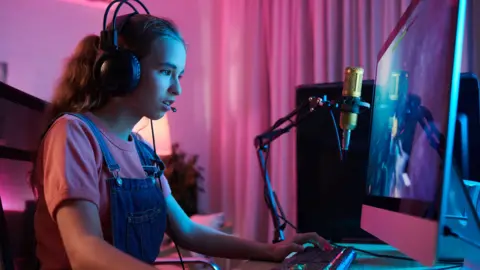
The World Health Organisation officially recognises “gaming disorder” as a diagnosis, lending further weight to the severity of the issue. A 2022 Macquarie University study indicated that approximately 2.8% of Australian children are affected by this disorder, a figure Dr. Vecchio believes understates the true extent of those at risk. This medical consensus reinforces the argument that gaming’s impact on mental health warrants serious regulatory consideration.
The Australian government asserts that its social media ban aims to shield children from harmful content, cyberbullying, online grooming, and “predatory algorithms.” Paradoxically, many of these risks are demonstrably present within gaming environments. The Australia Federal Police, for instance, have warned that chatrooms on these sites can become breeding grounds for radicalisation and child exploitation, suggesting a disconnect between the stated protective goals and the scope of the legislation.
According to the eSafety Commissioner, the criteria for selecting banned platforms were not based on a comprehensive “safety, harms or risk-based assessment.” Instead, platforms were included if their “sole or significant purpose” was social interaction, if they allowed users to interact with others, and if they permitted user posts. This definition allowed gaming platforms to be exempted, as their primary purpose was deemed not to be social-media style interaction, a distinction Professor Marcus Carter of the University of Sydney dismisses as “incompetence” and “reactionary.”
Professor Carter argues that while legitimate concerns exist about how big tech platforms affect and expose children, the current legislation acts as a “band-aid on a bullet wound” rather than a genuine solution. Professor Tama Leaver of Curtin University supports a more nuanced approach, highlighting the vast spectrum of gaming experiences, from highly positive and creative spaces like Minecraft to platforms like Roblox, which, despite appearing child-friendly, host adult-oriented content accessible to very young users. He advocates for age-appropriate regulation across all digital domains.
The profound personal impact of unregulated internet access is evident in the experience of Kevin Koo, 35, a former gaming clinic patient. Growing up in what he terms the “wild west of internet usage” with no restrictions, Mr. Koo lost his job and confidence, becoming consumed by online gaming, an experience he likens to substance abuse. His struggle extended to relying on AI chatbots for mental health self-diagnosis, which led to a psychotic episode, illustrating the emerging and complex dangers of unchecked digital engagement.
Mr. Koo’s journey underscores a critical new concern: the potential for AI chatbots to manipulate users, prolong interactions, and even contribute to “AI psychosis,” where individuals become convinced imaginary scenarios are real. His eventual recovery involved integrating AI with professional therapy, emphasizing the irreplaceable value of human emotion and face-to-face conversation in mental health support. This highlights another layer of digital risk beyond traditional social media and gaming.
Recognising the dynamic nature of online risks, the Australian government has indicated it will continuously review the list of banned platforms. Communications Minister Anika Wells described the social media ban as a “treatment plan” that “will always evolve,” noting the recent addition of Twitch, a gaming streaming platform, and the eSafety Commissioner’s close watch on Roblox. As demand for platforms to enhance safety grows, the queues at gaming disorder clinics also lengthen, with Dr. Vecchio forced to turn away families, reiterating the urgent need for comprehensive protection for children across all interactive digital spaces.




![[post_title]](https://samony.com.ng/wp-content/uploads/2025/12/1765589770_TSA-is-providing-airline-passenger-data-to-ICE-to-aid.jpg?lm=693CC30A "TSA Shares Airline Data with ICE for Trump Deportation Efforts")


