

![[post_title]](https://samony.com.ng/wp-content/uploads/2025/12/1764575847_Aitana-Bonmati-breaks-leg-in-training-as-Spain-dealt-huge-1024x683.jpeg?lm=692D4A68)
Aitana Bonmati’s Injury: A Setback, But What Does It Really Mean for Women’s Football?
Aitana Bonmati’s fractured fibula is certainly unfortunate. Reading about her injury, a seemingly innocuous training ground incident, is a reminder of the fragility of athletes, even those at the peak of their game. This isn’t just a blow for Barcelona and Spain; it ripples through the entire women’s football landscape. It prompts questions about player welfare, the demands placed on top athletes, and the broader evolution of the sport.
The immediate impact is clear. Barcelona will miss her creativity and control in midfield. Spain’s chances in the Nations League final undoubtedly diminish. It’s tough to replace a Ballon d’Or winner, after all. Yet, the deeper implications warrant closer examination.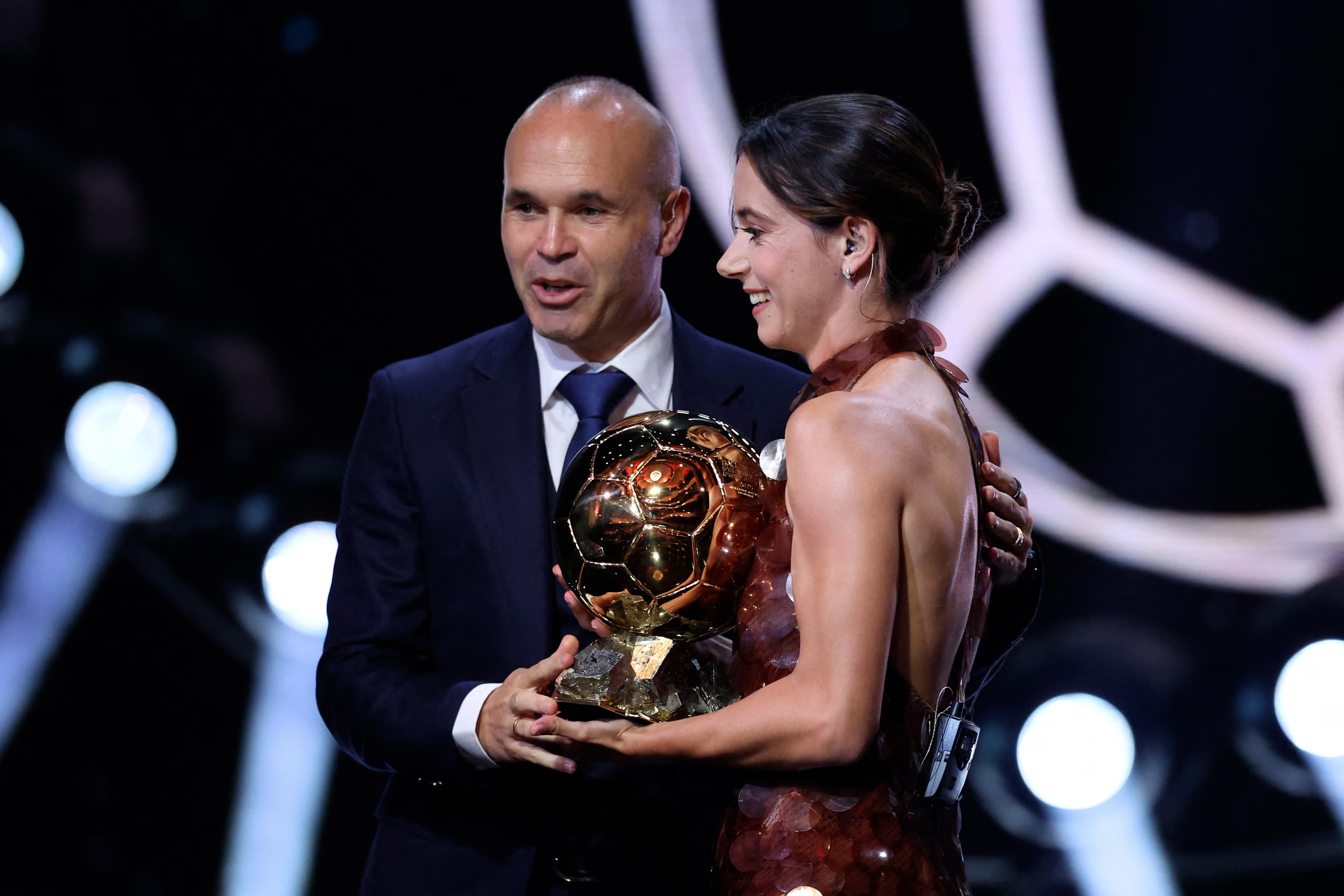 >
>
Player workload is a recurring concern. Bonmati, like many elite players, juggles club and country commitments, playing countless matches across various competitions. Travel, training, and the physical toll of constant high-intensity games mount up. Are governing bodies doing enough to prioritize player recovery and injury prevention? Are fixture schedules reasonable? These are not new questions, but Bonmati’s injury underscores their urgency.
Look at the bigger picture. Women’s football is experiencing exponential growth. Increased media coverage, larger sponsorships, and burgeoning fan bases are fueling its ascent. With this growth comes increased pressure to perform, both individually and collectively. This demand for excellence translates into more training, more matches, and ultimately, more risk of injury.
I have seen similar patterns emerge in other sports during periods of rapid expansion. The initial excitement and investment often overshadow the need for sustainable practices. It becomes crucial to balance ambition with athlete well-being. It’s a challenge the women’s game must confront head-on to avoid jeopardizing its long-term success.>
The response to Bonmati’s injury, both from clubs and federations, will be telling. Will it prompt a genuine review of training regimes, match schedules, and player support systems? Or will it be treated as an isolated incident, a mere bump in the road? I believe the former is essential.
Furthermore, this incident casts a spotlight on the research and development dedicated to women’s football. Are training methods and equipment adequately tailored to the specific needs and physiology of female athletes? Too often, women’s sports have been an afterthought, relying on approaches designed primarily for men. This needs to change. Investment in sport science and injury prevention programs is not simply a matter of fairness; it’s a strategic imperative.
It’s also worth noting the psychological aspect. The pressure on players like Bonmati is immense. They are not just athletes; they are role models, ambassadors, and symbols of progress. That pressure can contribute to fatigue and mental strain, indirectly increasing the risk of injury. Providing comprehensive mental health support is as vital as physical conditioning.
Beyond the immediate consequences, Bonmati’s absence provides an opportunity for other players to step up. This can be a chance for young talents to gain valuable experience and prove their worth. It might force Barcelona and Spain to adapt their tactics, discover new strengths, and become more resilient.
Still, the reliance on a single star player exposes a potential vulnerability. Developing a deeper pool of talent and fostering a more collective style of play can mitigate the impact of individual absences. This requires investment in youth development programs and a focus on building squad depth.
In any case, Bonmati’s injury serves as a wake-up call. It’s a reminder that the pursuit of excellence should never come at the expense of player welfare. Sustainable growth requires a holistic approach that prioritizes the health, safety, and well-being of athletes. Otherwise, the rapid progress we’re witnessing could be undermined by preventable setbacks.
The women’s game has come too far to let that happen. It requires proactive measures, not reactive responses, to ensure its continued success. This includes increased investment in research, improved player support, and a commitment to creating a more sustainable and equitable sporting ecosystem. Let’s hope Bonmati’s injury acts as a catalyst for positive change, rather than simply a footnote in her illustrious career. Given these facts, it’s the least we can do for her and the future of women’s football.
To that end, let’s keep a close eye on how this situation unfolds. The actions taken in the coming months will speak volumes about the commitment to player welfare within women’s football. Time will tell if this is merely a temporary setback or a crucial turning point.

![[post_title]](https://samony.com.ng/wp-content/uploads/2025/12/1764574906_My-lover-promised-me-hed-stopped-sleeping-with-his-wife-300x158.jpg?lm=692D46BB "Decoding Modern Relationship Patterns: Lessons from the Advice Column Front Lines")
![[post_title]](https://samony.com.ng/wp-content/uploads/2025/12/1764575847_Aitana-Bonmati-breaks-leg-in-training-as-Spain-dealt-huge-300x200.jpeg?lm=692D4A68 "Aitana Bonmati Injury: Exposing the Demands and Future of Women’s Football")
![[post_title]](https://samony.com.ng/wp-content/uploads/2025/12/Ogun-Govt-to-conduct-free-lead-test-for-Ogijo-residents-300x200.jpeg?lm=692D44CA "ULAB Recycling in Nigeria: From Crisis Response to Sustainable Systems")
![[post_title]](https://samony.com.ng/wp-content/uploads/2025/12/1764574705_Trump-unleashes-latest-insult-at-female-reporter-as-he-says-300x200.jpg?lm=692D45F4 "Trump vs. the Press: Is This How Politics Works Now?")
![[post_title]](https://samony.com.ng/wp-content/uploads/2025/12/1764574213_Man-shares-how-young-artists-life-transformed-after-impromptu-performance-300x150.jpg?lm=692D4408 "Lagos Artist’s Viral Moment: Luck, PR Stunt, or a Real Chance?")


![[post_title]](https://samony.com.ng/wp-content/uploads/2025/12/Mr-PresidentNorth-Is-BleedingI-Toured-Entire-CountryI-Just-Finished-Tour.jpeg?lm=692D462D "Northern Nigeria Insecurity: Beyond Military Might, Rebuilding Trust and Opportunity")
![[post_title]](https://samony.com.ng/wp-content/uploads/2025/12/1764574906_My-lover-promised-me-hed-stopped-sleeping-with-his-wife-1024x538.jpg?lm=692D46BB "Decoding Modern Relationship Patterns: Lessons from the Advice Column Front Lines")
