

AI Regulation: Is a Federal Takeover on the Horizon?
Donald Trump’s renewed push to preempt state AI laws sparks a critical debate: who should regulate artificial intelligence? The argument centers on whether a patchwork of state regulations will stifle innovation and allow China to gain an advantage, or if federal control risks oversimplification and ignores local needs.
Trump’s proposal mirrors Senator Ted Cruz’s earlier efforts, aiming to establish a uniform federal framework. This would involve the FTC playing a key role in defining preemptive guidelines, potentially overriding state laws deemed to interfere with truthful AI outputs.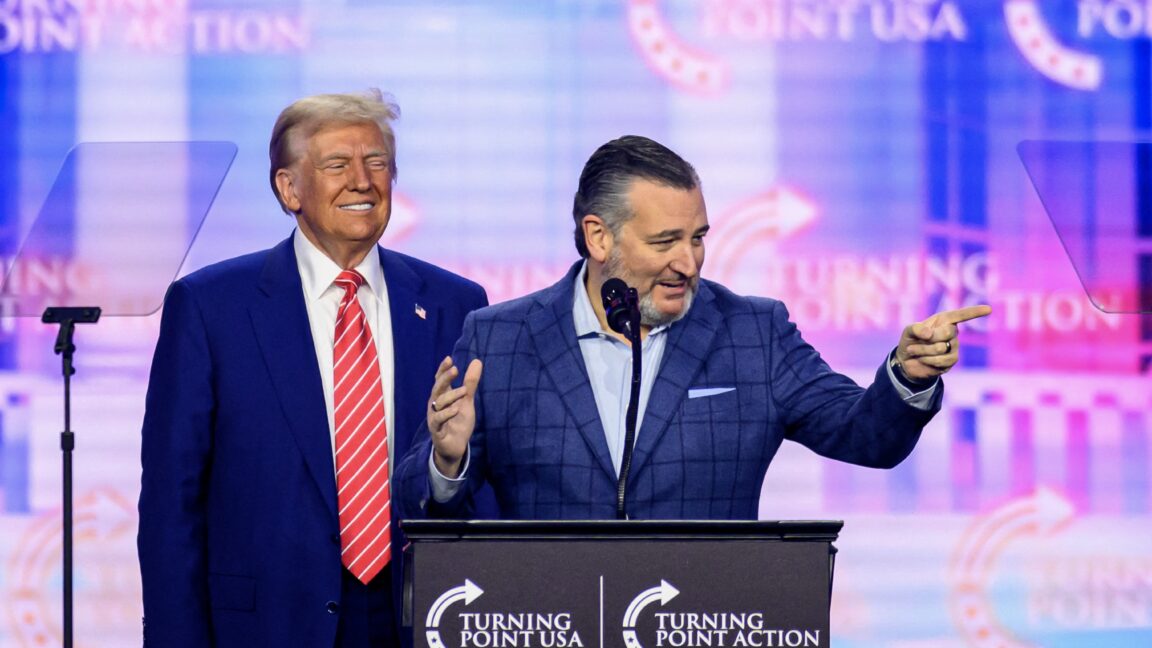 >
>
Yet, this approach isn’t without controversy. Consider the concerns raised by senators like Marsha Blackburn and Maria Cantwell. They see state-level AI regulation as vital for consumer protection, especially regarding issues like robocalls, deepfakes, and autonomous vehicles. Their opposition highlights a critical tension: the need for both innovation and safety.
Steve Scalise’s suggestion to include a ban on state AI laws in the National Defense Authorization Act (NDAA) signals the intensity of this debate. Democrats, like Senator Jack Reed, are pushing back, emphasizing the importance of allowing states to lead on AI regulation given the slow pace of federal action.
Trump’s justification, arguing that states are embedding DEI ideology into AI, injects another layer of complexity. This raises questions about the motivations behind federal preemption and whether it serves broader political agendas.>
It’s worth noting that a centralized federal standard certainly offers appeal. One set of rules could streamline compliance for businesses and potentially accelerate AI development. Still, past experience suggests that federal regulations can be slow to adapt to technological advancements. State-level experimentation, while potentially messy, allows for faster iteration and more tailored solutions.
Given these facts, the path forward remains unclear. The debate highlights fundamental questions about federalism, innovation, and the role of government in regulating emerging technologies. The outcome will significantly shape the future of AI development and deployment in the United States.


![[post_title]](https://samony.com.ng/wp-content/uploads/2025/12/2026-World-Cup-draw-300x140.png?lm=69334EB1 "2026 World Cup: Forget the Hype, What Does the Draw Really Mean?")



![[post_title]](https://samony.com.ng/wp-content/uploads/2025/12/1764969684_What-Netflixs-54bn-takeover-of-Warner-Bros-means-for-Hollywood-300x158.jpg?lm=69334CD7 "Streaming’s New Colossus: Integrating Legacy, Navigating Monopoly, and Preserving Creative DNA")

![[post_title]](https://samony.com.ng/wp-content/uploads/2025/12/An-diesem-beliebten-Mallorca-Strand-sind-neue-Benimmregeln-geplant-1024x538.jpg?lm=6933533D "Sóller’s Beach Ban: Paradise Lost or Sanity Restored? Mallorca’s Urgent Debate")
![[post_title]](https://samony.com.ng/wp-content/uploads/2025/12/Mother-drinks-annoiting-oil-rubs-it-on-her-forehead-as-1024x535.jpg?lm=693353AF "Viral TikTok: How Faith Endures in a Tech-Driven World")
![[post_title]](https://samony.com.ng/wp-content/uploads/2025/12/2026-World-Cup-draw-1024x477.png?lm=69334EB2 "2026 World Cup: Forget the Hype, What Does the Draw Really Mean?")
