

![[post_title]](https://samony.com.ng/wp-content/uploads/2025/11/Acosta-labels-MotoGP-2025-as-a-wasted-year-amid-search-1024x682.jpg?lm=69273D84)
Pedro Acosta’s “Wasted Year” in MotoGP: A Critical Look at Expectations and Realities
Pedro Acosta, the young MotoGP phenom, recently characterized his 2025 season as a “wasted year,” sparking considerable debate within the racing community. His remarks, delivered after securing fourth place in the championship – KTM’s best-ever result – reveal a fascinating tension between raw talent, ambition, and the harsh realities of top-tier motorcycle racing.
Acosta’s frustration, at face value, seems almost petulant. Achieving fourth in the world is hardly a failure. Yet, framing it all differently, consider Acosta’s trajectory. From Moto3 and Moto2 champion, he entered MotoGP with immense hype. He didn’t just aim for points; he aimed for dominance. Perhaps this is why failing to achieve a single victory feels, to him, like a stagnation.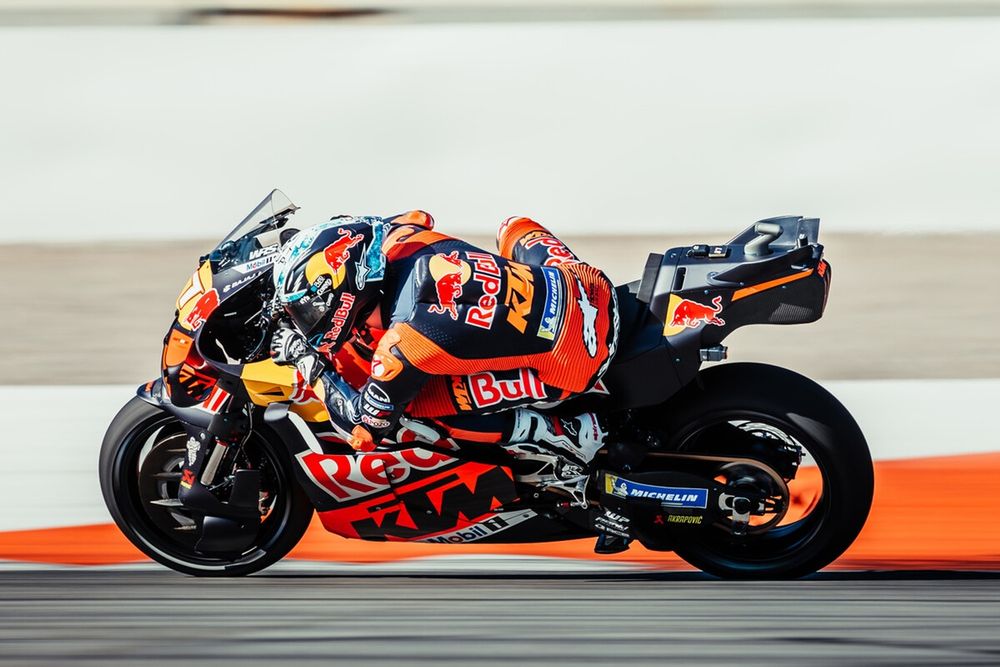 >
>
The Autosport article highlights Acosta’s self-assessment. He acknowledges growth in consistency and race craft. He concedes an improved understanding of managing races. Still, he argues that these improvements haven’t translated into the desired results: regular podium contention and, crucially, that elusive race win. It prompts a question: are his expectations unrealistic, or is something else at play?
KTM’s struggles early in the season can’t be dismissed. The article mentions financial difficulties impacting performance. An aero update mid-season demonstrably changed their fortunes, helping Acosta amass a large chunk of his points total in the latter half of the year. This suggests that the bike itself played a significant role in his initial struggles. To that end, Acosta’s “wasted year” might better be framed as a year of development hampered by external factors.
MotoGP is, after all, a team sport as much as an individual one. Even the most gifted rider needs a competitive machine beneath them. While Acosta undoubtedly possesses exceptional talent, expecting him to consistently outperform a bike that, for part of the season, wasn’t up to par seems a bit much.>
What intrigues me most is the psychological aspect. Acosta states, “Here in MotoGP, there’s no magic: you have to know where you stand.” It showcases a level of self-awareness unusual for someone so young. He recognizes the need for patience, even while expressing his disappointment. I have noticed this in other young racers; an ability to see the bigger picture.
The article briefly touches on Ducati’s expected continued dominance. Both Aprilia and KTM displayed improvements. Still, Ducati is likely to hold the advantage before the 2027 engine regulation changes. This challenge adds another layer to Acosta’s situation. He’s not just fighting other riders; he’s fighting against superior machinery.
It’s worth noting Acosta’s reflections on his personal evolution. He asserts that he’s a better rider now than when he won in Moto3 and Moto2. He highlights his improved race management and reduced tendency to crash. These are not small gains. Even without victories, he’s clearly developing into a more complete racer.
The question arises: is this development enough to satisfy his ambitions? And, more importantly, is it enough to position him as a future championship contender? Acosta himself seems to believe so. He says, “I’m becoming a better rider for when my time comes – which has to come.” This statement, full of conviction, hints at a long-term strategy, a belief that his hard work will eventually pay off.
Given these facts, consider the broader context of MotoGP. The sport is fiercely competitive, with established stars and emerging talents vying for the same limited podium spots. Success isn’t guaranteed, even for the most gifted individuals.
Acosta’s comments about “throwing the bike away in frustration” earlier in the season, compared to his later, more measured approach, reveal a crucial shift in mindset. He’s learning to manage his emotions, a vital skill in a sport where pressure is constant and mistakes are costly.
The article’s mention of Pirelli’s upcoming takeover from Michelin in 2027 adds another element of uncertainty to the future of MotoGP. Tire performance can significantly impact race outcomes. Acosta, and all other riders, will have to adapt to a new tire supplier, potentially altering the competitive landscape.
However, viewing Acosta’s statement purely as negativity misses the point. I suggest seeing it as an elite athlete’s unvarnished desire for more. It’s a hunger that fuels ambition and drives improvement. The real test will be how he channels this frustration into future performance.
Ultimately, whether 2025 was truly a “wasted year” for Pedro Acosta remains a matter of perspective. He gained valuable experience, honed his skills, and secured a commendable championship position. Whether these achievements align with his lofty goals is another matter. Only time will tell if he can transform this perceived setback into a springboard for future success in MotoGP.

![[post_title]](https://samony.com.ng/wp-content/uploads/2025/12/I-Placed-Police-Officers-on-My-Payroll-Paid-112000-Naira-300x225.jpeg?lm=693E2907 "Ex-Lawmaker Admits Paying Police Officers Directly")


![[post_title]](https://samony.com.ng/wp-content/uploads/2025/12/1765678217_Adekunle-Gold-Teases-Show-In-Lagos-300x235.jpeg?lm=693E1C8B "Adekunle Gold Hints at Major Lagos Concert Soon")


![[post_title]](https://samony.com.ng/wp-content/uploads/2025/12/Orlando-Magic-vs-New-York-Knicks-Where-to-watch-the-1024x576.jpg?lm=693E2ECE "Knicks, Magic Set for High-Stakes Semifinal Clash in Las Vegas")
![[post_title]](https://samony.com.ng/wp-content/uploads/2025/12/Stop-Malicious-Propaganda-Bala-Mohammed-Not-Planning-To-Dump-PDP.jpg?lm=693E2B95 "Bauchi Governor Denies PDP Defection Rumors")
![[post_title]](https://samony.com.ng/wp-content/uploads/2025/12/I-Placed-Police-Officers-on-My-Payroll-Paid-112000-Naira.jpeg?lm=693E2905 "Ex-Lawmaker Admits Paying Police Officers Directly")
