

The Mambilla Power Project latest news reveals a significant development in the ongoing corruption trial surrounding Nigeria’s ambitious hydropower initiative. A key prosecution witness recently testified before the Federal Capital Territory High Court in Abuja, stating that there was no record indicating China’s major financial agencies, specifically the Chinese Ministry of Foreign Trade and Economic Cooperation (MOFTEC) or the China Import-Export Bank, were official parties to the Memorandum of Understanding (MoU) for the Mambilla Power Project. This revelation introduces further complexity into a project already plagued by delays and allegations of fraudulent contract awards.
What is the Mambilla Hydropower Project? At its core, the Mambilla Hydropower Project is a monumental undertaking aimed at harnessing the vast hydro potential of the Mambilla Plateau in Taraba State, Nigeria. Conceived to deliver an estimated 3,050 megawatts of electricity, it stands as one of Africa’s largest proposed hydroelectric power plants. Its completion is seen as crucial for addressing Nigeria’s persistent energy deficit, providing stable power, and fostering industrial growth, making the current legal challenges and funding ambiguities particularly concerning for the nation’s development goals.
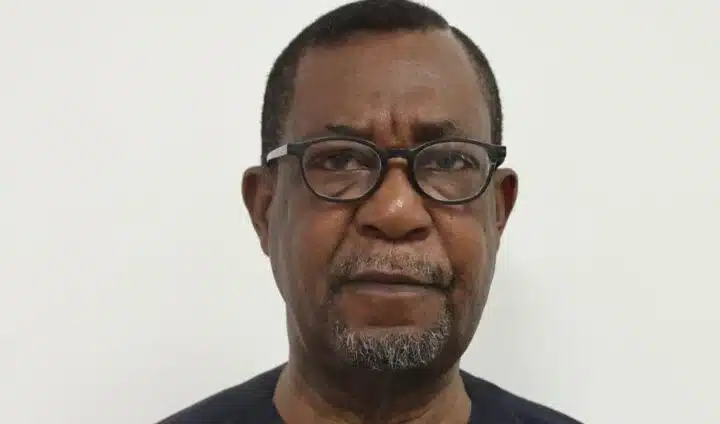
The witness, Umar Hussein Babangida, provided his testimony during the cross-examination phase in the trial of a former Minister of Power and Steel, Olu Agunloye. Agunloye faces an amended seven-count charge, which includes allegations of official corruption and the fraudulent award of a $6 billion contract related to the very same Mambilla Hydropower Project. Babangida explicitly referred to documentary evidence, Annexure 2 of Exhibit EFCC 3d, affirming that the crucial document lacked any indication of MOFTEC or the China Import-Export Bank being signatories or direct parties to the foundational MoU, raising serious questions about the project’s initial financial agreements.
This testimony casts a shadow over the transparency and integrity of the project’s early stages. The implications of major international financial institutions allegedly involved in such a large-scale project not having official records within its primary contractual agreement are profound. It suggests potential procedural lapses, or worse, deliberate obfuscation in how the Mambilla Power Project was initially structured and funded, especially concerning foreign investment and partnerships critical for its success.
The answer is complex, but key factors include alleged corruption, contract disputes, and funding irregularities, as highlighted by a witness’s testimony revealing no record of Chinese banks in the project’s Memorandum of Understanding, further complicating its progress.
Further into his testimony, Babangida elaborated on the Federal Government’s strategic decision to cap its participation in the project at no more than 25 percent. This critical policy was deliberated and approved during a Federal Executive Council (FEC) meeting held on May 21, 2003. He highlighted that while Sunrise Power and Transmission Company Limited had initially proposed a 35 percent government stake, and Tafag Nigeria Limited suggested 25 percent, the President at the time directed that government involvement should be limited to 25 percent for both potential partners, setting a clear financial parameter.
The witness confirmed that when the Memorandum of Understanding was subsequently presented at the FEC meeting, it received the full support of the council members. At that juncture, a substantial sum of ₦6 billion had already been allocated specifically for the initial take-off phases of the project, underscoring the government’s commitment at the time. Babangida further recalled the then-President’s direct remarks on the MoU, which stated: “Minister: approved. Please, give the two same parameters, i.e. Federal Government participation not more than 25 per cent; tariff not higher than prevailing tariff of thermal plant.”
This adherence to a 25 percent government participation limit was a critical financial safeguard, aiming to ensure that the project remained economically viable without over-burdening public funds. This dynamic between government funding vs foreign investment Nigeria is a recurring theme in large infrastructure projects. However, the current revelations about the alleged absence of key Chinese financial institutions in the MoU raise concerns about how this financial structure was ultimately implemented and whether the intended checks and balances were effectively maintained throughout the project’s complex development and funding stages. Understanding these early decisions is vital for anyone following the mambilla power project corruption explained.
Comparing the mambilla power project vs other nigerian projects, the Mambilla initiative often exemplifies the profound challenges inherent in large-scale infrastructure development within the nation. Many Nigerian projects face hurdles ranging from funding inconsistencies and political interference to bureaucratic bottlenecks and, unfortunately, allegations of corruption. The Mambilla case stands out due to its sheer scale and the persistent legal battles, making it a critical barometer for transparency and accountability in public contracting.
The ongoing trial of Olu Agunloye continues to be a focal point for those seeking an olu agunloye trial update. Justice Jude Onwuegbuzie has adjourned the matter for the continuation of cross-examination to Wednesday, January 21, 2026. This significant delay means that the legal proceedings will stretch well into the future, impacting the overall timeline for resolving the project’s controversies and potentially affecting the mambilla power project 2026 update and beyond. The prolonged legal battles underscore the intricate challenges facing nigeria power project challenges guide.
As Nigeria looks towards its future infrastructure needs, particularly in nigeria infrastructure projects 2026, the lessons learned from the Mambilla Power Project will be invaluable. The emphasis on clear, documented agreements, transparent financial partnerships, and robust oversight mechanisms cannot be overstated. The ongoing legal battle and the witness’s testimony serve as a stark reminder of the importance of accountability in mega-projects to ensure that national development goals are met without compromising public trust or resources.
In conclusion, the Mambilla Power Project latest news highlights a crucial moment in its long and controversial history. The testimony regarding the absence of China banks in the initial MoU underscores the need for greater scrutiny and transparency in large-scale infrastructure deals, especially those involving significant international partners. As the trial of Olu Agunloye progresses towards its 2026 adjournment, the nation watches closely, hoping for clarity and justice that will ultimately pave the way for a more accountable and efficient path for future development projects in Nigeria.





![[post_title]](https://samony.com.ng/wp-content/uploads/2026/01/I-have-potential-to-make-Marc-Marquezs-life-harder-in-300x200.jpg?lm=696FBF8F "Bagnaia vs Marquez: How the MotoGP Dynamic is Changing")
![Mr Real makes U-turn, apologizes to D'banj over viral remark about CREAM platform [VIDEO]](https://samony.com.ng/wp-content/uploads/2026/01/Mr-Real-makes-U-turn-apologizes-to-Dbanj-over-viral-remark-300x300.jpg?lm=696FBAB2 "Why Mr Real Apologized to D’banj: Key Details Revealed")



