


The recent launch of the Autistic Barbie doll marks a significant milestone in inclusive toy design, offering authentic and joyful representation for neurodivergent children worldwide. Mattel’s groundbreaking initiative, developed in close collaboration with the Autistic Self Advocacy Network (ASAN), aims to ensure more children see themselves reflected in their play, fostering a greater sense of belonging and understanding. This new doll is not just a toy; it is a powerful symbol of progress in acknowledging and celebrating neurodiversity.
This innovative doll incorporates several thoughtful design elements specifically chosen to reflect experiences common among some autistic individuals. These features include loose clothing, carefully designed to minimize fabric-to-skin contact, and an eye gaze subtly directed to the side, mirroring how some autistic individuals may process social interactions. Each doll is also accompanied by a pink fidget spinner, a tool often used to reduce stress and enhance focus, along with noise-cancelling headphones to help block out overwhelming background sounds and limit sensory overload.
Mattel’s commitment to genuine inclusivity is evident in its extensive consultation process. The company worked directly with the Autistic Self Advocacy Network (ASAN), ensuring that the doll’s design truly resonated with the autistic community. ASAN praised the doll as a “milestone” in representation, highlighting the critical importance for young autistic people to see authentic and joyful depictions of themselves in mainstream products, a sentiment strongly echoed by advocates.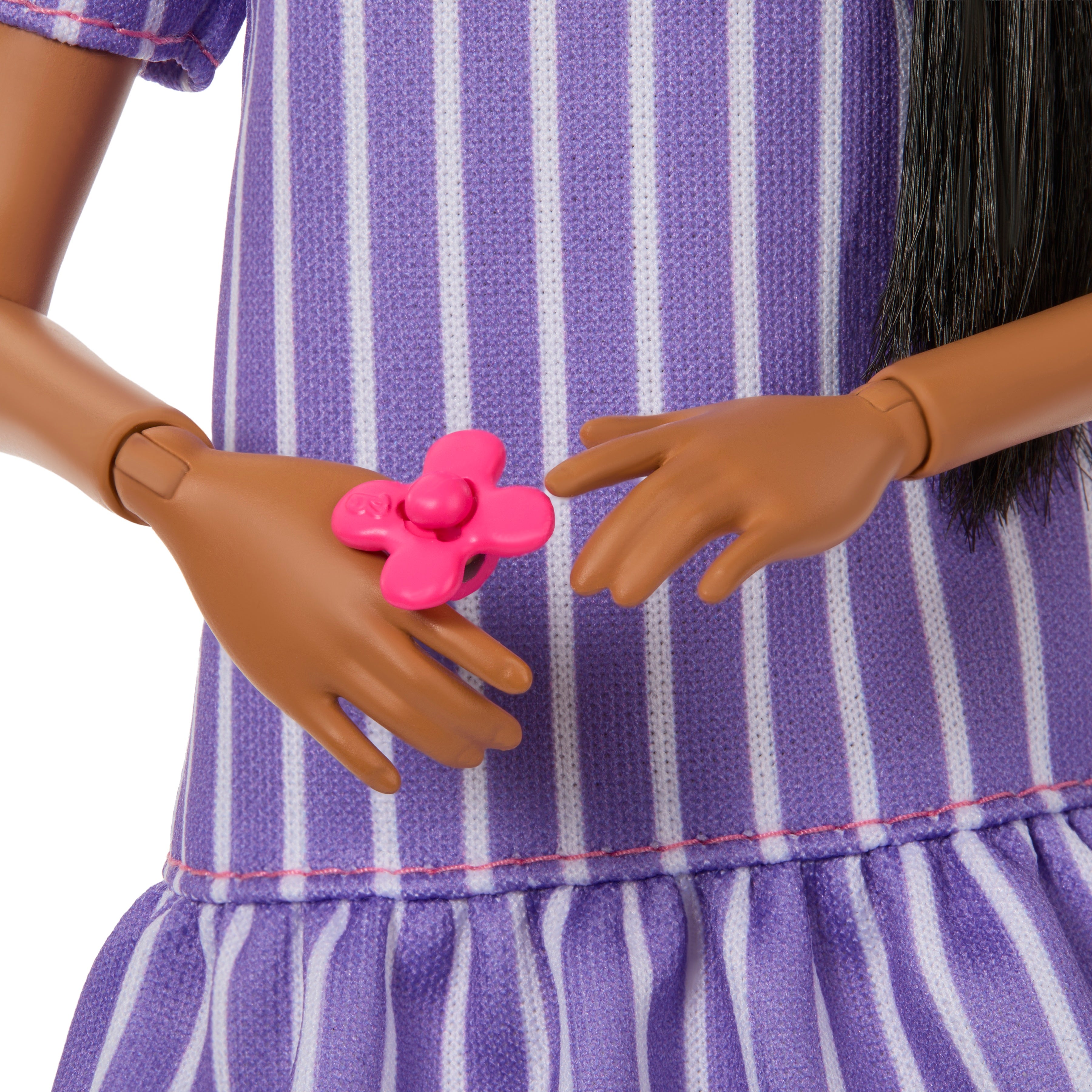
What is an Autistic Barbie doll? The Autistic Barbie doll is Mattel’s first doll specifically designed to represent autistic individuals, featuring elements like loose clothing, a unique eye gaze, a fidget spinner, and noise-cancelling headphones to promote authentic neurodivergent representation in play.
Why is neurodivergent representation important in toys? Authentic representation, like that offered by the Autistic Barbie doll, is crucial because it helps neurodivergent children develop a positive self-image and feel seen and accepted by society. It also educates neurotypical children, fostering empathy and understanding from a young age, thereby breaking down societal barriers and promoting a more inclusive future for everyone.
Beyond its visual characteristics, the doll features moveable elbows and wrists, allowing for gestures that some autistic people might use to process sensory information or express excitement. It also includes a pink tablet, symbolizing how some individuals utilize digital tools to aid their everyday communication. These details collectively create a comprehensive and respectful portrayal, moving beyond superficial representation to truly embody aspects of autistic experience.
Autistic writer Ellie Middleton articulated the profound impact of this new doll, describing it as a “powerful symbol” for young girls. She highlighted statistics showing that girls are often undiagnosed or misdiagnosed, making the Autistic Barbie doll news a vital catalyst for bringing conversations around neurodivergence in women to the forefront. This visibility ensures that autistic girls can feel accepted and truly seen in a world that often overlooks their unique experiences.
For parents seeking an autism representation guide for parents, this doll serves as an excellent starting point for discussions about neurodiversity. The National Autistic Society (NAS) emphasizes that autism is a spectrum, meaning autistic people are incredibly diverse, with varying strengths and challenges. The society defines autism as a “lifelong neurodivergence and disability” that profoundly influences how individuals experience and interact with the world, underscoring the need for varied and accurate portrayals.
Comparing the Autistic Barbie doll vs traditional Barbie, the key difference lies in the deliberate design choices aimed at reflecting specific neurodivergent traits rather than idealized mainstream aesthetics. While traditional dolls often present a singular, often unattainable, image, inclusive dolls like this one broaden the scope of what is considered beautiful and normal, providing a much-needed diverse array of role models for children.
Mattel’s journey towards greater inclusivity extends beyond this latest release. The company has previously introduced dolls with diabetes, blindness, and Down’s syndrome, demonstrating a sustained commitment to creating a brand that mirrors the rich diversity of children who engage with its products. This ongoing effort to produce mattel inclusive toys update the landscape of play, making it more reflective of real-world experiences.
Looking ahead, the demand for best inclusive toys 2026 is expected to grow as parents increasingly seek products that support diverse developmental needs. Initiatives like the Autistic Barbie doll pave the way for a future where a neurodivergent toy guide 2026 will be a standard resource, helping families find playthings that truly resonate with and empower their children. This commitment ensures that play remains a space of acceptance and understanding.
Ultimately, the launch of the Autistic Barbie doll is more than just a product release; it is a cultural statement. It underscores the growing recognition of neurodiversity and the vital importance of creating a world where every child feels valued, understood, and joyfully represented. This doll helps to foster a more inclusive and empathetic generation, ensuring that play mirrors the beautiful diversity of humanity.

![[post_title]](https://samony.com.ng/wp-content/uploads/2026/01/1768230078_F1-news-Australian-Grand-Prix-winner-to-drive-classic-F1-300x200.png?lm=69650CC3 "Breaking: Adelaide Motorsport Festival News & Key Driver Updates")





![[post_title]](https://samony.com.ng/wp-content/uploads/2026/01/1768230078_F1-news-Australian-Grand-Prix-winner-to-drive-classic-F1-1024x681.png?lm=69650CC4 "Breaking: Adelaide Motorsport Festival News & Key Driver Updates")
