


Navigating the rapidly evolving world of display technology to how to choose a gaming monitor can be a daunting task, but understanding the core innovations is crucial for making an informed decision. The latest advancements, particularly those showcased at events like CES, are pushing the boundaries of visual fidelity and immersion, offering gamers and professionals unprecedented experiences. From groundbreaking OLED panels that promise perfect blacks and vibrant colors to revolutionary glasses-free 3D displays, the monitor market is brimming with options designed to elevate your setup. This guide aims to demystify these cutting-edge technologies, helping you identify the best fit for your needs and budget.
One of the most significant developments in recent years has been the refinement of OLED monitor technology. Traditional OLED panels, while offering superior contrast, sometimes faced challenges with text clarity due to their subpixel structures. However, manufacturers like LG Display are addressing this head-on by increasing the proportion of the pixel area that emits light, enabling RGB-stripe subpixels and supporting ultra-high refresh rates. This innovation is a game-changer for clarity and overall visual performance, making OLED an even more compelling choice for both gaming and productivity.
What is QD-OLED technology? QD-OLED technology combines the self-emissive properties of OLED with quantum dot enhancement, allowing for superior color volume, brightness, and wider viewing angles than traditional OLED panels, all while maintaining perfect blacks and infinite contrast for an unparalleled visual experience.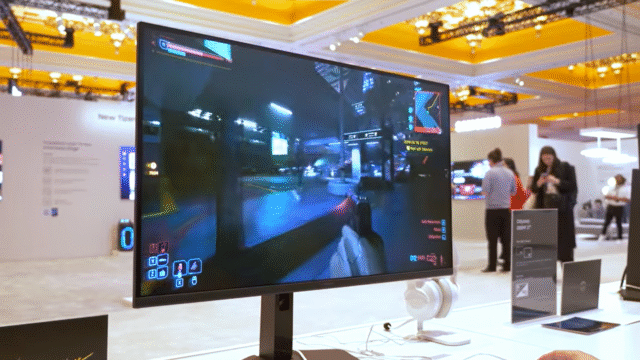
Samsung Display, a major player in the market, has also made significant strides with its QD-OLED panels, introducing a vertical RGB subpixel structure dubbed “V-stripe.” This proprietary design is engineered to overcome the common technical challenges associated with mass-producing high refresh rate panels, such as reduced organic material lifespan, excessive heat generation, and brightness degradation. By leveraging QD-OLED’s inherent brightness advantages and optimizing organic material efficiency, Samsung is enabling partners like Asus and MSI to release monitors that deliver both high performance and exceptional durability, making oled vs qd-oled monitors a key comparison point for enthusiasts.
For those comparing lg oled vs samsung oled monitors, the distinction often comes down to their specific approaches to subpixel arrangement and quantum dot integration. While LG has focused on its RGB-stripe OLED for improved text rendering and brightness, Samsung’s QD-OLED with its V-stripe structure emphasizes color volume and peak brightness. Both technologies represent the pinnacle of display innovation, offering distinct advantages depending on user priorities, whether it’s the crispness of text or the vibrant saturation of colors in gaming and media consumption.
Beyond two-dimensional displays, the future glimpsed at CES 2026 also included remarkable advancements in immersive technology. Samsung’s latest Odyssey 3D monitor, for instance, showcased a significant leap from its predecessors. Building on the foundation of a 2025 model, which featured a 27-inch 4K IPS screen, the new iteration pushes boundaries with a larger 32-inch display supporting a stunning 6K resolution at a 165 Hz refresh rate. It even boasts the ability to drop to 3K resolution for an incredible 330 Hz, catering to the most demanding gamers.
How do glasses-free 3D monitors work to create such a compelling visual experience? These monitors utilize advanced lenticular lens technology or eye-tracking systems to project slightly different images to each of the viewer’s eyes from a single screen. This creates the illusion of depth without the need for specialized eyewear. While the technology is impressive, its practical application, especially for gaming, still hinges on content availability and the sheer processing power required from your GPU.
The previous Odyssey 3D monitor faced challenges with limited game support, launching with only 14 titles in its dedicated Hub app. While the 2026 model boasts an expanded library of 29 3D-supporting titles, found on platforms like the Microsoft Store, this count may still be a consideration for gamers contemplating a purchase expected to exceed $2,000. This highlights a critical point for best gaming monitors for serious gamers: cutting-edge features must be balanced with practical utility and content ecosystem support.
For individuals seeking an oled monitor guide for beginners, understanding the benefits of OLED—such as infinite contrast, perfect blacks, and rapid response times—is key. However, it’s equally important to consider factors like potential burn-in risks, although modern OLED panels have significantly mitigated this concern, and the premium price point. These monitors are often considered a significant investment, but one that pays dividends in visual quality for both gaming and professional creative work.
The landscape of best gaming monitors 2026 is clearly dominated by innovation in OLED and QD-OLED technologies, alongside the fascinating, albeit niche, advancements in glasses-free 3D. When you consider how to choose a gaming monitor, your decision should be based on a careful evaluation of these emerging technologies, your budget, and the specific types of content you consume. Whether you prioritize unparalleled color accuracy, lightning-fast refresh rates, or groundbreaking immersive experiences, the market now offers an incredible array of options to enhance your digital world.
Looking ahead, the oled monitor buying guide 2026 will likely continue to emphasize the importance of subpixel structure, peak brightness, and refresh rates as key differentiators. The drive for higher resolutions and more vibrant color reproduction will persist, with innovations like those seen in ces 2026 monitor innovations setting the standard. Gamers and content creators alike can anticipate a future where their visual experiences are more immersive, more detailed, and more responsive than ever before, solidifying the importance of informed choices in this dynamic market.
Stay tuned for the latest samsung odyssey 3d monitor news and other developments as these technologies continue to evolve, promising even more incredible displays in the years to come. Ultimately, how to choose a gaming monitor boils down to aligning these technological marvels with your personal preferences and gaming demands.






