Certain Sydney communities are actively pushing back against the encroachment of fast food giants, prioritizing the preservation of their unique ‘heart and character.’ This resistance is manifesting through vocal opposition on social media, formal submissions to local councils, and even acts of vandalism. The surge in fast food establishments, which surpassed 26,000 across Australia in 2025 according to IbisWorld data, has prompted these localized battles for identity. McDonald’s, KFC, and Hungry Jack’s remain the dominant players in the Australian fast food landscape.
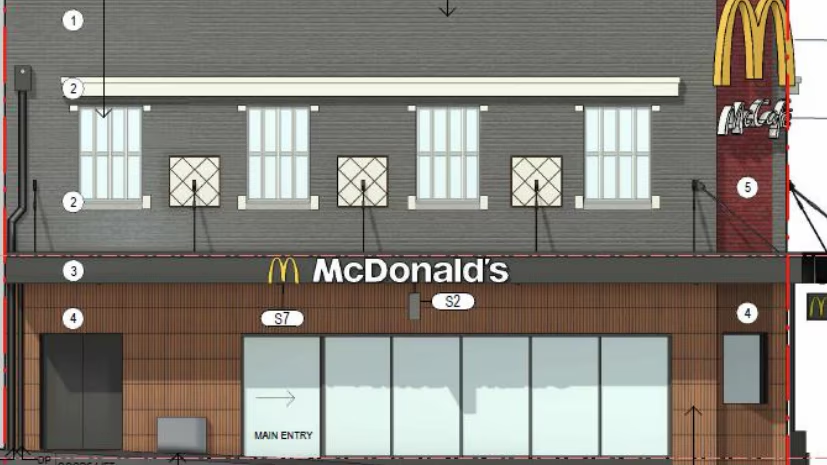
These communities are articulating compelling reasons for their efforts to remain largely free of these ubiquitous outlets. In May, a significant development proposal for a 24-hour, two-storey McDonald’s in Redfern was ultimately rejected by the City of Sydney Council. This decision came after a substantial public outcry, with only 17 out of 286 submissions supporting the project, which would have marked the first presence of a top-tier fast food chain in the inner-city suburb. While proponents cited potential increases in foot traffic and boosts to surrounding local businesses, objectors raised serious concerns.
LaVerne Bellear, CEO of Aboriginal Medical Services Redfern, voiced her objections, highlighting the potential negative impact on public health. She pointed to research indicating a correlation between the proliferation of fast food outlets and increased rates of obesity, diabetes, and other diet-related illnesses, which disproportionately affect Aboriginal and Torres Strait Islander populations. Dhungatti Archibald Prize-winning artist Blak Douglas echoed these sentiments, suggesting that the influx of fast food giants could undermine the efforts of First Nations businesses focused on improving local nutrition.
Douglas explained that the presence of such franchises represents a significant step backward in community health initiatives. In response, a McDonald’s spokesperson stated that each restaurant contributes to the local community by creating jobs and providing training, and that the company values community feedback and supports local causes. This highlights the ongoing debate between corporate claims of community benefit and local residents’ concerns about cultural and health impacts.
Newtown, another vibrant Sydney neighborhood, has also experienced a prolonged struggle against McDonald’s attempts to establish a presence. The area saw its first McDonald’s in 1989, which later closed in 2000 due to changing demographics. In 2025, the company made another bid for a 24-hour outlet, but this proposal was met with overwhelming opposition, garnering only six supporting submissions out of 1,433. The City of Sydney council rejected the application, citing a lack of merit and non-compliance with late-night trading regulations.
Newtown resident Liam Coffey described his neighborhood as possessing a rich ‘heart and character,’ emphasizing that residents are not hesitant to express their views. He believes that social media played a direct role in influencing the decision against the McDonald’s proposal. Despite having worked at McDonald’s in his youth, Coffey argues that the arrival of large fast food chains can negatively impact existing local businesses, potentially leading to job losses and reduced hours for current employees.
Meanwhile, KFC has successfully reopened on King Street in Newtown, replacing a local Indian and Sri Lankan restaurant. While the development proposal received limited support, the City of Sydney spokesperson indicated that KFC’s approval was due to a smaller kitchen footprint compared to McDonald’s proposals. This distinction underscores the nuanced considerations in council approvals.
Broaster Chicken Newtown owner Md Rubel reported a significant downturn in business since KFC’s arrival, attributing it to similar food offerings and competitive pricing. He faces challenges in meeting rent and supplier payments, even resorting to a second job to support his family. Rubel fears that a McDonald’s establishment in the area would lead to the closure of his business.
In Marrickville, a McDonald’s restaurant was approved through a Complying Development Certificate, bypassing the need for public or council support. This led to instances of vandalism on the construction site, with messages like ‘McF off’ spray-painted. McDonald’s emphasized its $5 million investment in the local economy, but did not provide data on development applications or rejections nationwide.
Professor Nicky Morrison of Western University explains that areas like Redfern and Newtown oppose fast food chains due to their strong sense of place and the decades invested in shaping local culture and street life. This opposition is not merely about a business but a perceived threat to the social and cultural fabric of the neighborhood. Morrison also noted that less affluent areas may have fewer resources to mobilize opposition, raising equity concerns about the health impacts of such developments.
Fabio Stefanelli, owner of La Favola Italian restaurant in Newtown, remains unfazed by the new KFC, preferring a tidy and vibrant streetscape over struggling local businesses. He observes that the new establishment has attracted more people and diversified late-night food options. Fashion store owner Ruth Tate understands the business rationale behind KFC’s King Street location, given the shift in nightlife from Kings Cross. This ongoing dynamic showcases the complex interplay between corporate expansion, local identity, and community resilience.
What is the primary reason Sydney suburbs are resisting fast food giants?
Suburbs like Redfern and Newtown are resisting fast food giants primarily to protect their unique ‘heart and character’ and preserve their local social and cultural fabric. Residents are concerned about the impact on public health, local businesses, and the overall identity of their neighborhoods, often viewing these developments as a threat to their established community values and sense of place.