

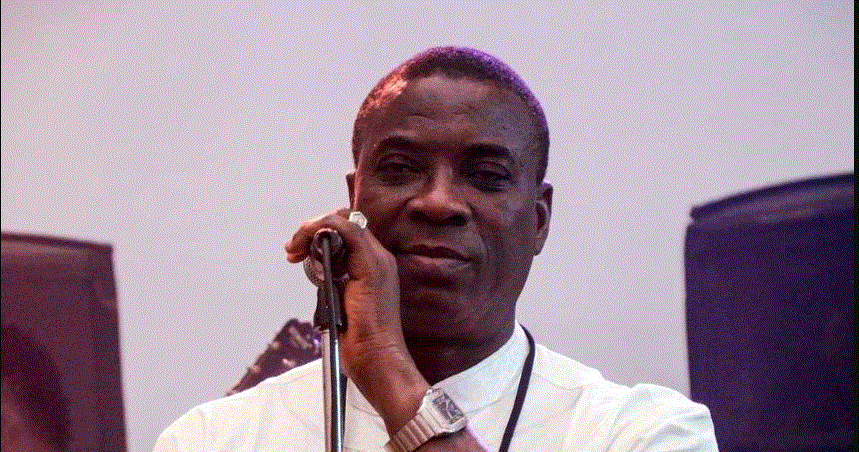
The highly anticipated Awujale stool succession in Ijebu Land has been thrust into the spotlight following allegations of exclusion from popular Fuji musician, Wasiu Ayinde, widely known as KWAM1. Ayinde has formally written to Ogun State Governor Dapo Abiodun, claiming he is being deliberately sidelined in the intricate process to select the next Awujale. This development has ignited a significant debate regarding the integrity of traditional leadership selection and the adherence to established chieftaincy laws within the state.
At the heart of the matter is the Fusengbuwa ruling house, which is next in line to produce the monarch. KWAM1 alleges that this ruling house is issuing directives that directly contravene both the Chieftaincy Declaration and the comprehensive Obas and Chiefs Law of Ogun State. These actions, he claims, are specifically intended to disenfranchise him from contesting for the prestigious throne, despite his declared interest. The formal complaint, detailed in a letter dated January 8, 2026, was submitted to the governor by Ayinde’s legal counsel, Wahab Shittu (SAN).
What is the Awujale stool? The Awujale is the revered paramount ruler of Ijebu Land, a significant traditional institution in Ogun State, Nigeria. This ancient title carries immense cultural and spiritual authority, playing a crucial role in community leadership and the preservation of heritage. The selection process is governed by specific chieftaincy laws and local customs.
The process to appoint a new Awujale has reportedly drawn interest from more than 60 aspirants, with Ayinde prominently among those who have made their intentions clear. However, the Fusengbuwa ruling house has consistently maintained that the musician is not an authentic member of their family, thereby rendering him ineligible to participate in the selection exercise. This fundamental disagreement forms the crux of the KWAM1 Awujale controversy, highlighting the complexities of royal lineage and eligibility.
Earlier attempts by Ayinde to seek legal redress saw him approaching the Ogun State High Court in Ijebu Ode. He sought an interim injunction to restrain Governor Abiodun and six other parties from proceeding with the selection process. However, the court dismissed his application for lacking merit, leading the musician to subsequently withdraw the suit. This legal setback did not deter him from pursuing the matter through official channels, as evidenced by the recent letter to the governor.
In his fresh communication to the governor, Ayinde detailed how the Ijebu Ode Local Government, through a letter dated January 6, 2026, approved the commencement of the selection process by the ruling house. He expressed profound surprise that while family members were preparing for a general meeting to discuss the Awujale candidates 2026, the family’s Public Relations Officer, Prince Adeleye Lateef Ademuyiwa, issued a notice. This notice directed candidates to obtain nomination forms and appear before a screening committee chaired by Prince Alhaji Mitiu Adenuga.
Ayinde’s concerns were amplified by the notice’s conflicting timelines. It fixed the nomination exercise for Monday, January 12, 2026, but also stated that the process would be conducted by delegates selected at a meeting scheduled for January 10. Such discrepancies, he argued, are inconsistent with the established legal framework. The letter underscored that these directives contravene the Chieftaincy Declaration, the Obas and Chiefs Law, and even the initial letter from the Secretary of Ijebu-Ode Local Government.
Understanding Ogun State chieftaincy laws is crucial here, as they are designed to ensure transparency and fairness in the selection of traditional rulers. Ayinde’s legal team emphasized that plans by the leadership of the ruling house to disenfranchise members desirous of participating in the nomination of candidates for the Awujale stool are clear. They stressed that all legitimate members of the ruling house are entitled to attend the meeting and nominate candidates of their choice, asserting that no single group within the ruling house can usurp these fundamental rights.
The idea of screening and nomination by delegates, as proposed by the ruling house, was further described as being “inconsistent with both the spirit and letter of the Chieftaincy Declaration and the Obas and Chiefs Law of Ogun State 2021.” This highlights a significant legal challenge to the legitimacy of the ongoing process. The debate around how to become Awujale and the correct procedural steps is intensifying.
Reacting to the allegations, Prof Fassy Yusuf, the Vice Chairman of the Fusengbuwa ruling house, confirmed receipt of Ayinde’s letter but vehemently dismissed its contents as “arrant nonsense.” Speaking on Sunday, Yusuf stated, “It is a misguided letter. Either Wahab Shittu is being misled, or Wasiu Ayinde is being misled. The letter was directed to the government, which will respond appropriately.” He further questioned the logic of screening, citing the impracticality of managing over 20,000 members in the ruling house, and reiterated that the nomination meeting was scheduled for Monday, January 12, 2026, for interested contestants. This KWAM1 news update continues to dominate discussions around traditional institutions.
The Awujale stool became vacant in July 2025 following the demise of Oba Sikiru Adetona, who passed away at the age of 91 after an extraordinary 65-year reign. The importance of a transparent and legally compliant Awujale succession guide cannot be overstated, especially for a lineage as significant as that of Ijebu Land traditional titles explained through generations. The ongoing dispute underscores the critical need for strict adherence to established protocols to maintain the sanctity and authority of traditional institutions in Ogun State.
This unfolding scenario, which also touches upon Dapo Abiodun latest news regarding governance and traditional affairs, will undoubtedly continue to generate considerable public interest. The resolution of the Awujale stool succession will not only determine the next monarch but also set a precedent for how future traditional ruler selections, including for Ogun State traditional rulers 2026 and beyond, are managed under the vigilant eye of the law and public scrutiny.
Keywords: what is Awujale stool, how to become Awujale, KWAM1 Awujale controversy, Ogun State chieftaincy laws, Awujale succession guide, Ijebu land traditional titles explained, KWAM1 news update, Dapo Abiodun latest news, Awujale candidates 2026, Ogun State traditional rulers 2026

![[post_title]](https://samony.com.ng/wp-content/uploads/2026/01/1768220216_Fermin-Aldeguer-remains-hospitalised-after-leg-surgery-300x200.jpg?lm=6964E63A "Breaking: Fermin Aldeguer Injury Update and Recovery Timeline")






![[post_title]](https://samony.com.ng/wp-content/uploads/2026/01/1768220216_Fermin-Aldeguer-remains-hospitalised-after-leg-surgery-1024x682.jpg?lm=6964E63B "Breaking: Fermin Aldeguer Injury Update and Recovery Timeline")
