

The football world was left in awe as Macclesfield, a club reborn from the ashes, delivered what many are calling the biggest FA Cup upset in history. Their stunning 2-0 victory over reigning holders Crystal Palace at Moss Rose wasn’t just a win; it was a seismic event that reverberated through the sport, showcasing the enduring magic of the FA Cup. This non-league triumph, achieved by a team 117 places below their Premier League opponents, etched Macclesfield’s name into the annals of football lore and provided a powerful narrative of resilience and underdog spirit.
Seven months prior, Crystal Palace had celebrated their first major trophy, defeating Manchester City at Wembley. Yet, on this fateful day, they became the first FA Cup holders in over a century, since Wolverhampton Wanderers in 1909, to fall to non-league opposition. The stark contrast between the two clubs – one a Premier League giant, the other plying its trade in the sixth-tier National League North – only amplified the scale of Macclesfield’s achievement.
The match itself was a masterclass in tactical discipline and raw determination from John Rooney’s Silkmen. Inspired by their manager, the younger brother of England legend Wayne Rooney, Macclesfield seized control. Captain Paul Dawson, a motorway supervisor by day, broke the deadlock with a crucial back-post header just before half-time. The stadium erupted, but the home side wasn’t done. Isaac Buckley-Rickett doubled their advantage in the 61st minute, flicking in a goal that sent shockwaves through the Palace camp and ignited fervent celebrations among the sold-out Moss Rose crowd.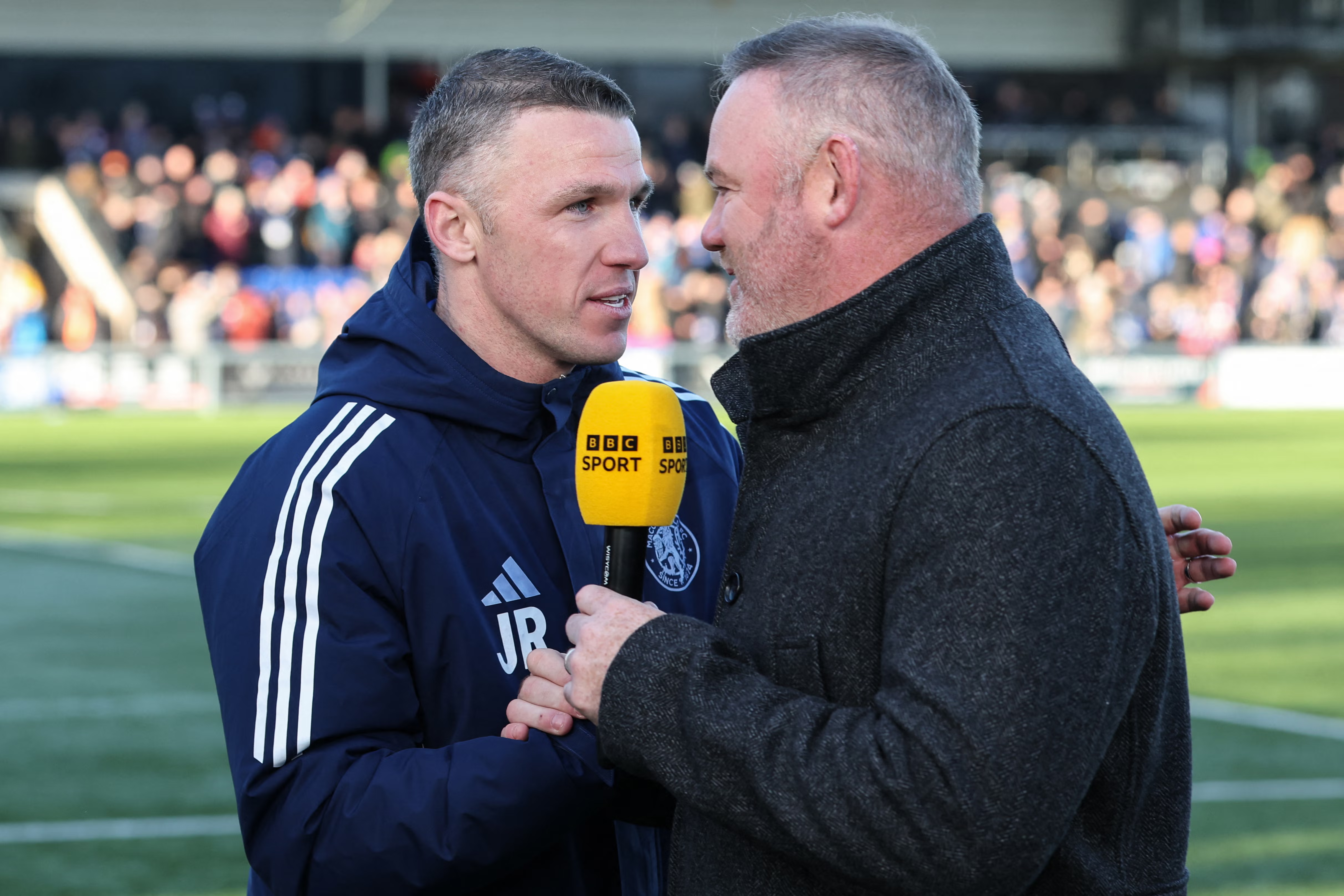
What is the biggest FA Cup upset? The biggest FA Cup upset in terms of league positions occurred when sixth-tier Macclesfield, 117 places below Premier League holders Crystal Palace, defeated them 2-0. This historic victory marked the first time since 1909 that non-league opposition eliminated the reigning champions.
This historic Macclesfield FA Cup upset wasn’t merely about the scoreline; it was laden with emotional depth. The club itself had been reborn in 2020 after the original Macclesfield Town, formed in 1871, was wound up with debts exceeding £500,000. This victory served as a powerful testament to their resurgence. Furthermore, the win came less than a month after the tragic death of young forward Ethan McLeod at just 21, adding a poignant layer of dedication to the team’s performance, with tributes paid before the match.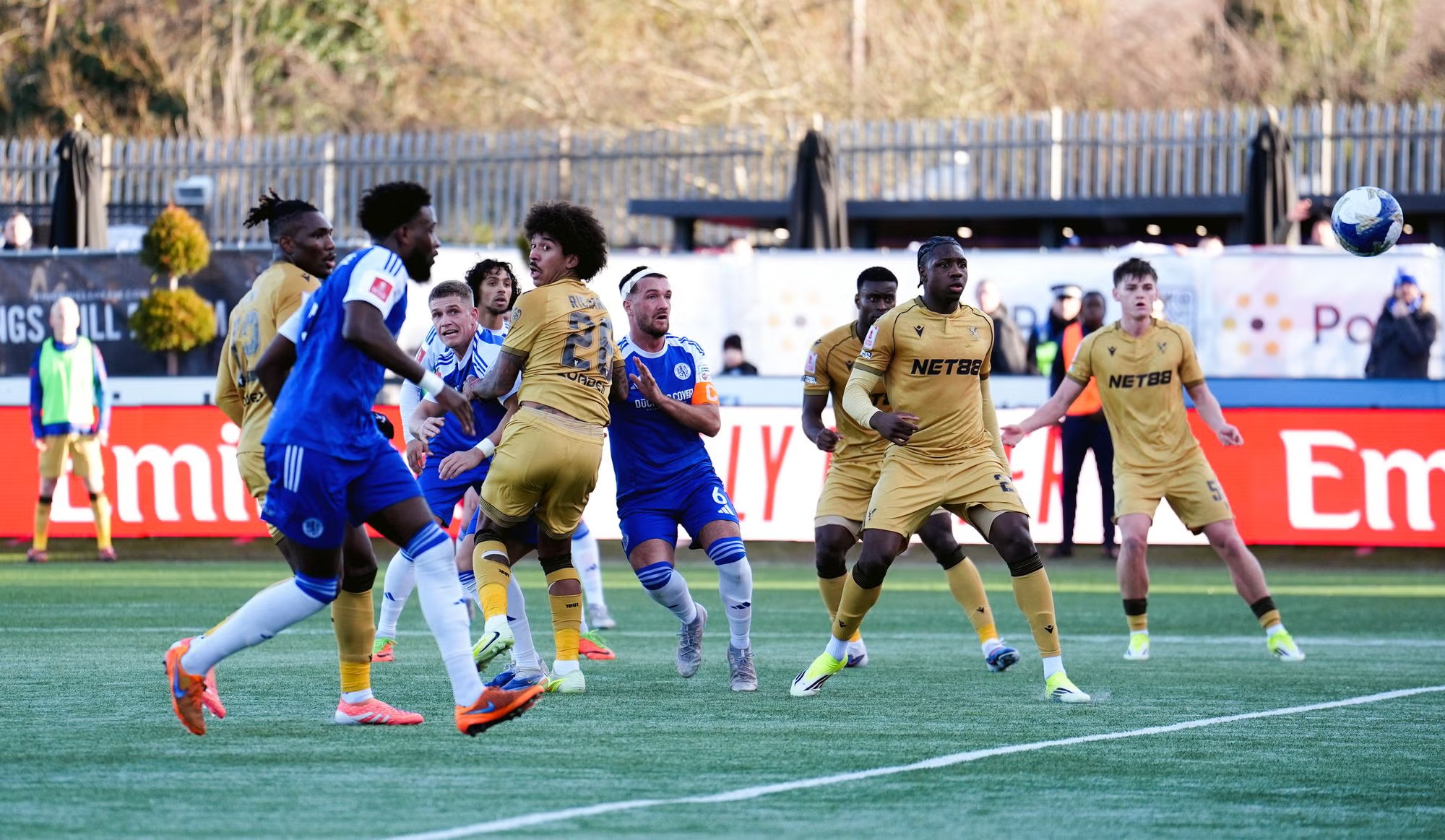
Crystal Palace, despite fielding England internationals Marc Guehi and Adam Wharton, and the £26m Spain winger Yeremy Pino, appeared disjointed and struggled to adapt to the artificial pitch. Manager Oliver Glasner’s frustration was palpable as his side failed to find rhythm or penetrate Macclesfield’s resolute defence. Pino’s late free-kick in the final minute of normal time offered a brief flicker of hope, but it was too little, too late. The six minutes of stoppage time that followed were a tense affair, but John Rooney’s team held firm, securing their memorable victory.
John Rooney’s role in orchestrating this remarkable Macclesfield FA Cup upset cannot be overstated. His tactical acumen and ability to inspire his players against overwhelming odds were evident throughout the game. His older brother, Wayne Rooney, present for punditry duties, expressed immense pride, stating, “He has not long been the manager. I am so proud of him.” John himself conveyed his disbelief and pride, remarking, “We were incredible from the first minute. I thought we were deserved winners. I couldn’t be any prouder of the lads.”
The aftermath saw a furious Oliver Glasner lamenting his team’s “lack of quality,” admitting Palace “deserved to lose” and struggling to provide an explanation for their dismal display. Club captain Guehi was observed engaging with angry Palace supporters, a stark image reflecting the depth of their disappointment. Glasner’s assessment highlighted a fundamental failure to perform, suggesting that in such games, “you don’t need a tactics… if you just show what you’re capable of and have a bit of pride, then you perform in a different way.”
Analyzing the biggest FA Cup shocks of all time reveals a pattern of Premier League teams underestimating their lower-league opponents or struggling with unfamiliar conditions. The Moss Rose artificial pitch, combined with Macclesfield’s relentless energy and belief, created an environment where Palace’s technical superiority was negated. This match serves as a potent reminder that in cup football, passion and preparation can often trump pedigree and financial might.
This Macclesfield FA Cup upset will undoubtedly be a cornerstone of the club’s narrative for years to come, potentially boosting their profile, attracting new fans, and generating much-needed revenue. For Crystal Palace, it’s a harsh lesson in humility and a call for introspection, particularly concerning their approach to cup competitions. The inherent unpredictability is precisely what makes the FA Cup so revered globally, offering moments like this where dreams are realized and giants are toppled.
The enduring appeal of the FA Cup for beginners and seasoned fans alike lies in these very moments of drama and unexpected outcomes. It’s a competition where any team, regardless of their league standing, can dare to dream of glory. This Macclesfield victory, a truly monumental FA Cup shock, will be discussed for generations, embodying the spirit of grassroots football and the ultimate underdog story. It reminds us why football is called the beautiful game, capable of delivering unparalleled joy and heartbreak in equal measure.


![[post_title]](https://samony.com.ng/wp-content/uploads/2026/01/The-MotoGP-changes-Liberty-Media-should-make-according-to-Sepang-300x200.jpg?lm=6962632A "How Liberty Media Will Change MotoGP: A Key Strategic Vision")







![[post_title]](https://samony.com.ng/wp-content/uploads/2026/01/The-MotoGP-changes-Liberty-Media-should-make-according-to-Sepang-1024x682.jpg?lm=6962632A "How Liberty Media Will Change MotoGP: A Key Strategic Vision")
