


Amazon’s latest AI experiment, the “Buy for Me” feature, is causing significant backlash from retailers as the technology is reportedly shopping on their behalf without consent. This innovative yet controversial AI tool aims to streamline product discovery and purchasing, but it’s inadvertently disrupting third-party businesses and raising ethical questions about data scraping and unauthorized sales. Retailers are expressing frustration over their products being listed and sold through Amazon’s AI, often without their knowledge or permission, leading to confusion and operational challenges.
This AI shopper phenomenon, while seemingly convenient for consumers browsing Amazon, represents a significant point of contention for the small businesses caught in its path. The “Buy for Me” feature leverages AI to pull product and pricing information directly from a brand’s public website. Once this information is gathered, Amazon’s system can then place an order on behalf of the shopper, using the shopper’s own account details, making it appear as a standard Amazon purchase.
How does Amazon’s AI shopper work without explicit retailer permission?
The Amazon “Buy for Me” feature uses AI to scan public websites of brands and retailers for product information, including pricing and availability. It then uses this data to offer those products to Amazon shoppers. The system is designed to place orders on behalf of the customer, effectively acting as an automated shopper that browses external sites and purchases items through Amazon’s platform, often without direct retailer consent.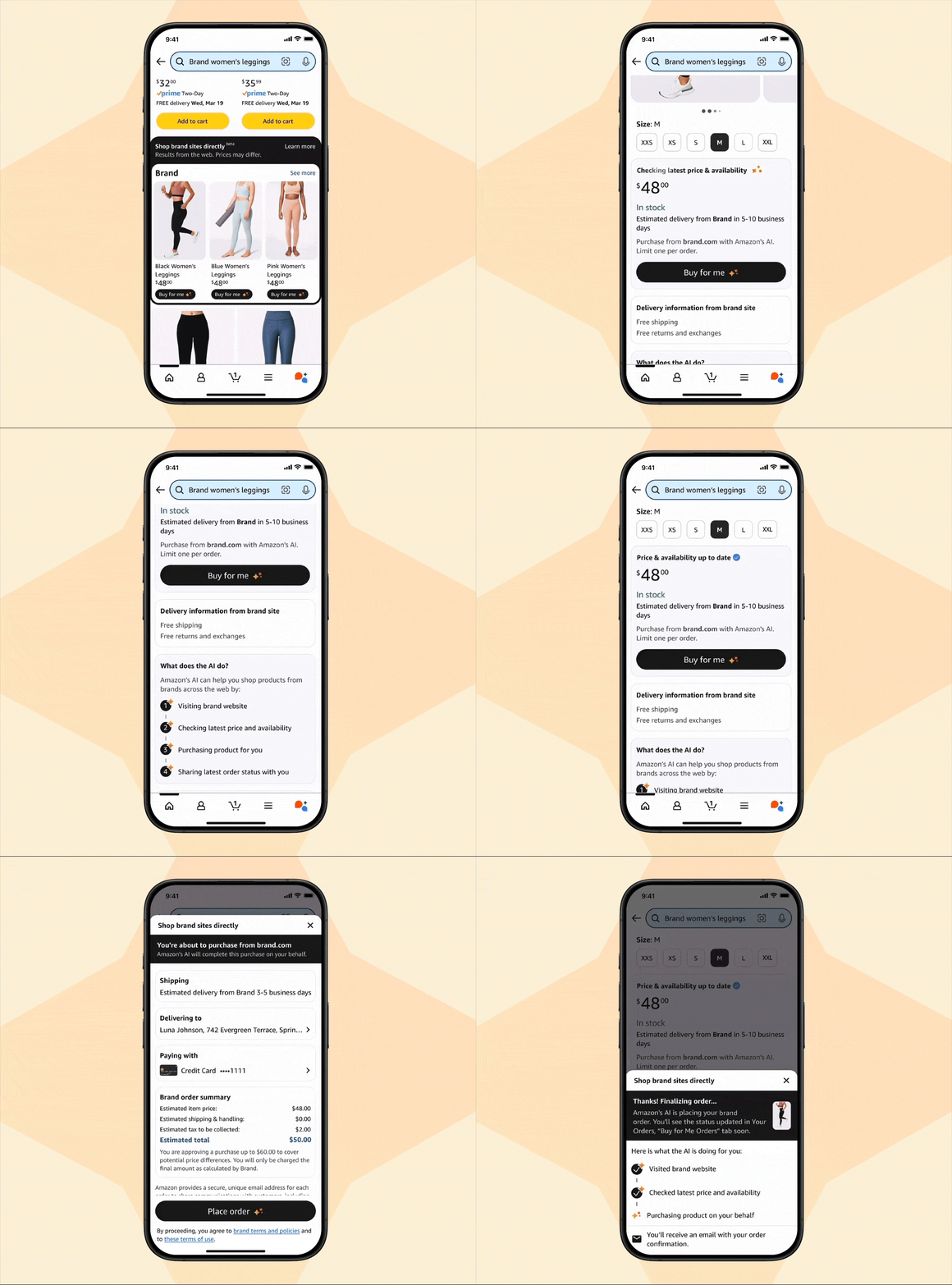
For many small businesses, the first indication that their products were being offered through this Amazon AI was when orders started appearing in their inboxes. These orders were often accompanied by unfamiliar email addresses, such as “buyforme.amazon,” signaling an unauthorized transaction. This has led to a wave of complaints on social media and directly to Amazon, detailing instances where products were listed that were out of stock or never intended for direct consumer sales.
Why are retailers unhappy with Amazon’s AI shopper?
Retailers are primarily unhappy because Amazon’s AI is listing and selling their products without their explicit consent or opt-in. This can lead to sales of out-of-stock items, damage brand reputation, and bypass their own sales channels. Many businesses intentionally avoid platforms like Amazon for strategic or financial reasons, only to find themselves inadvertently included through this AI-driven initiative.
One particularly irksome aspect for retailers is the burden of opting out. Instead of a proactive opt-in system, brands are now tasked with finding and utilizing specific email addresses to request removal from the AI’s shopping list. This process can be time-consuming and frustrating, especially when dealing with AI-generated orders for items that are no longer in stock or never were.
What is Amazon’s stance on the AI shopper controversy?
Amazon has characterized the “Buy for Me” feature as an experiment that is still undergoing development and refinement. They maintain that the AI tool is not acting improperly, as it relies on publicly available product and pricing information. The company states that the system is intended to verify stock levels and pricing accuracy before presenting items to customers. Amazon has provided an email address for merchants to submit opt-out requests should they encounter issues.
How does Amazon’s AI scraping compare to its stance on other bots?
There’s a notable irony in Amazon’s current AI shopping initiative. The company has historically taken a strong stance against external AI agents and bots that scrape its own platform for data. It actively blocks access from major AI players like Google and OpenAI. Now, Amazon itself is employing AI to scrape other retailers’ websites, a move that many perceive as hypocritical and a double standard in the evolving landscape of AI data utilization.
What are the implications of Amazon’s AI shopper for the future of e-commerce?
This situation highlights the complex challenges and ethical considerations emerging with the rapid advancement of AI in e-commerce. While AI offers potential benefits in terms of convenience and efficiency for shoppers, its implementation must be balanced with respect for third-party businesses and transparent practices. The ongoing debate about Amazon’s AI shopper suggests a need for clearer guidelines and industry standards regarding AI-driven data collection and unauthorized sales.
Retailers who have never opted into Amazon’s ecosystem are finding their products being sold through the platform without their agreement. This can include items that are out of stock or even AI-generated images of products that are no longer available, creating a logistical nightmare for the businesses involved.
The frustration is amplified by the fact that Amazon has been very aggressive in preventing other companies from scraping its own platform. This perceived hypocrisy has further fueled the backlash from retailers who feel they are being unfairly targeted by Amazon’s AI ambitions while Amazon protects its own data fiercely.
This Amazon AI shopping trend raises questions about how AI will be integrated into retail in the future. The current model places the onus on retailers to opt out, which is a significant departure from ethical business practices. As AI continues to evolve, ensuring fairness and transparency in its application across the e-commerce landscape will be crucial for maintaining trust between platforms, retailers, and consumers alike.
The core issue revolves around unauthorized data scraping and sales, which can lead to significant operational headaches for businesses. From managing orders for out-of-stock items to dealing with incorrect product images, the consequences of Amazon’s AI shopper are tangible and negative for many third-party sellers.
Ultimately, Amazon’s AI shopper is a prime example of how new technologies can create unintended consequences. While the goal might be to enhance customer convenience, the current execution has alienated a significant portion of the retail community, sparking a debate that will likely shape future AI policies in e-commerce.
Amazon’s AI shopping on behalf of consumers without explicit retailer permission is a contentious issue. The company’s “Buy for Me” feature is drawing criticism for its aggressive approach to data acquisition and sales, prompting a need for more ethical AI implementation in the retail sector.









