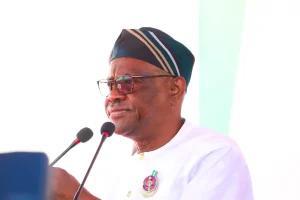
The intricate dance of Nigerian politics often sees key figures navigating complex landscapes to maintain their influence. Currently, the political moves of the Minister of the Federal Capital Territory, Nyesom Wike, are widely described as a profound struggle for Nyesom Wike political survival rather than a simple quest for party dominance. This perspective, articulated by figures like Emeka Bekee of the All Progressives Congress (APC) in Rivers State, highlights the high stakes involved for the former Rivers State governor as he seeks to preserve his relevance within the nation’s dynamic political fabric. His actions are not merely about expanding power but about solidifying his base and ensuring his continued impact on both state and national affairs.
What is Nyesom Wike’s political strategy? The answer is that Nyesom Wike’s political strategy primarily revolves around leveraging cross-party loyalty, maintaining a strong grassroots presence, and strategically aligning himself to remain a pivotal force in Nigerian governance and state-level politics. He aims to be indispensable.
Bekee’s insights, shared during a discussion on Wike’s evolving political influence, underscore a critical juncture. Rivers State, being one of Nigeria’s largest and most politically significant states, demands a robust and adaptable approach from its political actors. The notion that Wike is ‘fighting for survival’ suggests an existential political challenge, far beyond routine maneuvering. It implies a need to constantly adapt and re-strategize to counter opposing forces and consolidate support.
What is Wike’s political strategy in the current climate? His approach appears to be multifaceted, involving a careful balance of asserting his influence while also demonstrating a willingness to build bridges across traditional party lines. This strategy allows him to remain a kingmaker, or at least a powerful influencer, regardless of the prevailing political winds. His consistent claims of commanding loyalty across the APC and the Peoples Democratic Party (PDP) are central to this narrative, painting him as a figure who transcends partisan boundaries.
Wike vs Fubara Rivers State is a conflict that epitomizes this struggle. The power tussle between Wike and his successor, Governor Siminalayi Fubara, has become a defining feature of Rivers State politics. This rivalry showcases the complexities of political succession and the challenge of maintaining influence once out of office. Wike’s efforts to retain control over the state’s political machinery despite no longer being governor are a testament to his determination.
The concept of a ‘rainbow coalition’ as described by Wike himself further illustrates his unique approach. This term suggests a diverse support base, drawing from various political affiliations and segments of society. Such a coalition would be instrumental in ensuring his Nyesom Wike political survival, providing a broad shield against political adversaries and a strong platform for future endeavors. The presence of party chairmen from different political camps at his public appearances lends credence to these claims, at least in perception.
Nigerian politics for beginners can often seem opaque, but understanding figures like Wike provides crucial insight. His career trajectory, from local government chairman to governor and now federal minister, demonstrates a masterclass in political resilience. His ability to navigate different administrations and maintain a strong public profile speaks volumes about his strategic acumen and understanding of the local political terrain. This makes him a fascinating case study for anyone seeking to understand the intricacies of power in Nigeria.
Reports of his potential formal defection to the APC, while unconfirmed, highlight the fluidity of Nigerian political allegiances. Bekee’s clarification that Wike has not officially joined the ruling party, but would naturally assume a leadership role if he did, underscores Wike’s significant political stature. This scenario suggests that Wike is a prized asset, capable of shifting political dynamics simply by his association.
Rivers State politics update frequently revolves around the actions and pronouncements of Nyesom Wike. His influence extends beyond his current ministerial portfolio, deeply impacting local governance and party structures. The ongoing developments serve as a barometer for the broader political health of the state, with his decisions often setting the tone for future political alignments and contests. His every move is meticulously scrutinized by political analysts and the public alike, reflecting his enduring impact.
Ultimately, the narrative of Nyesom Wike political survival is a compelling one, reflecting the dynamic and often unpredictable nature of Nigerian politics. His ability to remain relevant, influential, and a central figure in political discourse, despite numerous challenges, is a testament to his strategic prowess. As the political landscape continues to evolve, Wike’s journey will undoubtedly offer valuable lessons on power, resilience, and the art of maintaining political relevance in a fiercely competitive environment.
Keywords: how to survive politically in Nigeria, what is Wike's political strategy, Wike vs Fubara Rivers State, APC vs PDP Rivers State, Wike political survival guide, Nigerian politics for beginners, Nyesom Wike news today, Rivers State politics update, best political strategies 2026 Nigeria, Rivers State election guide 2026