


Florida’s mandated decision to paint over colorful crosswalks with black paint has proven to be a costly and ineffective measure. In Seminole County alone, over $31,000 of taxpayer money was reportedly spent to cover vibrant green crosswalks, only for the black paint to already show signs of deterioration. This initiative, driven by new state regulations, has sparked significant debate regarding the necessity and practicality of such changes, especially given the early signs of wear and tear.
Mayor Megan Sladek of Oviedo highlighted the issue by sharing a photo of the original green paint peeking through the black overlay on a crosswalk. These high-visibility green crosswalks were initially installed to enhance pedestrian and bike trail safety. The push to repaint them black came in compliance with state regulations from the Florida Department of Transportation (FDOT), which required local governments to update their crosswalks by September 4th or face potential loss of state transportation funding.
The controversy surrounding these black crosswalks is closely linked to the statewide initiative that also led to the removal of a rainbow crosswalk outside Orlando’s Pulse nightclub. This has ignited conversations about the financial implications, safety considerations, and the overall effectiveness of these new design standards.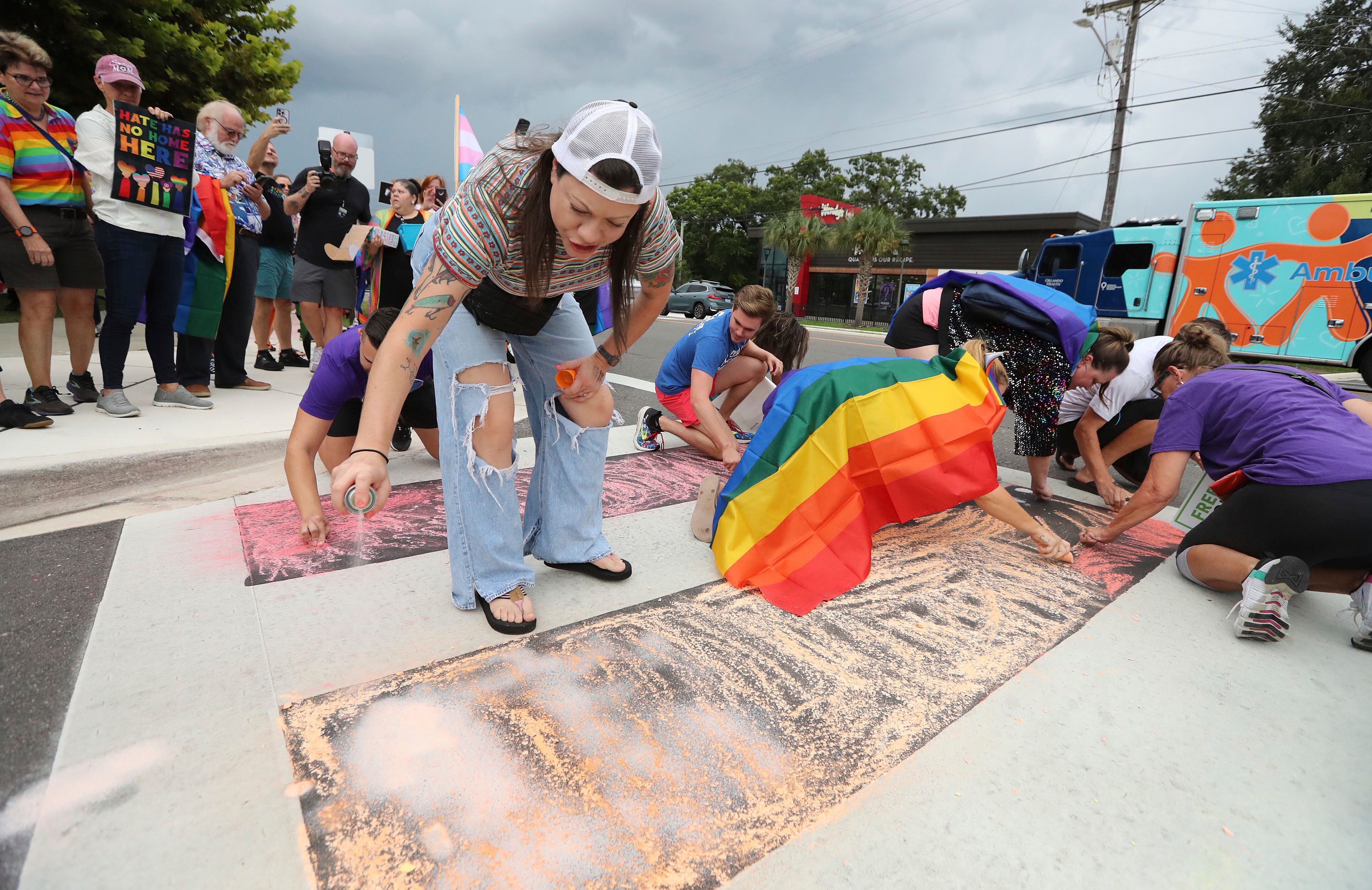
In July, U.S. Transportation Secretary Sean Duffy sent a directive to all 50 states, urging them to maintain intersections free from political or decorative markings. Duffy stated that taxpayers expect their funds to be allocated towards safe streets, not what he termed “rainbow crosswalks,” emphasizing that “political banners have no place on public roads.”
Mayor Sladek, however, offered a different perspective on the Pulse nightclub commemoration. She noted that the Pulse event was, at the time, the deadliest mass shooting in U.S. history. She expressed that there was no issue with commemorating such a significant event with art that survivors believed represented the victims.
A News 6 investigation brought to light the significant expenditure by Seminole County, exceeding $31,000 of taxpayer funds. The costs included approximately $3,200 for paint and supplies, and a substantial $24,000 for labor to meet the state’s deadline. Further expenses were incurred for vehicles and equipment used in the repainting project, as reported by News 6.
While the total amount spent on this repainting effort represents a small fraction of Seminole County’s $1.1 billion budget, officials have voiced concerns about the expense being unnecessary. They pointed out that the FDOT had initially approved the green crosswalks before altering design standards to prohibit non-uniform markings, such as decorative crosswalks.
Seminole County District 4 Commissioner Amy Lockhart commented on the costly repainting effort, describing it as “silly” despite the relatively small dollar amount. She acknowledged that such expenses, though individually minor, do add up over time. Lockhart emphasized the importance of ensuring taxpayer money is spent wisely and that collaboration is key.
What is the reason for Florida’s black paint crosswalk mandate? The mandate stems from new state regulations implemented by the Florida Department of Transportation (FDOT) that prohibit non-uniform or decorative markings on public roads, requiring all crosswalks to adhere to standardized designs. This initiative aims to ensure uniformity and, according to officials, taxpayer dollars are spent on safety, not political statements.
The early fading of the black paint raises questions about its durability and the long-term wisdom of the state’s directive. The cost associated with these mandated changes, coupled with the immediate signs of wear, prompts a critical look at the decision-making process and the allocation of public funds.
As the black paint continues to deteriorate, the visual reminder of the original colorful crosswalks serves as a stark contrast to the mandated monochrome. The debate over aesthetics, safety, and the use of taxpayer money in Florida’s crosswalk policy is likely to continue as more instances of fading and premature wear emerge.
Ultimately, the experience in Oviedo and Seminole County highlights a broader discussion about government mandates, their financial impact, and the unintended consequences that can arise when aesthetic or political considerations override practical implementation and public opinion.
The effectiveness of the black paint in terms of longevity and cost-efficiency is already being called into question, suggesting that the initial investment may not yield the expected durable results.
This situation underscores the importance of thorough cost-benefit analyses and public consultation before implementing large-scale, costly mandates that have visible and immediate impacts on local communities.
Citizens and local officials are left to ponder the true value of these black crosswalks, especially as the original, vibrant colors begin to resurface through the fading black paint, a testament to the initial design’s purpose and appeal.
The ongoing deterioration of these state-mandated crosswalks in Florida serves as a cautionary tale about the implementation of broad directives without sufficient consideration for local context and long-term durability.








