


Nvidia has officially announced DLSS 4.5 at CES 2026, promising significant upgrades for PC gamers. This latest iteration of Nvidia’s Deep Learning Super Sampling technology aims to enhance visual fidelity and frame rates, building upon the foundation of DLSS 4. The upgrade will be available for free to all owners of RTX 5000 series GPUs, a move that should broaden its accessibility within the enthusiast PC gaming community. The announcement was made amidst a flurry of other Nvidia news, including enhancements to their GeForce Now cloud gaming service and the introduction of new G-Sync Pulsar gaming monitors, all showcased at the major tech event.
DLSS 4.5 represents an iterative, yet crucial, step forward in Nvidia’s AI-powered upscaling technology. It incorporates a second-generation transformer model, an advancement that was first introduced with DLSS 4. This refined model is designed to deliver improvements in several key areas, including reducing ghosting artifacts, enhancing pixel sampling accuracy, and boosting overall temporal stability. These refinements are critical for delivering a smoother and more visually convincing gaming experience, especially in fast-paced titles where image clarity is paramount.
How does DLSS 4.5 improve frame generation? DLSS 4.5 significantly boosts the Multi Frame Generation (MFG) feature, increasing the maximum mode from 4x frame generation to 6x. This represents a substantial leap in potential performance gains, though early experiences with the 4x mode have shown some variability. The new transformer model is expected to make the 4x mode more stable, potentially making it a viable option for more gamers and a significant step forward for DLSS.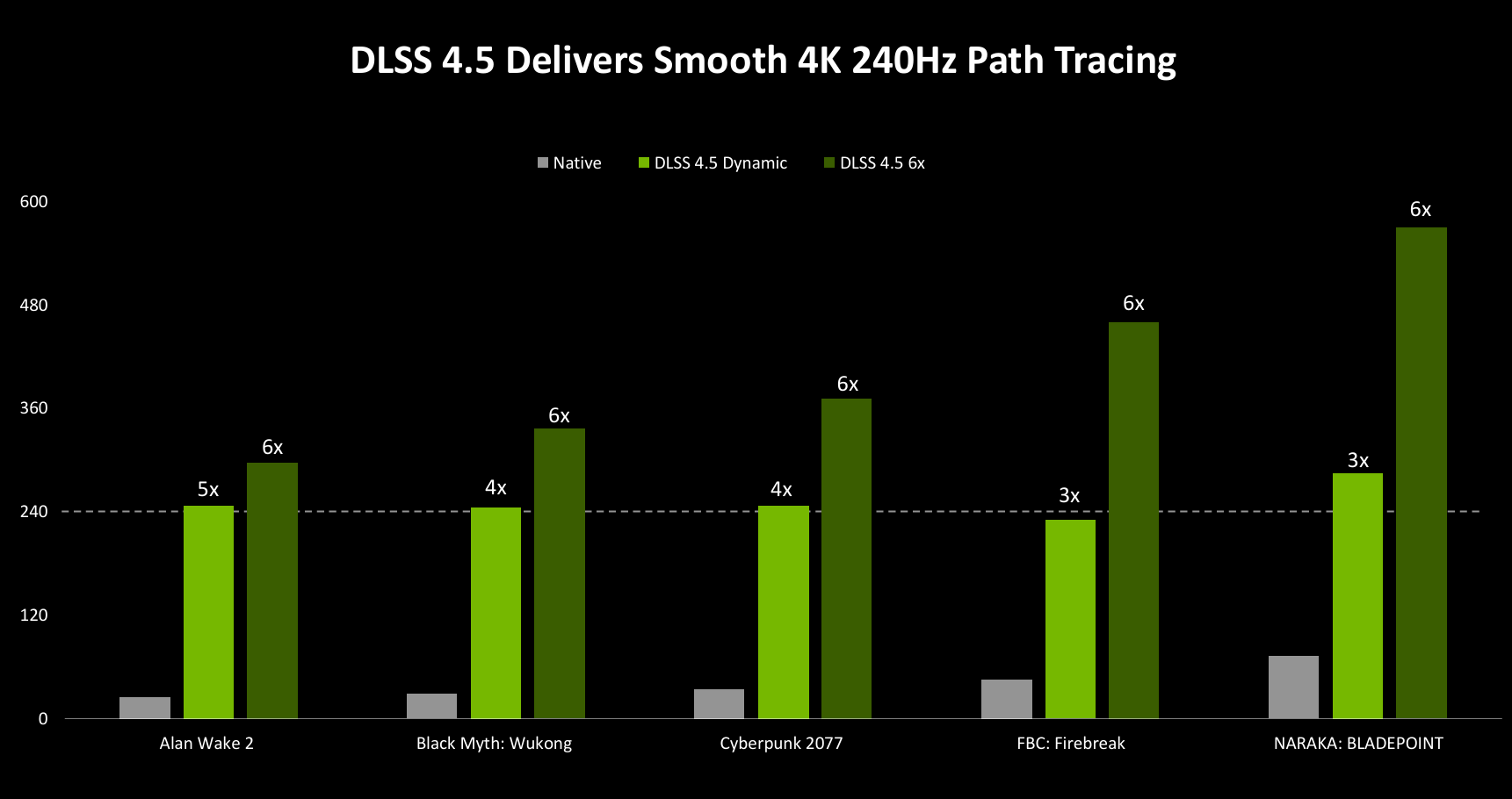
One of the most compelling aspects of DLSS 4.5 is the intelligent targeting of frame rates. The new MFG capabilities will be able to dynamically match your monitor’s refresh rate, ensuring that the generated frames are optimally synchronized. This intelligent approach promises to further optimize performance and reduce any perceived choppiness, leading to a more fluid and responsive gameplay experience. This level of optimization is key to unlocking the full potential of high-refresh-rate displays.
Beyond the core DLSS advancements, Nvidia also unveiled substantial upgrades to its GeForce Now game-streaming platform. A new premium tier has been introduced, offering performance comparable to the RTX 5080. This new tier effectively replaces the previous RTX 4080 tier at the same price point, providing a significant performance boost for cloud gamers. Nvidia is advertising capabilities of up to 5K resolution at 120 frames per second or 1080p at an impressive 360 frames per second with this new tier.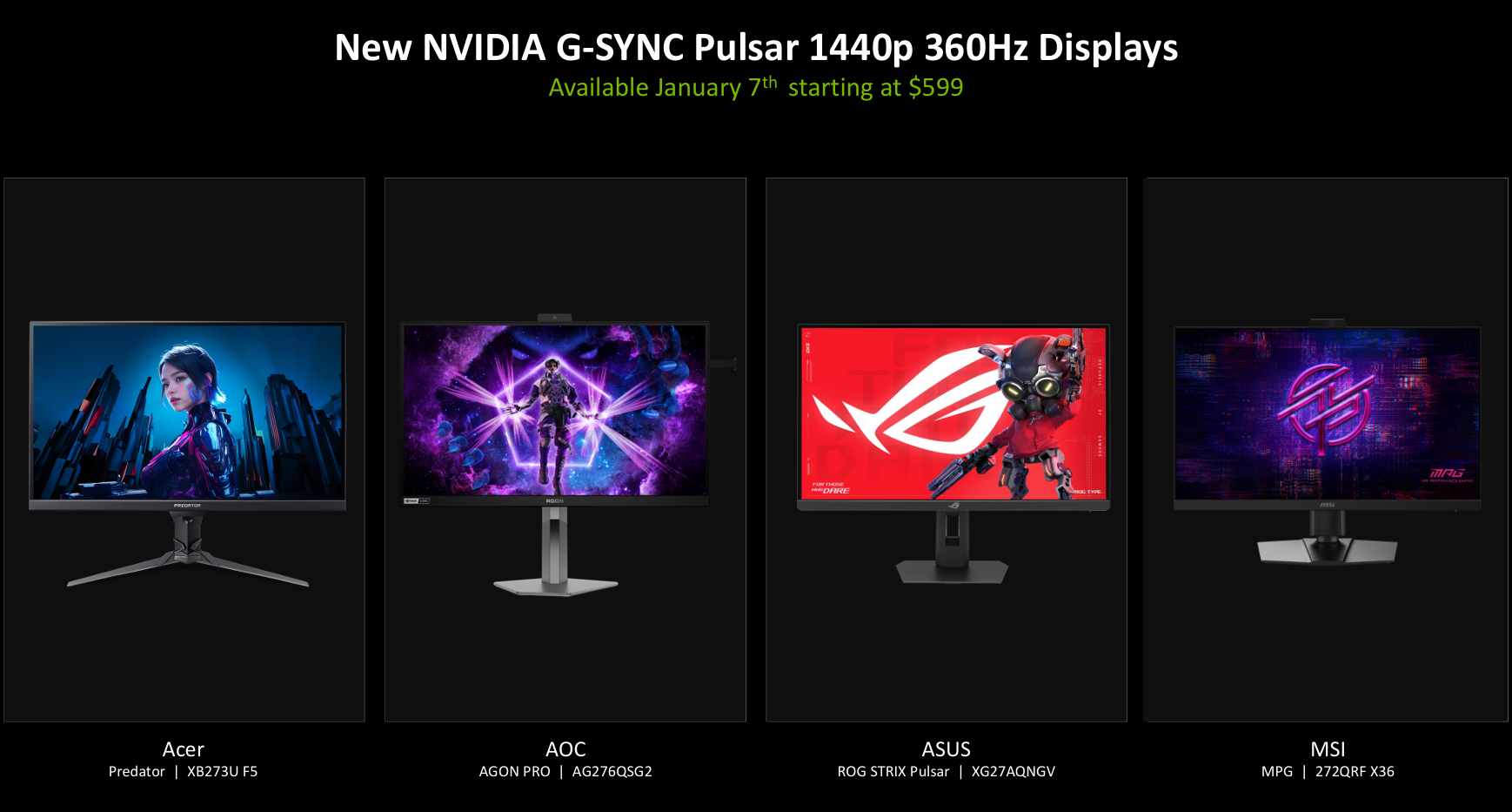
GeForce Now is also expanding its reach with native clients for Linux and Amazon’s Fire TV. The Fire TV integration is particularly noteworthy for gamers who prefer to play PC titles on their living room setups without needing a dedicated gaming PC. Furthermore, expanded controller support is on the horizon, with racing wheels and flight sticks being the first peripherals to receive enhanced compatibility, catering to a wider range of gaming preferences.
Nvidia’s commitment to display technology is also evident with the new G-Sync Pulsar technology. This innovation promises improved sharpness and smoother gameplay compared to existing G-Sync displays. These new G-Sync Pulsar monitors, expected to be available from January 7th, will primarily be 27-inch 1440p 360Hz displays, targeting serious esports gamers. Nvidia claims they offer “1000Hz+ Perceived Motion Clarity,” a specification that will undoubtedly appeal to competitive players seeking the absolute edge in visual responsiveness.
However, the widespread adoption of DLSS 4.5 and other Nvidia innovations faces a significant hurdle: the availability and pricing of RTX 5000 series graphics cards. The ongoing RAM crisis has already severely impacted GPU pricing, leading to skyrocketing costs and scarce stock. This situation makes it incredibly challenging for the average PC gamer to acquire the latest high-end GPUs, a problem not seen since the height of the cryptocurrency craze.
Nvidia’s own business strategy contributes to this GPU crunch. The immense demand for AI datacenter hardware has driven a recent spike in component demand, and Nvidia is a major player in this AI market. A substantial portion of their CES presentation was dedicated to AI advancements, highlighting how RTX 5000 GPUs benefit AI-powered content creation and large language model performance. While this ensures another profitable year for Nvidia, there’s a growing concern that PC gamers might be overlooked.
With GeForce Now offering a compelling alternative for those who cannot afford or access dedicated gaming hardware, Nvidia appears to be in a win-win situation. They can capitalize on both the high-end dedicated GPU market and the cloud gaming sector, ensuring continued dominance regardless of individual gamer purchasing power. The question remains whether DLSS 4.5’s technological leaps will be enough to satisfy gamers struggling with hardware accessibility.
What is DLSS 4.5? DLSS 4.5 is Nvidia’s latest AI-powered upscaling technology, announced at CES 2026. It features a second-generation transformer model to improve ghosting, pixel sampling, and temporal stability, alongside enhanced Multi Frame Generation for higher frame rates. It’s a free upgrade for RTX 5000 series GPU owners.
These technological advancements, while impressive, underscore the complex relationship between cutting-edge graphics, AI development, and the consumer PC gaming market. The future of PC gaming performance will likely depend on how Nvidia balances these competing demands and whether they can alleviate the hardware shortages that plague the industry.






