

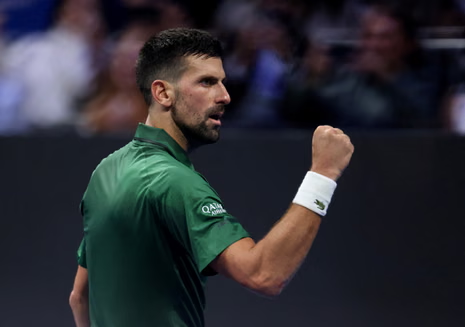
A significant development in the world of professional tennis has seen Novak Djokovic PTPA involvement come to an end. The tennis icon announced his decision to step away completely from the Professional Tennis Players Association, the player advocacy group he co-founded just a few years ago in 2020. This move, detailed in a public statement, cites ongoing concerns regarding the association’s transparency, its governance structure, and how his voice and image were being represented within the organization. While stressing his enduring pride in the PTPA’s foundational vision, Djokovic made it unequivocally clear that he no longer aligns with its current operational direction, marking a pivotal moment for player representation in the sport. This news has generated considerable discussion among fans and stakeholders alike, eager to understand the full implications of his departure.
What is PTPA tennis? The Professional Tennis Players Association (PTPA) is an independent player advocacy group co-founded by Novak Djokovic in 2020. Its mission is to protect and promote the rights of professional tennis players globally, aiming to provide a unified voice for athletes outside of existing governing bodies like the ATP and WTA. It sought to address issues such as prize money distribution, player welfare, and scheduling.
Many observers have been asking, why did Djokovic leave PTPA? His statement highlighted specific issues: a lack of transparency in decision-making and concerns over governance. These factors suggest a growing disconnect between Djokovic’s original aspirations for the association and its practical implementation. Reports indicate that internal disagreements over strategy and communication methods may have contributed to his feeling that the organization was veering off its intended course. For an athlete who has consistently championed player rights throughout his career, this divergence became a critical point.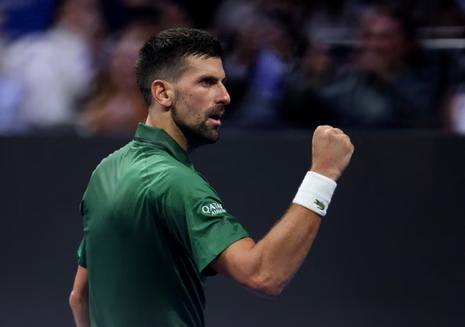
The dynamic of Djokovic vs PTPA has been complex since its inception. Initially, Djokovic was the most prominent face and driving force behind the organization, lending it significant credibility and visibility. His departure signifies a major shift, potentially leaving a void in leadership and public perception. The move reflects a personal stance on integrity and alignment, rather than a disinterest in player welfare, as he has consistently advocated for athletes’ interests, even prior to the PTPA’s formation.
Understanding the landscape requires looking at ATP vs PTPA. The ATP (Association of Tennis Professionals) is the main governing body for the men’s professional tennis circuit, overseeing tournaments and player rankings. The PTPA was established as an alternative, independent voice for players, aiming to directly represent their interests without the inherent conflicts of interest perceived in a body that also represents tournaments. Djokovic’s move underscores the ongoing tension and the challenging path for an entirely new, player-led association to gain widespread acceptance and power within the established tennis ecosystem.
For those seeking a comprehensive understanding, PTPA explained means delving into its short history and ambitious goals. Founded during the US Open, it aimed to empower players by giving them a direct say in decisions affecting their careers, from prize money to health and safety protocols. Despite initial challenges and skepticism from established bodies, the PTPA garnered significant interest from many players, particularly those feeling underrepresented by existing structures. Djokovic’s departure, however, forces a re-evaluation of its trajectory and influence.
This event also serves as a crucial case study for any tennis player advocacy guide. It highlights the immense hurdles in creating and sustaining an independent player union in a global sport with deeply entrenched governing bodies. The need for clear leadership, robust governance, and consistent transparency becomes paramount for such an organization to thrive and effectively serve its members. The PTPA’s journey, even with Djokovic’s exit, will undoubtedly provide valuable lessons for future attempts at collective player action.
The Novak Djokovic PTPA news has dominated tennis headlines, sparking a wave of reactions from fans, fellow players, and pundits. While some expressed concern for the PTPA’s future without its most high-profile founder, many praised Djokovic for his unwavering principles. Social media was abuzz with comments acknowledging his commitment to integrity, with some dubbing him the ‘GOAT’ not just for his on-court prowess but for his off-court stance on player rights. The overwhelming sentiment was one of respect for his decision, rather than criticism.
Analyzing Djokovic latest statement reveals a carefully worded message, emphasizing his continued dedication to tennis and his desire for the sport’s overall betterment. He affirmed that his focus remains on his playing career, suggesting that the energy and attention previously dedicated to the PTPA will now be channeled elsewhere. This clarity helps to dispel any speculation that his decision might signal a broader withdrawal from the sport or a decline in his commitment to top-level competition. His words underscore a strategic pivot, prioritizing his individual career while still holding firm on his principles regarding player representation.
Looking ahead, the PTPA future 2026 appears to be at a crossroads. Without Djokovic’s direct involvement, the association will need to solidify its internal structures, expand its membership, and clearly articulate its value proposition to players. Its ability to attract new, influential leaders and demonstrate tangible results will be critical for its long-term viability. The path forward will require strategic alliances and a clear vision to continue advocating for player interests effectively within the complex ecosystem of professional tennis. The coming years will be crucial in defining its legacy.
The broader discussion around tennis player rights 2026 will undoubtedly continue to evolve, regardless of the PTPA’s specific trajectory. Issues like fair prize money distribution across all levels of the sport, improved support for lower-ranked players, mental health resources, and transparent governance will remain central. Djokovic’s departure from the PTPA, while significant, does not diminish these fundamental concerns. Instead, it might prompt new approaches or renewed efforts from other stakeholders to ensure that players’ voices are heard and their rights are protected as the sport moves forward.
Ultimately, the decision by Novak Djokovic PTPA to part ways reflects a personal conviction about the best path forward for player advocacy. His commitment to the sport remains undimmed, and his influence on the conversation around player rights is undeniable. This development will shape discussions about governance and representation in tennis for years to come.






!['I've not been accountable with resources given to me' - Harrison Gwamnishu tenders public apology [VIDEO]](https://samony.com.ng/wp-content/uploads/2026/01/Ive-not-been-accountable-with-resources-given-to-me.jpg?lm=695B7F96 "Why Harrison Gwamnishu Apologized: Key Accountability Insights")

