


The heartwarming account of a Muslim man receiving unexpected Christmas rice and chicken from a Christian stranger offers a profound lesson on how to foster interfaith relations through simple, genuine acts of kindness. This viral story, shared by @IUWakili, transcends religious divides, illustrating the powerful impact of human connection and generosity. It highlights how gestures, however small, can build bridges of understanding and respect, challenging preconceived notions and strengthening community bonds in unexpected ways. This single interaction became a testament to the potential for harmony in a diverse society.
The man’s surprise and gratitude, evident in his tweet, resonated deeply with hundreds of thousands, underscoring the rarity and value of such spontaneous compassion. He described finishing a portion of the meal on his way home, unable to wait, a vivid picture of the joy and comfort the thoughtful gift provided. This personal anecdote serves as a powerful reminder that goodwill knows no religious boundaries, fostering a sense of shared humanity that often gets overshadowed by societal differences.
What is religious tolerance? Religious tolerance is the recognition and respect for the beliefs and practices of others, even if they differ from one’s own. It involves embracing diversity, fostering understanding, and ensuring peaceful coexistence among people of various faiths and no faith traditions. This fundamental principle is essential for a harmonious society.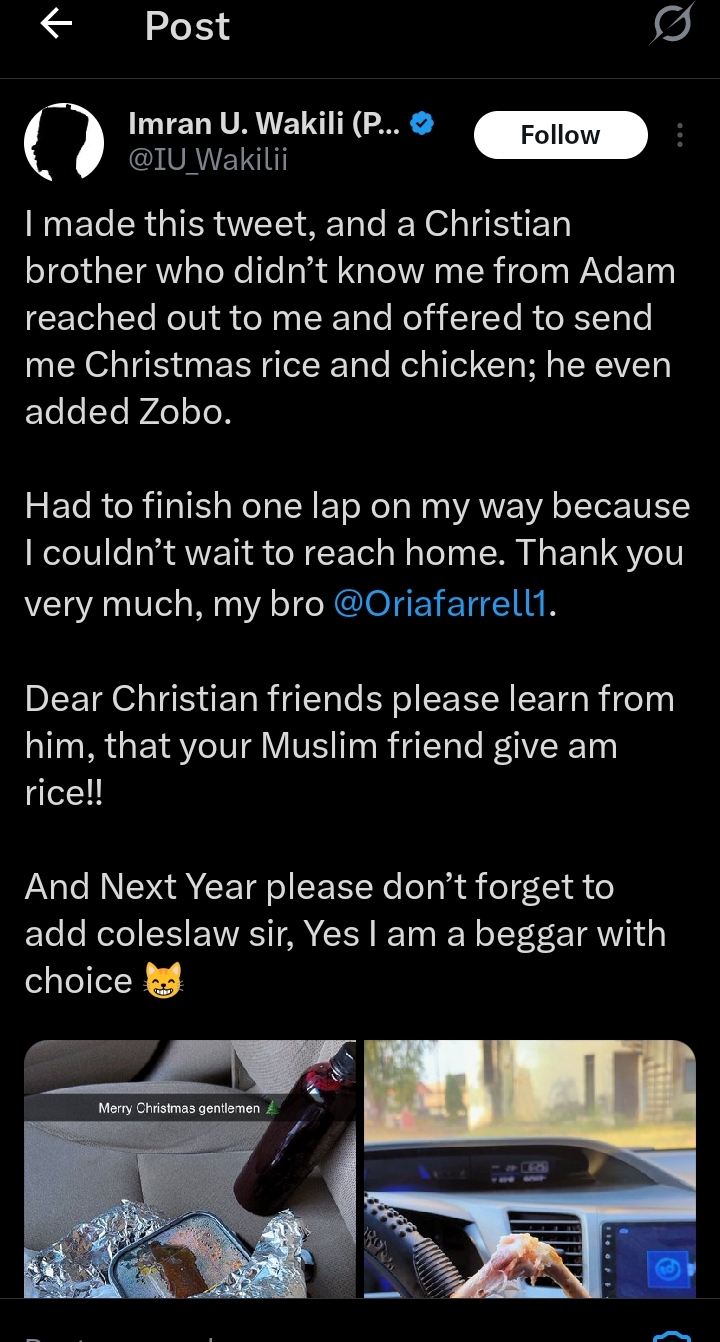
Such acts of spontaneous generosity are vital in cultivating a culture of interfaith kindness ideas. Beyond grand dialogues and official initiatives, it is these everyday interactions that truly cement mutual respect. When individuals reach out across perceived boundaries, they demonstrate a commitment to neighborliness and shared community values that resonate far more powerfully than any sermon or political statement. These gestures become tangible examples of empathy in action, inspiring others to follow suit.
One common misconception is that interfaith engagement must always be formal or academic, involving complex theological discussions. However, the story of the Christmas meal reminds us that often, the most effective interfaith kindness ideas are rooted in practical support and shared moments. Whether it’s helping a neighbor, sharing a meal, or simply offering a kind word, these actions build trust and rapport, laying the groundwork for deeper understanding and a robust religious tolerance guide for daily life.
These seemingly small encounters contribute significantly to a growing collection of community kindness stories that inspire and uplift. They serve as tangible proof that despite global tensions, people are actively seeking and creating moments of connection. These narratives often spread rapidly, influencing public perception and encouraging more individuals to engage positively with those from different backgrounds. The ripple effect of one act of generosity can truly transform communal attitudes.
The distinction between interfaith dialogue vs religious debate is crucial in fostering positive relations. While debates often focus on proving one’s own faith superior, dialogue aims for mutual understanding and respect, acknowledging shared values and learning from differences. The act of sharing a meal exemplifies dialogue in its purest form—an exchange that requires no words to convey acceptance and friendship, moving beyond theological arguments to a place of human connection.
In an age dominated by often divisive headlines, positive interfaith harmony news is more critical than ever. Media platforms have a significant role to play in amplifying stories of cooperation and compassion, rather than solely focusing on conflict. By showcasing examples like the Christmas rice and chicken, we can shift the narrative, demonstrating that peaceful coexistence and mutual support are not only possible but are actively happening in communities worldwide, offering hope and inspiration.
Looking ahead, developing a comprehensive interfaith relations guide 2026 will be essential for communities striving for greater cohesion. This guide would emphasize practical steps, educational resources, and opportunities for interaction that encourage understanding across diverse populations. It would focus on sustainable models for engagement, ensuring that the spirit of kindness extends beyond seasonal festivities and becomes an integral part of community life throughout the year.
Anticipating community kindness trends 2026, we foresee an increased emphasis on localized initiatives and digital platforms facilitating connections. As societies become more interconnected and diverse, the need for intentional efforts to bridge divides will grow. Technology can play a pivotal role in sharing stories, organizing events, and providing resources that encourage cross-cultural and interfaith understanding, making kindness and compassion more accessible and widespread.
Ultimately, the simple act of sharing a meal, as exemplified in this viral story, underscores the profound power of individual actions. It reminds us that fostering genuine connections doesn’t require grand gestures or complex strategies, but rather an open heart and a willingness to extend kindness without expectation. These moments are the bedrock upon which stronger, more tolerant communities are built, demonstrating that humanity’s shared values can always triumph over division.
By embracing opportunities for connection and generosity, we actively participate in how to foster interfaith relations, ensuring a more peaceful and understanding world for everyone. Every smile, every shared meal, and every act of support contributes to a tapestry of mutual respect that strengthens the fabric of society, proving that kindness is truly a universal language.









