The call for universal preschool vision screening across South Australia is gaining significant momentum, highlighting a critical need to safeguard children’s development and future potential. Undetected vision problems in early childhood can lead to lifelong challenges, impacting learning, social skills, and overall well-being. Advocates, including leading optometrists and researchers, are pushing for a comprehensive program to ensure every child receives essential eye health checks before starting school, identifying issues like lazy eye before they become irreversible.
Many children live with undiagnosed vision conditions, often without their parents or even educators realizing the underlying cause of their struggles. For instance, what is lazy eye in children, also known as amblyopia, can develop without obvious symptoms, yet it significantly hinders visual development in one eye. If not caught and treated early, this condition can lead to permanent vision loss in the affected eye, underscoring the urgency of proactive screening.
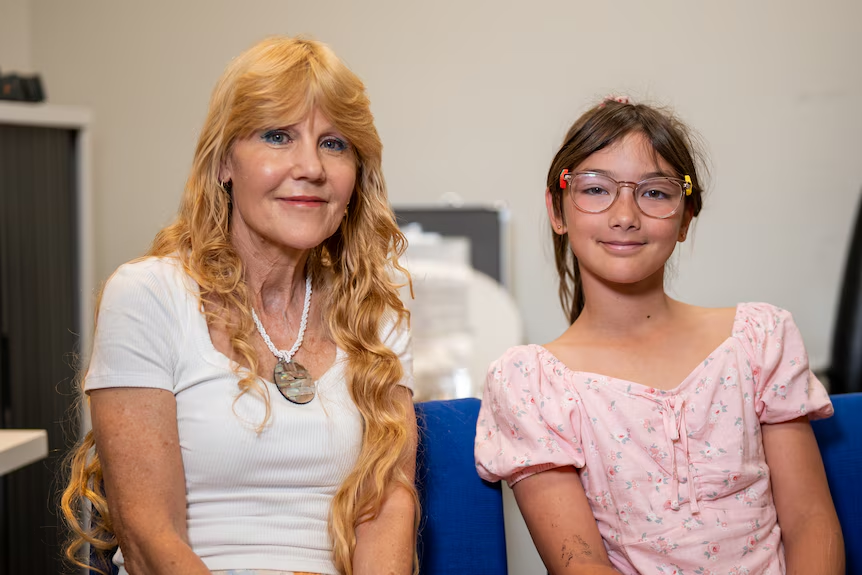
A poignant example is Lucy, whose kindergarten teachers first noticed her struggling to follow instructions and connect drawings. Her mother, Carole Thornley, sought an eye test for her four-year-old. Optometrist Hayley McDonald discovered the beginnings of a lazy eye, a condition that could have severely impacted Lucy’s future. The prompt diagnosis and treatment, which involved balancing her asymmetric eyes, prevented the lazy eye from fully developing and preserved her vision.
For Lucy, the impact was immediate and transformative. She gained confidence, her reading and writing skills soared, and she became a vibrant, happy child, now dreaming of becoming a fashion designer. Her story is a powerful testament to the life-changing potential of early intervention, demonstrating how a simple vision test can unlock a child’s full potential.
What is the importance of early vision screening for children? Early vision screening is crucial because it detects conditions like lazy eye or refractive errors when they are most treatable. Identifying these issues before age five can prevent permanent vision impairment, improve learning outcomes, and enhance a child’s overall development and quality of life.
Despite the clear benefits, current free vision and hearing checks offered to four and five-year-olds in South Australia through the Child and Family Health Service (CaFHS) only reach an estimated 40 percent of eligible children. Research from Flinders University, led by optometrist Cassandra Haines, reveals that a staggering 17 percent of children have an undiagnosed vision condition – nearly one in five. This gap highlights a systemic failure to protect the eye health of a significant portion of the young population.
In response to these alarming statistics, eye healthcare leaders are united in their call for a universal vision screening program for all South Australian children in preschools and day care centres. They estimate the program would cost approximately $1.1 million and could be implemented as early as 2028 with government support. This proactive approach would bring South Australia in line with other Australian states that already have comprehensive vision screening programs, ensuring almost 100 percent of children have their eyes screened before school.
The long-term implications of untreated vision problems extend far beyond the classroom. Poor vision can negatively impact a child’s academic performance, but also their learning and earning potential across their entire lifespan. Implementing a robust children’s eye health guide through universal screening is an investment not just in individual children, but in the future productivity and well-being of the entire community, offering benefits that far outweigh the initial costs.
Many parents wonder how to check child’s vision effectively, and the process for preschool vision screening is designed to be quick, simple, and child-friendly. It involves reading shapes on a chart, meaning children don’t need to know their letters, and using automated machines that can quickly screen for glasses prescriptions. This method is non-invasive and efficient, making it suitable for young children who might not yet articulate their vision problems.
It is important to understand the distinction between a basic vision screening vs eye exam. A screening is a quick check designed to identify potential problems that warrant further investigation, while a comprehensive eye exam is a more detailed assessment performed by an optometrist. The goal of universal screening is to identify children who need that more in-depth examination, ensuring no child falls through the cracks due to a lack of awareness or access.
Ms. McDonald emphasizes that parents and children often don’t even realize vision problems exist, meaning these conditions can easily be missed without a universal program. The South Australia vision screening proposal aims to eliminate this oversight, ensuring that every child receives the opportunity for early detection and treatment. The older a child gets, the more impact an untreated vision problem has on their education, and the less effective treatments become.
Looking ahead, implementing a universal screening program would significantly improve best children’s eye care 2026 and beyond. Carole Thornley, grateful for Lucy’s early diagnosis, passionately supports the proposal, stating, “It’s where you’ve got all the children together — nobody gets missed and nobody gets left out.” This sentiment encapsulates the core benefit: ensuring equitable access to vital health services for all children. It’s a simple yet profound step that can give every child the best opportunity in life.
Ultimately, a universal preschool vision screening program is a fundamental step towards ensuring every child has the best possible start. By identifying and addressing vision problems early, we empower children to learn, thrive, and reach their full potential, preventing avoidable lifelong challenges and fostering a healthier, more capable generation. This initiative represents a crucial investment in public health and educational equity.